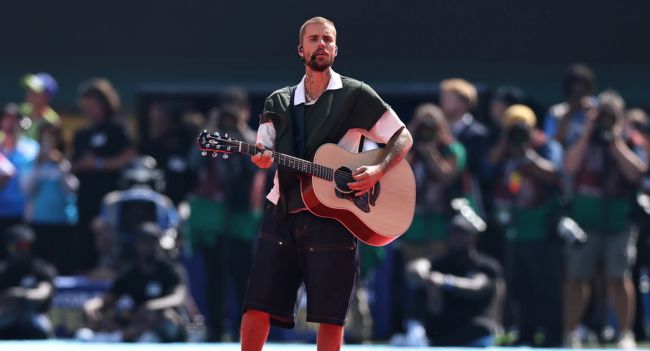
Justin Bieber’s performance at the 2026 FIFA World Cup Final halftime show sparked a wave of criticism, with many viewers questioning his decision to perform a slow acoustic song during the biggest match in football.
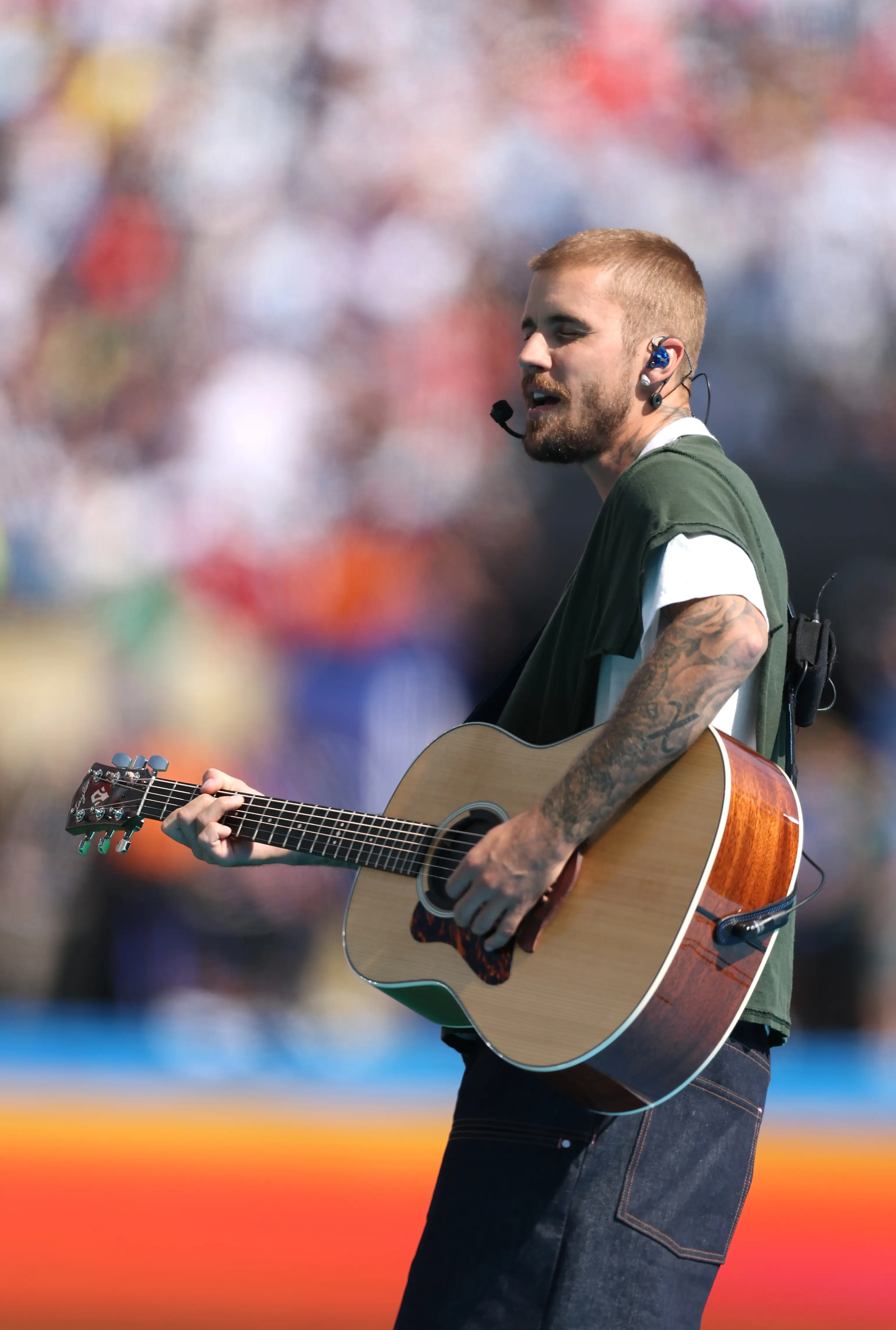
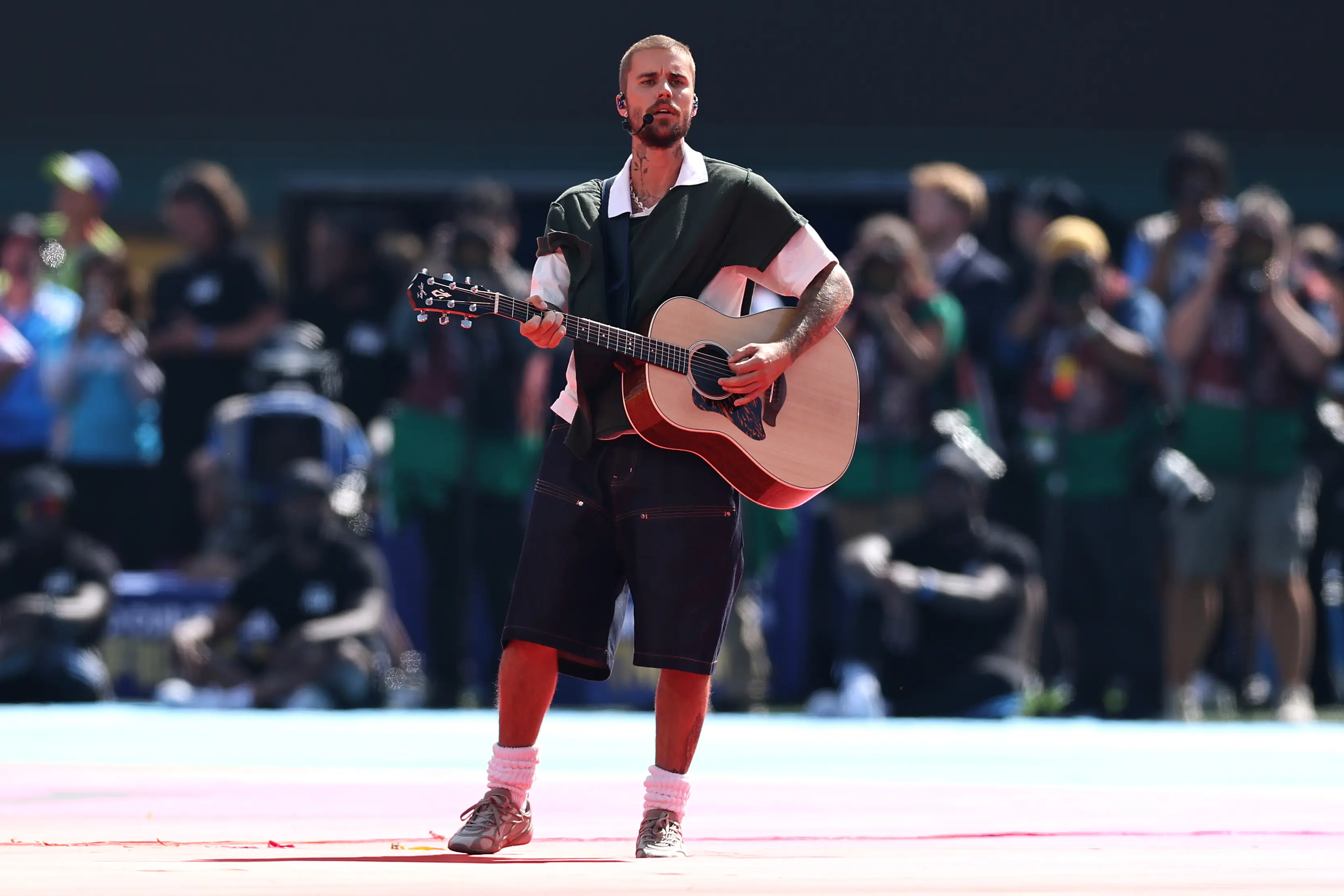
The Canadian singer appeared during FIFA’s first ever halftime show, which took place at MetLife Stadium in East Rutherford, New Jersey, with more than 82,500 fans in attendance. Actor Jason Sudeikis introduced Bieber, who walked onto the field with a guitar and performed an acoustic version of his 2025 track “Everything Hallelujah.”

The performance had been one of the most anticipated moments of the night. It marked one of Bieber’s highest profile live appearances in years and added fuel to the internet’s ongoing “Bieber Cup” jokes, with fans claiming the tournament had started to feel like an unofficial Justin Bieber concert after his recent surprise appearances and festival performances.
But the stripped back performance did not land with everyone watching at home. Many viewers had expected Bieber to perform one of his more upbeat hits and quickly took to social media to complain about the slower mood.
One viewer wrote that the energy of Bieber’s halftime song “matched the first half perfectly,” referring to the scoreless opening 45 minutes between Spain and Argentina.
Another joked, “Justin Bieber put me to sleep with that slow halftime song.”
@varietymagazine #JustinBieber performs a special version of “EVERYTHING HALLELUJAH” at the FIFA #WorldCup ♬ original sound – Variety
A third added, “The fact that Justin Bieber is playing the slowest song and acoustic at the World Cup final is exactly why there shouldn’t be a halftime show.”
The halftime show lasted about 11 minutes and was designed as a World Cup version of the Super Bowl style entertainment break. FIFA had announced the concept months before the tournament began, with the show curated by Coldplay frontman Chris Martin in partnership with Global Citizen.
The lineup also featured Madonna, Shakira, BTS, Burna Boy, conductor Gustavo Dudamel, the PS22 Chorus, Coldplay, and appearances by characters from Sesame Street and The Muppets.
The expanded entertainment schedule forced broadcasters to adjust their coverage plans. Both the BBC and ITV had originally suggested they would not show the full performance, but later confirmed they were preparing for a much longer halftime break that combined the concert with the usual match analysis.
FIFA said the show was part of a broader effort to support the FIFA Global Citizen Education Fund, which aims to raise money for education and football programs for children around the world.
The final itself was already surrounded by heavy attention and several controversies. Jennifer Hudson performed “The Star-Spangled Banner” before kickoff even though the United States had been eliminated earlier in the tournament, leading to confusion among some international fans.
Security was also increased after it was confirmed that U.S. President Donald Trump would attend the match. Fans reported long queues and delays entering the stadium, while FIFA continued to face criticism over dynamic ticket pricing, with some final tickets selling for thousands of dollars and resale prices climbing even higher.

On the field, Spain reached the final by beating France 2-0 in the semifinals, while Argentina advanced after a 2-1 victory over England.
Although opinions on Bieber’s performance were divided, it quickly became one of the most talked about moments of the night and ensured that FIFA’s first experiment with a halftime show generated exactly the kind of attention organizers were hoping for.