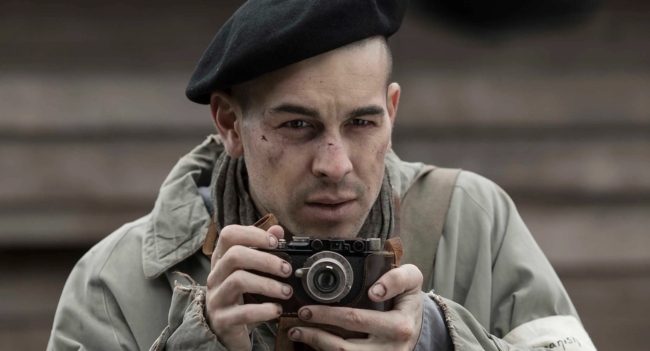
The Photographer of Mauthausen: Harrowing World War II Film Based on a True Story Now on Netflix
A Spanish film about a photographer who risked his life to preserve evidence of Nazi atrocities at the Mauthausen concentration camp is drawing renewed attention from Netflix viewers.
The Photographer of Mauthausen (El fotógrafo de Mauthausen), released in 2018, tells the true story of Francesc Boix, a Catalan Republican imprisoned at the Mauthausen-Gusen concentration camp during World War II.
Directed by Mar Targarona, the historical drama has been praised for its stark portrayal of life inside the camp, with viewers highlighting its naturalistic performances, cinematography and refusal to soften the brutality of its subject. Netflix currently lists the film among its movies based on real life.

A photographer documenting the horrors of Mauthausen
Boix was a Spanish photographer and Catalan Republican who was forced into exile in France in 1939 after the Spanish Civil War. He was captured by German forces and deported to Mauthausen in Austria, arriving on January 27, 1941.
Because of his photographic skills, Boix was assigned to the camp’s photography department. From there, he became involved in secretly preserving photographic evidence of what was happening inside Mauthausen.
Boix and other prisoners managed to hide and protect negatives taken by the SS. The photographs documented the conditions inside the camp and provided evidence of Nazi crimes. Some of the material was later used as evidence at the Nuremberg and Dachau trials.
The film focuses on the enormous risks involved in that effort. Every photograph that was concealed represented a potential danger to the prisoners involved, while the evidence itself could become crucial to exposing what had taken place behind the camp’s walls.
Viewers describe the film as deeply unsettling
The production does not shy away from the violence and suffering at the centre of Boix’s story.
Its performances are deliberately restrained and naturalistic, helping create a sense of immediacy rather than turning the events into conventional action sequences. That approach has left some viewers describing the film as one of the more visceral portrayals of concentration-camp life.
One IMDb reviewer said they had expected a good story but instead found themselves watching a compelling and heartbreaking drama. They praised the film for bringing the reality of Nazi atrocities to life through the photographs at the heart of Boix’s story.
Another viewer gave the film eight out of 10 and praised it for telling the story of a real photographer. They argued that the historical reality behind the film was what made it particularly compelling.
The same reviewer said the second half becomes increasingly tense as the danger surrounding the prisoners grows. They also singled out the film’s depiction of the Death Stairs, saying that even its brief appearance was enough to leave them shaken.
The reviewer acknowledged that there are other stories from Mauthausen that could be told, but concluded that the historical record itself was already horrifying enough. They described the movie as a solid film and a fascinating glimpse into a much broader and more devastating history of genocide.

Boix’s photographs became important historical evidence
The real Francesc Boix survived Mauthausen and later testified at the Nuremberg and Dachau trials in 1946.
Photographs he helped preserve were presented as evidence against Nazi officials. According to Spain’s Ministry of Culture, Boix’s testimony and the images he brought forward provided important evidence concerning the crimes committed at Mauthausen.
The Catalan government’s historical archive records that Boix and fellow prisoners worked together to hide photographs produced inside the camp. After liberation, the surviving material became part of the historical record of Mauthausen.
Boix later returned to work as a photojournalist in France. He died in Paris in 1951 at the age of 30. His remains were transferred to Père-Lachaise Cemetery in 2017.
The story portrayed in The Photographer of Mauthausen therefore reaches beyond the film itself. It follows a man whose photographs helped preserve evidence of crimes that the perpetrators had every reason to conceal.
For viewers looking for a serious World War II drama based on real events, The Photographer of Mauthausen is available to stream on Netflix.