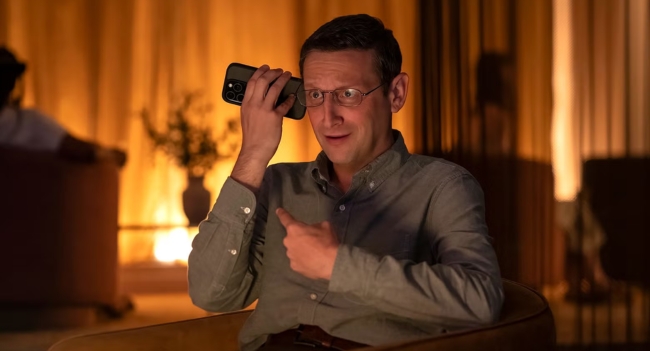
Tim Robinson’s The Chair Company Is the Perfect Antidote to TV’s Most Exhausting Trope
I have a confession: I’m starting to feel worn out by prestige television.
Give me another eight-episode limited series about a haunted cop or gangster with a troubled past, a dead child, a mountain of guilt and a growing conviction that breaking the rules is the only way to set things right, and I may fall asleep for a century.
Fortunately, there is a much better cure for that particular kind of TV fatigue.
HBO’s The Chair Company, created by and starring Tim Robinson, takes the familiar prestige-TV strongman and pushes the concept into increasingly bizarre, uncomfortable and hilarious territory. Instead of treating the obsessive antihero with solemn reverence, the series turns that archetype inside out.
At its center is Ron Trosper, a corporate executive and family man whose life becomes consumed by an apparently minor grievance. After his chair collapses during an important company presentation, embarrassing him in front of his colleagues, Ron decides to find out who is responsible.
That simple complaint sends him down a bizarre rabbit hole involving abandoned warehouses, mercenary short-order cooks, hoarder houses and a furniture company hidden behind a maze of shell companies, fake websites and other strange complications.
What follows is a darkly comic dismantling of the very kind of TV character that prestige dramas have spent years celebrating.
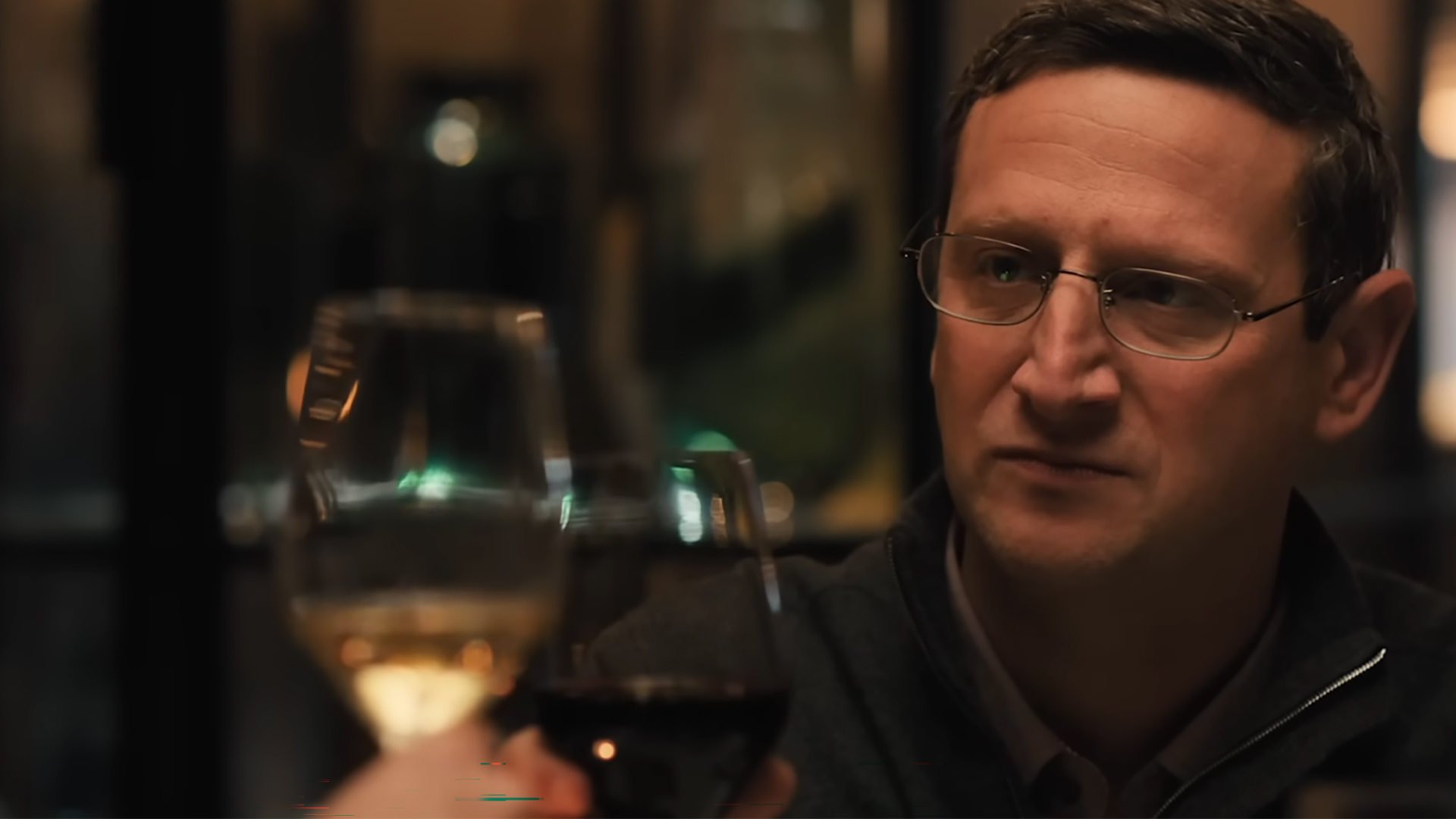
The ghost of Tony Soprano
The prestige-TV fascination with lone wolves who ignore the rules in pursuit of their own version of justice is hardly new.
One of the clearest examples is Tony Soprano, whose values are repeatedly tested as he sinks deeper into his own contradictions. His actions may be twisted, but he continually finds ways to justify them as necessary evils.
That archetype reached another level with Breaking Bad and its spin-off Better Call Saul. Both shows masterfully follow apparently well-meaning men as desperation pulls them into increasingly destructive and amoral choices. Walter White and Saul Goodman are difficult acts to follow when it comes to depicting men whose personal decisions spiral into consequences far beyond themselves.
Yet television continues to return to the same basic formula.
Over the past few months alone, I’ve encountered at least five limited series about damaged cops haunted by dead children and past mistakes, each eventually pushing its protagonist toward increasingly questionable decisions in the name of some self-justified goal.
The strongman archetype also remains central to major prestige dramas such as Yellowstone. There, the familiar idea takes the form of a salt-of-the-earth land baron patriarch and his family fighting to protect their territory from an encroaching outside world.
It is another variation on the same message: when the cause feels sufficiently personal, almost any method can be rationalized, including illegal or morally dubious ones.
Some recent shows have found interesting ways to play with the formula. Netflix’s Wayward, for example, turns some of the genre’s gender dynamics on their head and benefits from performances by creator Mae Martin and Toni Collette.
But The Chair Company takes the idea somewhere much stranger.
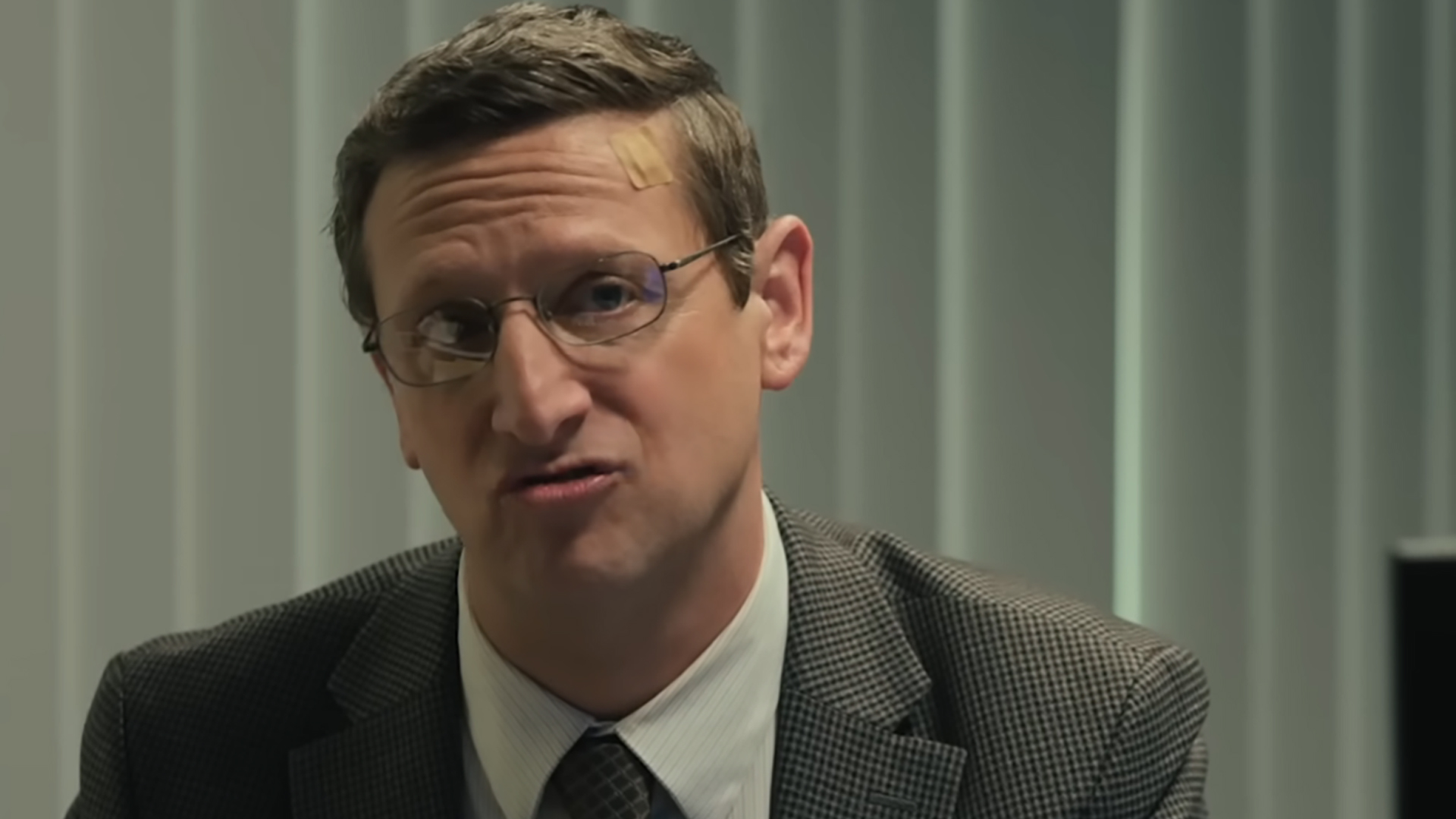
Ron Trosper and the absurdity of the strongman
Robinson and co-creator Zach Kanin have created a protagonist who looks, at first, like a classic prestige-TV antihero.
Ron has a personal mission. His obsession gradually separates him from his family and colleagues. As his investigation progresses, he becomes increasingly willing to disregard social conventions, his own better judgment and eventually the law.
The difference is that Ron’s crusade is almost spectacularly unnecessary.
His journey begins with a chair collapsing during a company presentation. It is embarrassing. It is frustrating. But it is hardly the sort of life-shattering event that normally sends a television protagonist into an existential battle against an all-encompassing conspiracy.
Ron refuses to let it go.
His determination to discover exactly what happened draws him deeper into an increasingly strange world. The furniture company he investigates appears to be buried beneath layers of shell companies, fake websites and unexplained connections. His search takes him to abandoned warehouses, hoarder homes and encounters with mercenary short-order cooks.
The deeper he goes, the stranger everything becomes.
That is where Robinson’s performance becomes so important. Ron may possess many of the qualities associated with the traditional TV strongman, but he is surrounded by the kind of social awkwardness, bizarre characters and absurd situations that have become hallmarks of Robinson’s work.
The result recalls his previous television successes, Detroiters and I Think You Should Leave, while also fitting alongside his recent film appearance in Friendship, which co-stars Paul Rudd.
Ron is recognizable as a familiar kind of television antihero, but Robinson refuses to give him the dignity that usually accompanies that role.

An underdog with almost nothing at stake
The most effective joke at the heart of The Chair Company is also what makes its critique of prestige television work so well: Ron’s problem barely matters.
Consider Walter White. His transformation into a criminal empire-builder is rooted in circumstances with enormous consequences. His desperation forces him to respond to increasingly violent situations, and every decision creates new problems that require even more extreme solutions.
Ron Trosper has none of that.
There is no comparable tragedy behind his investigation. His life is not hanging in the balance. He is not fighting to save his family from some immediate catastrophe. He is trying to figure out why a defective office chair embarrassed him at work.
And yet his obsession grows.
That mismatch between the tiny stakes and Ron’s increasingly extreme behavior exposes something fundamental about the strongman archetype. Strip away the grand tragedy, moral dilemmas and life-or-death consequences, and what remains can look remarkably ridiculous.
The Chair Company essentially conducts that experiment.
It takes the familiar ingredients of the prestige-TV antihero, removes the grand justification for his actions and then watches what happens when an ordinary man becomes convinced that his personal grievance deserves an extraordinary response.
Ron’s real danger is not that he will bring down a criminal organization or destroy the social order. It is that he will move from being temporarily embarrassed to becoming permanently unhinged.
That makes him an unexpectedly effective counterpoint to the endlessly serious antiheroes who populate prestige television.

The hero we actually deserve
There is something familiar in Ron’s initial motivation, even if his eventual behavior is anything but.
Most people have experienced the feeling of being unable to let some small injustice go. A minor slight can become strangely important. Something trivial can occupy your thoughts long after everyone else has moved on.
Ron takes that ordinary impulse to an absurd extreme.
Instead of allowing the grievance to fade, he turns it into an all-consuming personal mission. His desire to feel that he matters becomes inseparable from his determination to control the situation and uncover an explanation that, in the grand scheme of things, he probably does not need.
That is what separates Ron from most of us.
His problem is not simply that he cares too much. It is that he transforms a personal annoyance into a form of vigilante determination, steadily withdrawing from the people around him as his obsession becomes more important than his actual life.
The more he tries to impose control, the further he retreats from the community around him.
There is a particularly strange irony in that. Ron wants to make himself important in a world that increasingly feels meaningless, yet his attempts to establish his own significance only push him deeper into an isolated world of his own making.

A timely antidote to the prestige-TV strongman
That makes The Chair Company more than a collection of awkward jokes and increasingly ridiculous situations.
Its absurdity gives the show room to examine something that many prestige dramas take for granted: the idea that a determined individual is entitled to break the rules if his cause feels important enough.
The series takes that assumption and gives us a protagonist whose cause is so mundane that the underlying logic becomes impossible to ignore.
Ron is not pursuing some noble mission that happens to require questionable methods. He is pursuing a personal grievance because he cannot accept being made to look foolish.
That distinction makes his increasingly chaotic journey both funny and revealing.
In a television landscape filled with guilt-ridden cops, damaged patriarchs and solitary antiheroes convinced that only they can solve the problem, Ron Trosper offers a very different kind of protagonist.
He is obsessive, awkward, self-important and increasingly detached from reality. His quest does not make him a larger-than-life hero. Instead, it exposes how strange the entire idea of the TV strongman can become when the usual tragic backstory and moral justification are stripped away.
Given the state of the real world, there is something timely about that perspective. The Chair Company encourages us to look more closely at the impulse to pursue personal relevance at the expense of self-awareness and personal growth.
Sometimes the thing we are determined to conquer is not actually a great injustice waiting to be corrected.
Sometimes it is just a broken chair.
The Chair Company is currently airing on HBO in the US and Sky/NOW in the UK. Once you’ve caught up with the series, check out our picks for the 25 best shows on HBO Max to watch right now.