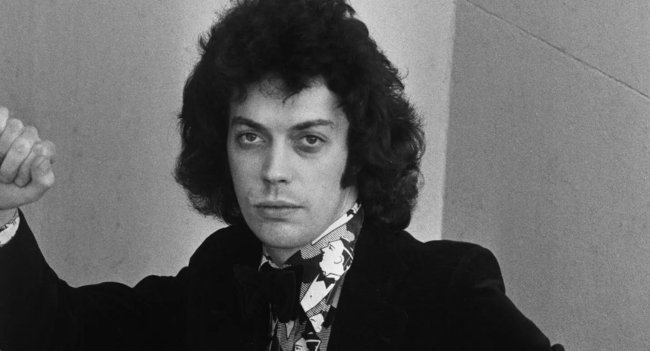
Tim Curry, Star of Rocky Horror and Much More, Dies at 80
Tim Curry built a career out of characters who could be flamboyant, menacing, funny and completely unpredictable. But no role defined him more enduringly than Dr. Frank-N-Furter, the outrageous, cross-dressing scientist at the center of The Rocky Horror Picture Show.
Curry, the British-born actor whose distinctive voice and flair for eccentric performances made him a memorable presence on stage and screen, died Tuesday at his home in Los Angeles. He was 80.
His death was confirmed by Marcia Hurwitz, his longtime agent and manager. Curry suffered a serious stroke in 2012. Speaking about his health last year, he said he had been recovering for quite a long time.
Throughout his career, Curry had a particular talent for playing villains and larger-than-life characters. His mischievous looks, natural physical ease and rich, resonant voice made him equally effective as a theatrical bad guy, a comic eccentric or an animated character.

The role that defined a career
Curry’s most famous performance came in The Rocky Horror Picture Show, the 1975 film adaptation of Richard O’Brien’s stage musical The Rocky Horror Show.
He first played Dr. Frank-N-Furter in London in 1973, originating the role in the stage production. He went on to star in the premiere American production in Los Angeles in 1974 and then appeared on Broadway in 1975. The Broadway production closed after only 45 performances, but the film would ultimately become one of the most enduring cult movies of its era.
Frank-N-Furter introduces himself as a “sweet transvestite from Transsexual, Transylvania,” and Curry gave the character a mixture of theatricality, sensuality, humor and menace that became inseparable from the movie’s identity.
The story follows a conventional young couple whose car breaks down on a rainy night. They seek shelter at the home of Frank-N-Furter, a scientist who has created a muscular, handsome creature as a sexual plaything.
Barry Bostwick and Susan Sarandon played the young couple in the film. Released in 1975, The Rocky Horror Picture Show eventually became a midnight-movie phenomenon, with audiences around the world dressing as the characters, singing along and returning for repeat screenings. The film marked its 50th anniversary in 2025.
The success of Curry’s performance opened the door to a long succession of villainous roles. He approached each one differently, shifting between sly comedy, theatrical glee and genuine menace.
Among them were Darkness, the deep-voiced embodiment of evil in Ridley Scott’s 1985 fantasy horror film Legend; Pennywise, the murderous entity disguised as a clown in the 1990 miniseries based on Stephen King’s It; and Cardinal Richelieu in The Three Musketeers (1993).
In Charlie’s Angels (2000), the film adaptation of the television series about three female detectives, Curry played a wealthy businessman initially believed to be the story’s principal villain. He gave the character an especially oily self-confidence before the real villain killed him.
Curry himself had initially hesitated to accept Frank-N-Furter. He understood that such a distinctive performance could become difficult to escape if the film succeeded.
“But then, really, I’ve always thought it wasn’t worth doing unless you took a risk, really,” he said in a television interview in England as the movie opened in 1975. “So I just took the risk.”
Four decades later, he viewed the role with a mixture of affection and detachment. Asked by Los Angeles magazine about his career-making performance after receiving a lifetime achievement award from the Actors Fund, he said he regarded it “with a sort of bemused tolerance.”
“It’s neither a blessing nor a curse. I was lucky to get it.”
From Clue to Spamalot
Curry’s screen career extended far beyond Rocky Horror.
In the 1982 film adaptation of Annie, he played Rooster Hannigan, a con artist who devises a scheme to kidnap the title character, a spirited orphan.
Three years later, he appeared in Clue, the 1985 comedy mystery based on the popular board game. As Wadsworth, Curry played the rapid-fire butler responsible for shepherding a house full of murder suspects through a sinister mansion. His performance combined relentless verbal energy with the intensity of a manic Sherlock Holmes.
On Broadway, he demonstrated that his comic gifts could work just as well in a more traditional leading role. In 2005, he played King Arthur in Spamalot, the musical adaptation of Monty Python’s deliberately absurd take on the legend of King Arthur.
The role earned Curry a Tony nomination. In his review for The New York Times, Ben Brantley called him “the best of the cast at translating classic Python style into a musical-comedy idiom.”
Curry had a way of maintaining a straight face while surrounded by ridiculous material. That quality served him particularly well as Arthur, whose comparatively serious demeanor provided an anchor for the show’s extravagant comedy.

A serious dramatic actor
Curry’s career was never limited to camp or villainy.
In 1980, he appeared on Broadway in Peter Shaffer’s Amadeus, playing Mozart in the play’s portrayal of the rivalry between the celebrated composer and Antonio Salieri, played by Ian McKellen.
Shaffer’s Mozart was a startling departure from the dignified musical genius of conventional biography. He was vulgar, irreverent and disrespectful toward his elders.
Curry embraced the complexity of the part.
“It’s a marvelous role to play,” he told The Times. “It has such a terrific arc. Mozart starts out as an energetic little punk and ends up as a truly tragic figure. So you get to go from high comedy to tragedy. This kind of role is a gift.”
The production won a Tony Award, while Curry received a nomination for best actor. He lost to McKellen, his castmate.
Milos Forman’s Oscar-winning 1984 film adaptation featured F. Murray Abraham as Salieri and Tom Hulce as Mozart.
Reviewing the stage production for The Times, Frank Rich described Curry’s Mozart as not “truly despicable,” praising what he called the actor’s “impressively fine-tuned” performance, which balanced braying comedy with sensitivity.
Curry later earned his third Tony nomination for playing Alan Swann in the Broadway musical My Favorite Year. Swann, a former movie star who has become a swaggering comic reprobate, gave Curry another opportunity to combine theatrical excess with vulnerability.
His other stage credits included Tristan Tzara, the Dadaist writer, in Tom Stoppard’s Travesties in London and on Broadway in the mid-1970s. In 1982, he returned to the London stage as the Pirate King in The Pirates of Penzance.
In 2001, he took on another famous theatrical figure, playing Ebenezer Scrooge in the lavish holiday production of A Christmas Carol at Madison Square Garden.

A voice audiences never forgot
One of Curry’s greatest assets was his voice. Deep, flexible and unmistakable, it became a major part of his acting identity and made him especially well suited to voice work.
He supplied voices for numerous animated characters, sometimes becoming as recognizable through sound alone as he was through his on-screen performances.
In Valiant (2005), an animated film set during an avian version of World War II, he voiced General Von Talon, an intimidating hawk with a hooked bill and an eye patch.
He played Fluffy, a haughty gray cat with an imperious French accent, in A Turtle’s Tale: Sammy’s Adventures (2010).
In Ribbit (2014), he voiced Terrence, an expressive toucan with a multicolored beak in the story of an insecure tree frog.
His voice work also reflected the same quality that defined much of his live-action career: a willingness to commit fully to characters that were strange, theatrical or exaggerated.
Choosing acting over music
Timothy James Curry was born on April 19, 1946, in Grappenhall, England.
His father, Jim Curry, served as a Methodist chaplain in the British Navy. His mother, Maura Patricia (Langmead) Curry, worked as a secretary.
Radio was his principal source of entertainment as a child, an early influence that later helped spark his interest in voice work. He also sang as a boy soprano in a church choir.
His father died when Curry was 12. By the time he was 15, Curry already knew he wanted to become an actor, though he spent years trying to convince himself otherwise.
“Everybody else was trying to,” he told The Washington Post in 1988. His widowed mother, who had little money, wanted him to choose a more secure profession.
Curry acted while he was in school and later attended the University of Birmingham, graduating in 1968. He moved to London and won a place in the new musical Hair.
He continued appearing in productions in London and Glasgow before being cast in The Rocky Horror Show.
At the time, he was still uncertain whether acting or music would become his career.
“I couldn’t make up my mind whether to be a singer or an actor,” he told The Los Angeles Times in 1974.
He had been offered recording contracts and opportunities to join musical groups. But acting ultimately won out.
“I want to be an actor,” he recalled deciding.

A short life as a rock singer
In the late 1970s and early 1980s, Curry briefly pursued a career as a rock singer. It never matched the success of his acting work, although his second of three albums, Fearless, reached No. 53 on the Billboard chart in 1979.
He eventually returned to theater, appearing as the Pirate King in The Pirates of Penzance in London in 1982.
The stage remained an important part of his career even as his film and television work expanded. Whether performing comedy, drama, musical theater or villainy, Curry brought the same willingness to make bold choices that had first made Frank-N-Furter so memorable.
Returning to Rocky Horror
The character that launched Curry’s international fame remained part of his career for decades.
When Fox produced a new made-for-television version of The Rocky Horror Picture Show in 2016, Curry returned to the story in a different role, appearing as the narrator. Laverne Cox played Frank-N-Furter.
By then, the original character had become firmly established as Curry’s signature performance. Yet he never treated the role as either a burden or a defining limitation.
His assessment of Frank-N-Furter remained characteristically understated: he had taken a risk, it had worked, and he had been fortunate enough to get the part.

A private life
Curry never married and consistently chose not to discuss his private life publicly.
In his 2025 memoir, Vagabond, he wrote about love and heartbreak while making clear that he had no interest in turning those experiences into public material.
“I guarantee you, if it matters, that I have experienced true love, true heartbreak and everything in between, including no small amount of wreckage,” he wrote.
He added that those experiences helped shape who he was, while firmly separating that part of his life from public curiosity: “But I’m not interested in your romances.”
Information about his survivors was not immediately available.
Curry’s final years followed the serious stroke he suffered in 2012. Even so, his career remained remarkably broad, stretching from London’s theater scene to Broadway, Hollywood films, television, animation and music.
He left behind a body of work in which the outrageous and the dramatic frequently existed side by side. Frank-N-Furter may have been the role that audiences remembered first, but Curry’s career was built on far more than one character. His villains, comic figures, dramatic performances and unforgettable voice made him one of the most distinctive actors of his generation.