The Forgotten Guitarist Who May Have Inspired One of The Beatles’ Most Famous Riffs
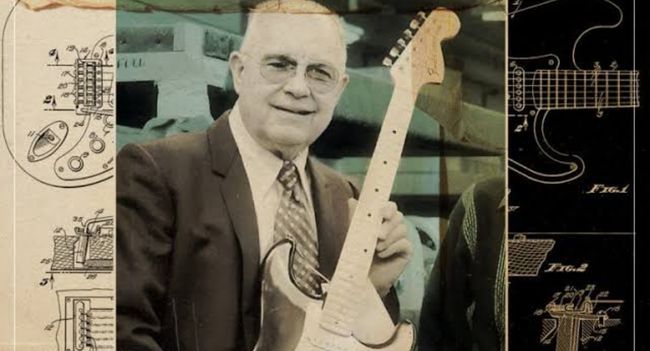
Few guitars have become as inseparable from rock music as the Fender Stratocaster.
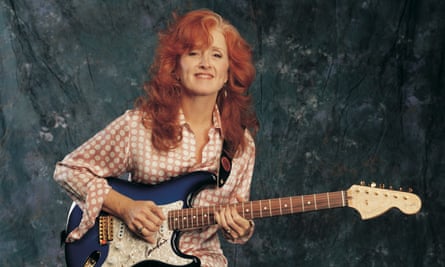
With its three single-coil pickups, distinctive shape and unmistakable bright, glassy tone, the Stratocaster eventually became one of the defining instruments of modern rock. Jimi Hendrix, David Gilmour and Stevie Ray Vaughan would all help turn it into an icon.
Even Keith Richards once offered an extraordinary comparison, describing the Stratocaster as the guitar that takes a player into “the big league.”
But the story of the Stratocaster’s impact on rock music may begin with a guitarist whose name is far less familiar today — Pee Wee Crayton.
And somehow, decades later, his music may have found its way into the opening seconds of a Beatles classic.
The Stratocaster’s rocky beginning
The Fender Stratocaster arrived in 1954, at almost exactly the moment rock ‘n’ roll was beginning to transform popular music.
It seemed like perfect timing.
But the guitar didn’t immediately become the sensation Fender had hoped for. The company continued refining the design as musicians gradually discovered what the new instrument could do.
According to the story surrounding the guitar’s earliest days, Leo Fender gave one of the first Stratocasters to Crayton, an influential but now largely overlooked pioneer of rock ‘n’ roll.
Crayton apparently understood the instrument almost immediately.
On April 29, 1954, he reportedly took the distinctive new guitar into a New Orleans recording studio and used it while recording “Do Unto Others.”
That session would later acquire an almost mythical importance.
At the time, however, nobody could have known that the sound coming from Crayton’s guitar would eventually become connected to one of the most famous bands in music history.
Pee Wee Crayton’s mysterious guitar sound
Crayton’s recording was not an immediate success.
“Do Unto Others” was released as a B-side and largely disappeared from public attention. Crayton himself did not become the household name that some of his contemporaries did.
The Stratocaster’s breakthrough would instead come through other players.
One of the most important moments arrived when Buddy Holly and the Crickets appeared on The Ed Sullivan Show in December 1957, performing “That’ll Be the Day” and “Peggy Sue.”
Suddenly, audiences could see and hear the striking new Fender guitar in the hands of young rock stars.
The instrument’s popularity began to grow.
Crayton’s recording, meanwhile, remained largely forgotten.
Until someone noticed something strange.
The riff that sounds remarkably familiar
Fourteen years after Crayton recorded “Do Unto Others,” The Beatles released “Revolution.”
The opening guitar figure immediately invites comparison with Crayton’s earlier recording.
The similarity is striking enough to raise an obvious question: Could John Lennon have heard Crayton’s song?
There is no documented evidence that Lennon or any other Beatle deliberately borrowed the riff.
The Beatles’ archives also contain no known statement from the band acknowledging Crayton or his recording.
So the mystery remains.
But there is one fascinating clue.
Bob Dylan noticed the connection
In 2008, Bob Dylan included Crayton’s obscure recording on a compilation titled The Music That Matters To Me.
Dylan apparently noticed the resemblance between “Do Unto Others” and “Revolution” and offered his own theory in the liner notes.
His suggestion was simple: Lennon may have heard the record at some point, perhaps without even knowing who performed it, and the guitar figure could have remained somewhere in his memory.
It was speculation, not proof. But it offered a tantalising explanation for a musical coincidence that had otherwise remained difficult to explain. The two recordings were separated by roughly 14 years, yet their opening guitar figures are remarkably similar.
From a forgotten B-side to The Beatles
That’s what makes the story of the Stratocaster’s early history so fascinating.
The instrument itself had a slow start. Crayton’s recording failed to become a major hit.
The guitarist who helped introduce the Stratocaster to a recording studio audience became largely forgotten by the mainstream.
Yet his music may have indirectly resurfaced in one of the most recognizable guitar openings of the 1960s.
And the irony is hard to miss. A guitar designed by Leo Fender to become a new kind of electric instrument was handed to a pioneering musician at the very beginning of its life.
That musician recorded a song that almost vanished. Years later, The Beatles released “Revolution,” featuring an opening that sounds remarkably close to Crayton’s earlier work.
Whether Lennon consciously remembered the song, encountered it somewhere without remembering its source, or simply arrived at a similar idea independently may never be known.
The Stratocaster became much bigger than one song
Whatever the truth behind the “Revolution” connection, the Fender Stratocaster eventually became far more than another electric guitar.
It became part of the visual language of rock music.
Hendrix pushed its sound into psychedelic territory. David Gilmour made it central to Pink Floyd’s atmospheric guitar work. Stevie Ray Vaughan turned its tone into a cornerstone of modern blues.
Generations of musicians followed.
But before the famous players, before the stadiums and legendary solos, there was a much quieter beginning.
A new guitar.
A pioneering player.
A forgotten recording.
And a riff that may have travelled farther than anyone could have imagined.
Perhaps the strangest part of the story is that “Do Unto Others” did not need to become a hit to leave a mark.
If Bob Dylan’s theory is correct, its influence may have survived precisely because someone heard it, remembered its sound and carried that fragment into the future.
And if it isn’t correct, the resemblance between Crayton’s recording and The Beatles’ “Revolution” remains one of rock music’s most intriguing coincidences.