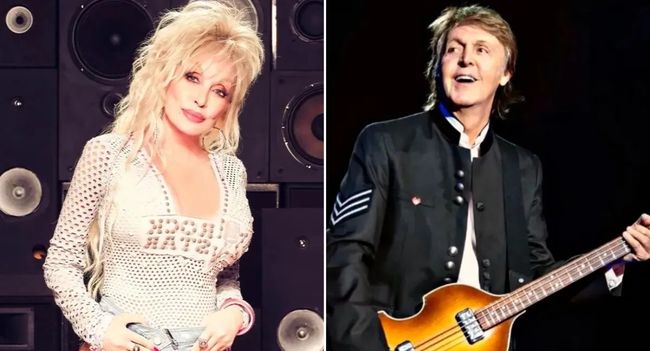
Paul McCartney Remembers Meeting a Young Dolly Parton — And Reveals the Beatles Song She Sang That Became One of His ‘Greatest’ Honors
Paul McCartney has spent more than six decades surrounded by some of music’s most celebrated figures, but his memories of Dolly Parton reached far beyond her success as a performer.
Following Parton’s death, McCartney looked back to their first meeting in Nashville, when Dolly was still approaching one of the biggest turning points of her career.
He remembered someone who was “bubbly and full of life,” a gifted songwriter and singer whose generosity became just as important to her legacy as her music.
Decades later, their careers crossed again in a way McCartney considered an extraordinary privilege: Dolly recorded one of the Beatles’ most famous songs.
“There was no greater honour for me,” he said.
McCartney first met Dolly as her solo career was taking off
McCartney shared several photographs while reflecting on his friendship with Parton.
His memories stretched back to Nashville and the Grand Ole Opry, where Dolly had been performing with country star Porter Wagoner.
At the time, she was preparing to establish herself independently.
“I first met her in Nashville at the Grand Ole Opry where she had been playing with the country star Porter Wagoner and was about to start her solo career,” McCartney recalled.
The meeting came before Dolly had fully become the international figure the world would eventually know.
Yet her personality was already impossible for him to forget.
“She was so bubbly and full of life,” McCartney wrote.
That memory made accepting the news of her death particularly difficult.
‘It is hard to imagine living in a world without Dolly’

McCartney has witnessed enormous changes in popular music throughout his lifetime.
As a member of the Beatles and later through his solo career and Wings, he became one of the artists who helped shape modern popular culture.
Still, he viewed Dolly as irreplaceable.
“Her songwriting, her singing and her philanthropy were unrivaled in the world of country music,” he wrote.
Then came one of the most poignant lines of his tribute:
“It is hard to imagine living in a world without Dolly.”
His words reflected something echoed in tributes from across entertainment following Parton’s passing.
Dolly’s influence was never limited to the records she sold or the songs she wrote.
Her charitable work and reputation for making people feel valued became inseparable from the public figure she created.
Even landmarks joined the tributes following her death, with the Empire State Building illuminated in pink in her honor.
Dolly eventually sang one of McCartney’s most famous songs
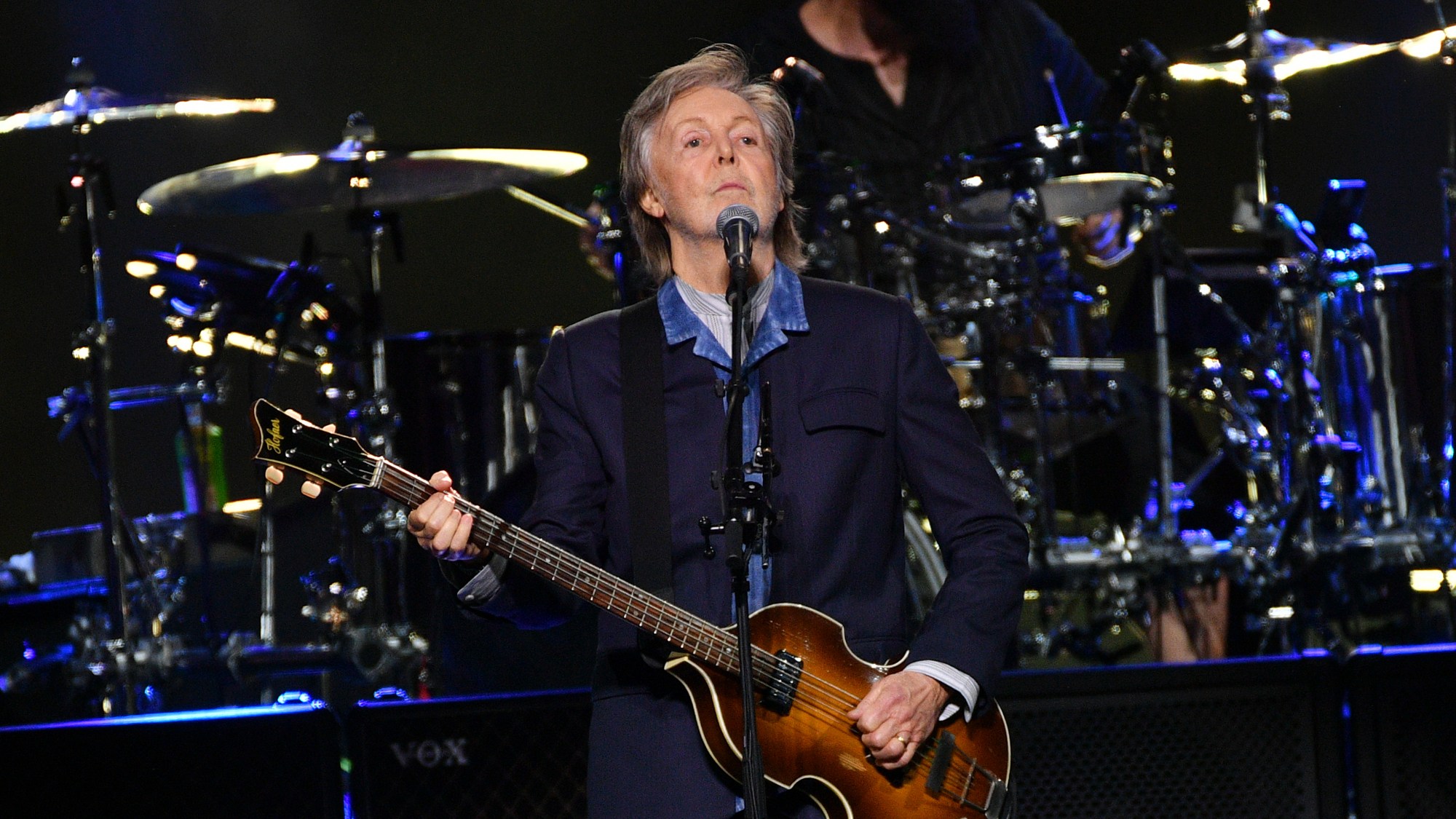
There was another connection between the two music legends that McCartney particularly treasured.
Dolly recorded “Let It Be.”
For McCartney, hearing her take on a song so closely associated with the Beatles carried enormous meaning.
“There was no greater honour for me than to have her sing my song Let It Be,” he wrote.
McCartney contributed to Dolly’s recording, although he modestly described his involvement as small.
“Even though I only made a small contribution to it, I am so honoured that she did it,” he said.
The collaboration brought together two artists whose careers had taken remarkably different paths but whose songs became embedded in popular culture across generations.
For McCartney, it was also another reason to feel grateful that he had known her personally.
“I am so proud to have known her and admire her unique talents,” he wrote.
Their ‘Let It Be’ collaboration became a remarkable meeting of music legends

Dolly recorded “Let It Be” for her rock project Rockstar, bringing several legendary musicians into her interpretation of the Beatles classic.
McCartney contributed vocals and piano, while his former Beatles bandmate Ringo Starr played drums.
Peter Frampton added guitar and Mick Fleetwood contributed percussion.
It created an extraordinary lineup around a song first made famous by the Beatles.
For Dolly, recording the track was another example of her willingness to cross musical boundaries even after decades at the center of country music.
For McCartney, the significance was more personal.
A woman he had first encountered when she was preparing to establish herself as a solo country artist was now interpreting one of the defining songs of his own career.
McCartney’s tribute focused on the woman behind the fame
Dolly accumulated countless accolades during her lifetime, but McCartney did not build his farewell around awards or statistics.
He remembered her personality.
Her songwriting.
Her voice.
Her philanthropy.
And the excitement of meeting someone whose energy stayed with him decades later.
It was the same quality many of Dolly’s friends and collaborators emphasized after her passing: she possessed the ability to make enormous fame feel surprisingly human.
Her success never became the only thing people remembered about meeting her.
That distinction helped explain why the reaction to her death extended so far beyond country music.
‘You were the best’
McCartney eventually closed his tribute without an elaborate farewell.
Instead, he reduced decades of admiration to a few simple words.
“You were the best.”
Coming from an artist whose own career helped transform popular music, the statement carried particular weight.
McCartney had encountered countless famous performers during his life.
Dolly Parton was still someone he considered unique.
He first remembered her as the young Nashville performer who was “bubbly and full of life.”
Decades later, he had the experience of hearing that unmistakable voice sing “Let It Be.”
And when the time came to say goodbye, McCartney’s greatest praise was reserved not merely for Dolly Parton the country superstar, but for the woman he had been fortunate enough to know.