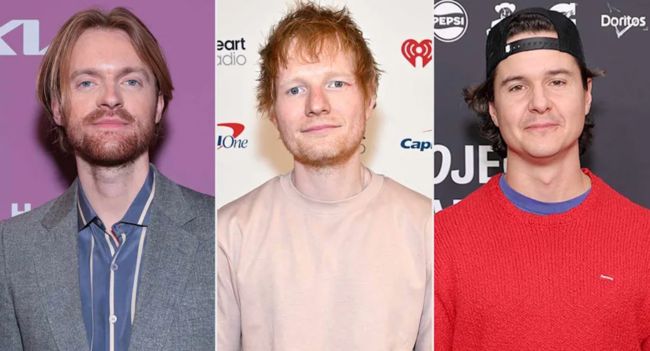
Ed Sheeran’s Tour Loses Every Opening Act After Macklemore Removal Sparks Dramatic Walkout
Xem bài viết này trên Instagram
Ed Sheeran’s Loop Tour has been hit by a dramatic wave of departures, with every scheduled opening act — along with Irish band Beoga, who perform as part of his live backing band — withdrawing after Macklemore was removed from the remaining US dates.
Finneas, Lukas Graham, Aaron Rowe and Beoga announced their decisions on Tuesday, September 15, each linking their withdrawal to support for Palestinians and objections to Macklemore’s removal.
The exits came just one day after Macklemore publicly addressed being dropped from the tour following his pro-Palestinian comments onstage.
Sheeran, meanwhile, has insisted that removing his longtime friend was not his decision, saying promoters acted after several venues threatened not to host the concerts if Macklemore remained on the bill.
The result has turned a dispute over one support act into a major shake-up for the final stretch of one of Sheeran’s biggest tours.
Finneas Says ‘Artists Must Not Be Silenced’

Finneas was among those to announce he would no longer perform his scheduled dates.
“Artists must not be silenced when they speak up for the oppressed,” the 29-year-old wrote in a statement.
He added that he had decided to withdraw from his upcoming appearances with Sheeran and declared his support for Palestine and its people.
His decision was quickly followed by similar announcements from the other supporting acts.
Irish singer Aaron Rowe acknowledged that leaving was particularly difficult because of his personal relationship with Sheeran.
Rowe said he did not “take the decision lightly,” describing Sheeran as a friend who had changed his life.
But he said he could not continue as normal given his views on the war in Gaza.
Aaron Rowe Says He Had To Be ‘True To Myself’

Rowe connected his decision to Irish history, referring to famine, occupation and colonization.
He said he could not accept powerful figures silencing people who speak out over Palestinian suffering and argued that remaining on the tour would leave him unable to respect himself.
“I need to be true to myself and my ancestors who resisted colonization, and fought for a freedom that I enjoy today in Ireland,” Rowe wrote.
He concluded his statement: “Free Palestine.”
Rowe’s exit was particularly striking because he made clear that his gratitude and friendship toward Sheeran had not disappeared.
The disagreement was instead over whether he felt able to continue performing after what had happened to Macklemore.
Beoga Pull Out Despite Decade-Long Friendship With Ed

Beoga also withdrew.
The Irish folk group has known Sheeran for more than a decade and has performed as part of his live band.
In its statement, Beoga acknowledged the enormous opportunity that performing inside stadiums had provided.
“We are a traditional Irish band who never saw ourselves playing stadiums of that size and that opportunity is not lost on us,” the group wrote.
They also stressed that their friendship with Sheeran would continue.
But the band said it would not perform at venues that, in its view, silence people advocating for a free Palestine.
Beoga described Macklemore’s removal as “the silencing of Macklemore by Zionist lobbies” and expressed support for his message.
“We believe in dialogue as a means of progressing the plight of the Palestinian people,” the group added.
Lukas Graham Joins The Walkout
:max_bytes(150000):strip_icc():focal(749x0:751x2)/Macklemore-performs-live-on-stage-during-the-5th-Lollapalooza-Paris-Festival-091426-1ceea3f030964298b722ef9ae71bb645.jpg)
Danish band Lukas Graham also announced it would leave the tour.
Frontman Lukas Forchhammer reflected on growing up in Christiania, Denmark, where he said expressing opinions was part of everyday life.
“Having more money didn’t make your opinion worth more than anyone else’s,” he wrote.
“Money doesn’t give you the right to own the conversation.”
Forchhammer said nobody’s wealth should determine who is allowed to speak or which suffering people are permitted to acknowledge.
“This is a difficult decision, but it’s one I need to stand by,” he concluded.
With that announcement, Sheeran had lost all of the scheduled opening acts referenced in reports on the North American leg.
The Fallout Started With Macklemore
:max_bytes(150000):strip_icc():focal(999x0:1001x2)/ed-sheeran-c4e59bbf7e324b5197d3fe172a82f134.jpg)
The controversy erupted after Macklemore used his performances on Sheeran’s tour to express support for Palestinians.
During a September 4 performance at MetLife Stadium in New Jersey, Macklemore said “Free Palestine” and incorporated pro-Palestinian messaging into his set.
Macklemore later said he and Sheeran had held a series of “difficult conversations” about the fallout.
He characterized them as discussions rooted in friendship and respect but ending in “fundamental disagreement.”
Macklemore also alleged that Sheeran told him about a conversation with Robert Kraft, whose Kraft Group owns Gillette Stadium in Foxborough, Massachusetts.
According to Macklemore, Sheeran said Kraft would not permit him to perform at the stadium.
Macklemore further claimed Kraft had rallied other stadium owners, resulting in an ultimatum that threatened Sheeran’s remaining concerts if the rapper stayed on the lineup.
Sheeran confirmed that he spoke with Kraft and other venues but gave a different account of who ultimately made the decision.
Ed Sheeran Says Removing Macklemore ‘Was Not Mine’
Sheeran issued a lengthy statement explaining his position.
“Macklemore coming off tour was the promoter’s decision, it was not mine,” he said.
“Macklemore’s contract for the tour was with the promoter, not me.”
Sheeran said venues began raising objections after the New Jersey concerts and warned that shows could be pulled if Macklemore continued performing.
He said he spent the following week attempting to find a compromise.
“I spoke with the venues at length all week to try and build a bridge,” Sheeran said, adding that his discussions included Kraft, promoters and activists representing different perspectives.
Ultimately, he said, the decision by venues and promoters was final.
Sheeran Defends His Approach To Politics
Sheeran also addressed why audiences generally don’t hear political messages from him during his concerts.
He described the Israel-Palestine conflict as a human tragedy and said the suffering on both sides was appalling.
But he argued that his professional platform has a different purpose.
“My audience includes young people, often children, of all backgrounds,” he said. “Those who come to my shows do not expect a political forum.”
Sheeran said he respected Macklemore’s determination to publicly advocate for what he believes.
However, he argued that artists could pursue peace in different ways, saying he wanted his own concerts to offer “safety and sanctuary” while keeping conversations open.
“I have spent this week trying to build bridges, to find a solution and unfortunately, was unable to do so,” he said.
Robert Kraft Defends Gillette Stadium’s Decision
Kraft also publicly defended the decision concerning Gillette Stadium.
He said the venue would not “provide a platform for hate speech” and argued that Macklemore’s recent actions, stage material and what Kraft described as a history of antisemitic rhetoric and imagery had crossed that line.
Kraft stressed that his position was not intended to dismiss Palestinian suffering or prevent advocacy for Palestinian civilians.
He argued instead that supporting Palestinians and opposing Hamas and antisemitism should not be mutually exclusive.
Macklemore has rejected the suggestion that his advocacy is antisemitic and has maintained a distinction between criticism of Israel and hostility toward Jewish people.
Kraft said he would be willing to meet Macklemore to discuss the dispute.
Macklemore Says Friendship With Ed Is Not Over
Despite the disagreement, Macklemore made clear that he did not consider the episode the end of his friendship with Sheeran.
His statement was not framed as a personal attack on the British singer.
Instead, he said he felt an obligation to explain what had happened and continue speaking about Palestinians.
“I didn’t need 10 shows from Ed. I needed 2,” Macklemore wrote.
He said those appearances represented opportunities to stand before crowds of around 90,000 people and deliver his “Free Palestine” message.
And he argued that losing his place on the tour was insignificant compared with the suffering he was trying to highlight.
For Macklemore, even being removed had accomplished something if it returned public attention to Palestinians.
One Departure Became A Tour-Wide Revolt
The consequences extended far beyond Macklemore.
Within roughly a day of his public statement, Sheeran’s remaining support lineup began disappearing.
Finneas was out.
Aaron Rowe withdrew.
Lukas Graham followed.
Then Beoga, friends and collaborators of Sheeran for more than a decade, confirmed they would not continue either.
All stressed their own reasons for leaving, while several also made clear that their decisions did not amount to personal attacks on Sheeran.
That distinction leaves the Loop Tour in an unusual position.
Sheeran says he tried to prevent Macklemore’s removal and refuses responsibility for the promoter’s final decision.
Macklemore says their friendship can survive despite their disagreement.
Several of Sheeran’s supporting musicians have similarly expressed affection or respect for him.
Yet they have still walked away.
And with the Loop Tour scheduled to continue through its final show in Tampa on November 7, a dispute that started with two words from one artist — “Free Palestine” — has now reshaped the lineup around Sheeran’s entire tour.