_updates.jpg)
Prince George’s New Life at Eton Comes With a Strict Rule on Smartphones
For Prince George, starting at Eton College means stepping into a very different kind of teenage life. The 13-year-old future king has left the familiar routine of home and begun boarding at one of Britain’s best-known schools, where traditional rules extend to something as ordinary as a mobile phone.
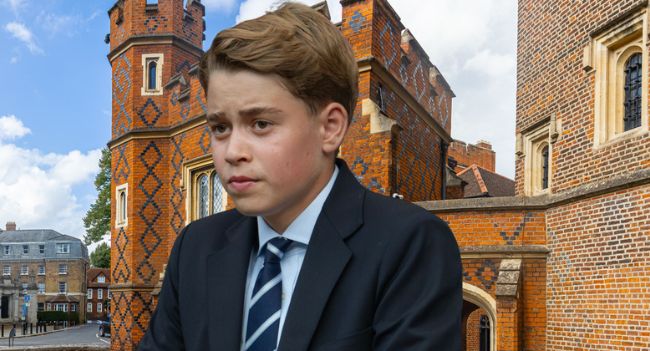
George began his new chapter at Eton on September 8, 2026, arriving with his parents, Prince William and Catherine, Princess of Wales. He is now living as a boarder at the Berkshire school, following in the footsteps of his father and uncle, Prince Harry.
One of the biggest adjustments involves technology. New pupils at Eton are not permitted to use smartphones. Instead, they can have basic “brick” phones that allow calls and text messages but do not provide internet access.
The policy is not entirely new. Eton introduced the approach for Year 9 pupils in 2024, providing basic phones for use outside the school day alongside school-issued iPads for academic work. The school said at the time that it had reviewed its mobile-phone and device policy to balance the benefits of technology with the challenges it can create in education.
For George, the restriction also fits closely with the approach his parents have taken at home.
Why Eton is limiting smartphone access
The decision comes as concerns about children’s screen use, gaming and unrestricted internet access continue to influence school policies.
Melanie Sanderson, managing editor of The Good Schools Guide, said the phone policy had been welcomed by parents, noting that pupils are kept so busy with school life that they have less opportunity to spend their time scrolling through social media. Her comments were reported in connection with George’s arrival at Eton.
Eton’s basic phones provide a way for pupils to stay in contact without giving them unrestricted access to the internet. That distinction is particularly relevant to George, whose parents have previously been open about their cautious approach to smartphones.
Prince William discussed the family’s rules during an appearance on Eugene Levy’s The Reluctant Traveler in 2025. Speaking about Prince George, Princess Charlotte and Prince Louis, he said: “None of our children have any phones, which we’re very strict about.”
William has also explained that his concern is particularly focused on unrestricted internet access. He has previously indicated that a basic phone capable of messaging could be acceptable when access is limited, while children having full internet access creates a different set of concerns.
A further restriction on school devices
The rules around technology do not stop with smartphones.
According to reports cited in the original account, pupils are also restricted from using their school-issued iPads after 9 p.m. The additional limit comes amid concerns raised by parents about children’s gaming and wider screen habits.
That means George’s technology use at Eton is structured from both sides: he does not have access to a conventional smartphone, while the device supplied for his schoolwork is subject to limits as well.
The arrangement represents a considerable contrast with the way many teenagers use their phones. At Eton, the emphasis is instead on keeping digital devices focused on communication and education while limiting their role in pupils’ free time.

George begins life as an Eton boarder
The technology rules are only one part of the adjustment facing George.
Eton is a full boarding school, and the young royal now has to manage a greater degree of independence away from his family. The school has 25 boarding houses, each with residential staff, and pupils are provided with their own rooms.
For George, that means organizing much of his daily routine on a large campus rather than returning home at the end of each school day.
The change is significant for a boy who has spent his earlier school years at Lambrook. His arrival at Eton marks the beginning of his secondary education and also places him within an institution closely associated with his own family.
Prince William attended Eton from 1995 to 2000, while Prince Harry also studied there. Eton’s own records list a long line of royal alumni, including Prince William of Gloucester, Prince Richard, Duke of Gloucester, Prince Henry, Duke of Gloucester, Prince William and Prince Harry.

The traditional Eton uniform
George’s new routine also comes with one of the school’s most recognizable traditions: its distinctive uniform.
On his first day, he was photographed in Eton’s traditional dress, featuring a black tailcoat, waistcoat, pinstriped trousers and a stiff white collar. The formal outfit has long been one of the visual symbols of life at the school.
Beyond the uniform, pupils are expected to navigate the school’s distinctive customs and routines while becoming increasingly responsible for their own schedules and schoolwork.
For George, this independence is taking place under an unusually high level of public attention. Although he is second in line to the British throne, his day-to-day life at Eton is structured around the same boarding-school environment as his fellow pupils.
The school has also historically been part of the education of prominent public figures. Its royal connections are particularly longstanding, with Eton’s records documenting generations of royal pupils.
A new chapter close to Windsor
Eton’s location also keeps George relatively close to his family. The school is in Berkshire, near Windsor, allowing the young royal to live independently while remaining within the wider area associated with the Wales family.
There has also been speculation that King Charles could continue a family tradition of spending time with George over afternoon tea at Windsor Castle. Reports have linked the possibility to an earlier routine involving Queen Elizabeth II and a young Prince William, although the idea of Charles reviving that tradition has been presented as a possibility rather than a confirmed arrangement.
For now, George’s first weeks at Eton are about settling into boarding-school life, learning the routines and traditions of the institution, and adapting to greater independence.
Among those adjustments, the absence of a smartphone may seem like a small detail. But for a teenager beginning life at one of Britain’s most traditional schools, it reflects a much broader approach to how technology fits into everyday life.
And in George’s case, the rule has an added significance: it closely mirrors the cautious approach Prince William and Princess Kate have already taken toward smartphones within their own family.