Prince Harry Reveals He ‘Slipped Into Depression’ After Moving To Canada With Meghan Markle
Prince Harry has opened up about a difficult period in his mental health following his move to Canada with Meghan Markle and their young son, Prince Archie, in late 2019. The Duke of Sussex says he experienced an unexpected emotional crash after leaving behind an environment dominated by stress and adrenaline, eventually slipping into depression for around two weeks.
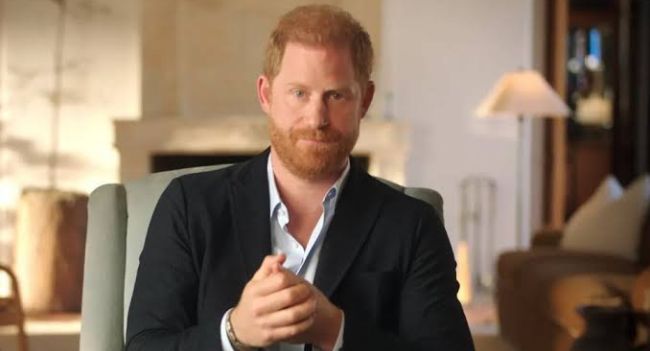
The 42-year-old shared the personal account in a new episode of MasterClass, released on Thursday, October 8. The programme explores how grief affects the brain and body, with Harry reflecting on his own experiences alongside neuroscientist Dr Mary-Frances O’Connor.

‘I Felt Like I Couldn’t Function Without Adrenaline’
Harry recalled that his mental state changed within just a few days of arriving in Canada. After spending years in what he described as a stressful environment, he found himself struggling when that constant pressure suddenly disappeared.
“Being in Canada, away from the stressful environment where presumably my body was just pumped full of adrenaline, within two or three days, I experienced this adrenaline crash, something that I’d never experienced before,” he explained.
The Duke said the change left him feeling unable to manage ordinary activities around the house. He began to recognise how much he had relied on stress and adrenaline to keep himself going.
“It was as if I needed stress in order to get the adrenaline to make my brain function because I became useless around the house,” Harry said.
He added: “I actually slipped into depression for about two weeks, and I felt like I couldn’t function without adrenaline.”
The episode, filmed in California earlier this summer, also examines the longer-term effects of grief and the loss Harry experienced as a child.

Years Of Emotional Numbness After Princess Diana’s Death
Harry was just 12 when his mother, Diana, Princess of Wales, died in a car crash in Paris in 1997. In the programme, he reflected on how he spent many years coping with that loss without fully recognising its emotional impact.
“For 15, 20 years, when I was being asked, ‘Are you okay?’ My response was, ‘I’m fine.’ It was numbness, emotional shutdown. And without knowing it, adrenaline was pushing me, was driving me,” he said.
Looking back, Harry believes that constant drive became a significant force in his life, including his decision to join the military at the age of 20.
“It was the driving force of what led me to join the military at the age of 20. It was the perfect distraction. I couldn’t really think about much else apart from the task at hand,” he explained.
Military life gave him a clear focus, allowing him to concentrate on immediate responsibilities rather than confront painful emotions. However, he later began to understand that the experiences he encountered during service had also brought earlier trauma to the surface.

Panic Attacks Led Harry To Recognise Something Was Wrong
After returning from his second tour of Afghanistan in 2013, Harry began to notice that certain experiences were triggering deeper emotional difficulties.
“The things that I saw, the things I experienced, appeared to be a trigger for other traumas that had stored themselves within me,” he recalled.
His symptoms eventually became difficult to ignore. Even getting dressed for work could provoke a frightening physical response, while everyday journeys sometimes left him experiencing panic attacks.
“I started to realise that I probably had become seriously depleted when just putting a simple dress shirt on — the tightening of the collar — literally felt like I was suffocating, and I would be experiencing panic attacks just in the car on the way to work,” Harry said.
Those experiences prompted him to question what was happening and recognise that the problem went beyond the immediate pressures of his daily life.
“And that’s when I realised, ‘Okay, there’s something bigger, there’s something else that you need to look into here,’” he added.
His latest reflections offer a more personal account of how grief, emotional suppression and prolonged stress affected him over many years, before he began to understand the connection between his experiences.
The Move To Canada That Preceded The Sussexes’ Royal Exit
Harry’s account also sheds light on the period surrounding one of the most significant turning points in his and Meghan’s lives.
At the end of 2019, the couple took an extended break in Canada with their son, Archie. Instead of returning to the UK for Archie’s first Christmas with the Royal Family at Sandringham, the family spent the festive period abroad.
In early January 2020, Harry and Meghan briefly returned to Britain without Archie and visited the Canadian Embassy in London.
On January 8, they announced that they intended to step back from their senior royal duties and work towards becoming financially independent, while hoping to divide their time between the UK and North America.
The announcement prompted a series of discussions with Queen Elizabeth II, then-Prince Charles and Prince William at what became known as the Sandringham Summit.
The resulting agreement ruled out the semi-in, semi-out arrangement the couple had hoped to pursue. Harry and Meghan subsequently moved to the United States permanently.
After settling in Montecito, California, their family grew again when Princess Lilibet Diana was born in Santa Barbara on June 4, 2021.
Harry’s account of his time in Canada provides a glimpse into the personal challenges he was facing during the period leading up to the Sussexes’ departure from royal life. His reflections also underline how the effects of grief and trauma can emerge years after the original loss, sometimes in ways that are difficult to recognise at first.