
Deciphering the Drama: What Really Happened with Lewis Hamilton’s Ferrari Pit Call in Singapore?
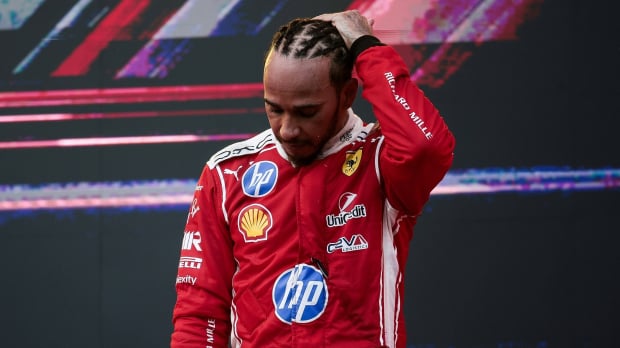
MARINA BAY — Lewis Hamilton’s slide from podium contention to a distant sixth place at the Singapore Grand Prix has triggered fierce post-race debate across the Formula 1 paddock. While the seven-time World Champion promptly took the blame over team radio on his cooldown lap—apologizing for a strategy blunder that cost Ferrari valuable championship points—a seven-minute dead period on his broadcast audio feed sparked wild internet theories accusing Ferrari of covering up internal communications.
Sorting fact from speculation reveals that technical gremlins and high-speed decision-making collided under the Marina Bay floodlights.
The Crucial Turning Point: The Virtual Safety Car
With roughly 25 laps remaining, a Virtual Safety Car (VSC) was deployed, offering the ideal window for drivers to make a final pit stop for fresh soft tires while losing minimal time compared to green-flag running.
Ferrari called both drivers in to execute a double-stack stop. While Charles Leclerc dove into the pit lane, Hamilton remained on track. The decision backfired in the closing twelve laps: Hamilton’s aging tires fell off a performance cliff, costing him over two seconds per lap and allowing Kimi Antonelli, Lando Norris, and Oscar Piastri to sweep past.
On his cooldown lap, Hamilton acknowledged the error directly:
“Sorry boys, I let you down today with that strategy. My call, and I lost us valuable points. I’ll try and make up for it in the next one.”
The ‘Blackout’ and the Fan Conspiracies

The controversy erupted when Ferrari Team Principal Fred Vasseur told post-race broadcasters that the pit wall had issued a clear instruction to box:
“We called two cars: ‘Guys, you pit behind the VSC.’ One of my guys said, ‘No, I prefer to stay on track.’ He said, ‘I missed the pit entry.’ Don’t blame the team.”
Viewers monitoring Hamilton’s dedicated onboard feed and radio audio quickly pushed back on social media, claiming no call to pit was audible on the live broadcast, leading some to allege Vasseur was deflecting blame.
However, the broadcast silence was the result of a documented transmission glitch:

-
The Dead Period: A seven-minute dead period affected Hamilton’s car-to-broadcast telemetry and audio around the VSC period. Notably, the routine call announcing the end of the VSC—a standard automated pit message—was also completely absent from the international feed.
-
Urban Interference: Radio dropouts are frequent around street circuits like Marina Bay, where towering skyscrapers, concrete walls, and subterranean power infrastructure create dead zones for external broadcast relays.
Hamilton’s Confirmation: Two Critical Decisions
Because Hamilton felt unwell immediately following the punishing heat of the race and was sent for an FIA medical checkup, he was unable to clarify the radio situation in the media pen.
However, statements issued later Sunday evening via Ferrari and Hamilton’s personal media channels corroborated Vasseur’s account:
“Under VSC, the team called me in but I missed the [pit] entry,” Hamilton confirmed. “After that, I decided to stay out and try to hold track position to the end, but in the final laps I had massive problems with tyre wear.”
Hamilton also confirmed he owned two distinct strategy decisions that unraveled his race: electing to start on the underperforming medium compound tires, and gambling to stay out after failing to make pit entry under the VSC.
Whether Hamilton’s missed entry was an inadvertent navigation error on an evasive in-lap or a split-second driver gamble to preserve track position remains the only open question—one Hamilton is expected to address when the paddock reconvenes at Circuit of the Americas in Austin.