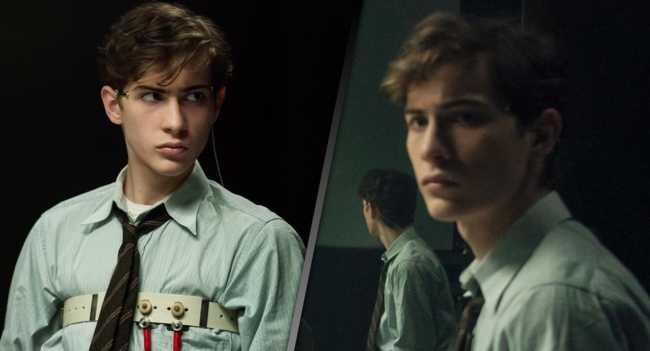
Netflix’s Unabomber Trailer Reveals Jacob Tremblay’s Transformation Into Ted Kaczynski
Jacob Tremblay takes on one of the most disturbing roles of his career in Netflix’s Unabomber, a new thriller inspired by the life of Ted Kaczynski. The first trailer offers a look at Tremblay as the young mathematical prodigy who entered Harvard at 16 and eventually became known as the Unabomber, while also introducing the controversial psychological experiments that form a central part of the film.
Directed by Janus Metz Pedersen, Unabomber takes a different approach from previous dramatizations of Kaczynski’s life. Rather than focusing solely on his years as a fugitive, the film moves between his early days at Harvard and the FBI investigation that eventually led to his capture. Netflix describes the movie as an exploration of Kaczynski’s transformation from a gifted student into the infamous bomber.
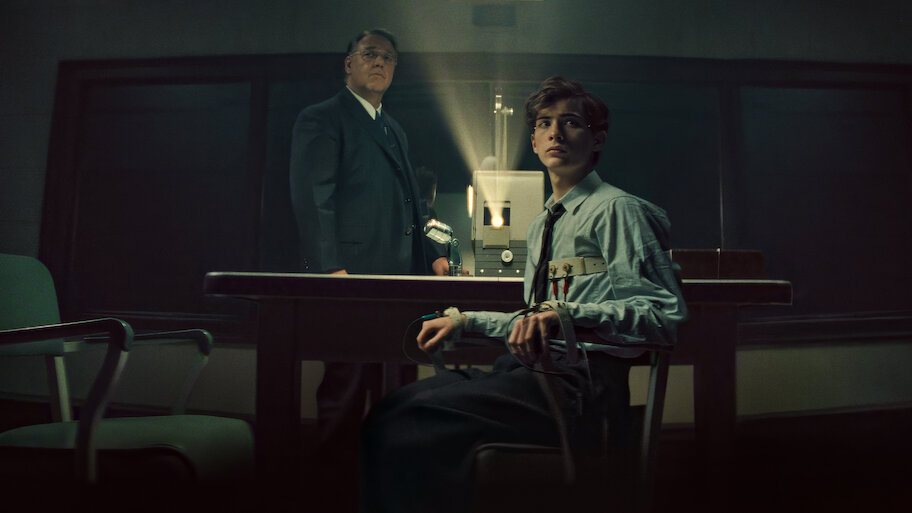
Unabomber Tells Kaczynski’s Story Across Two Timelines
The trailer begins during the FBI’s pursuit of Kaczynski before shifting back to 1958, when he was a young Harvard student. The two timelines gradually converge, showing both the making of the Unabomber and the investigation that ultimately brought him down.
Tremblay plays Kaczynski during his formative years. At just 16, he was already a mathematical prodigy attending Harvard. The film follows him as he struggles to connect with those around him and begins participating in a controversial psychological study led by Harvard professor Henry Murray, played by Russell Crowe.
Annabelle Wallis plays Christiana Morgan, Murray’s academic partner and co-director of the Harvard Psychological Clinic. Shailene Woodley, meanwhile, portrays FBI agent Joanne Miller, who leads the search for Kaczynski decades later. The cast also includes Alexander Ludwig, Steven Ogg and Marc Menchaca.
The result is a story that moves between Kaczynski’s increasingly troubled college years and the later investigation into the bomber responsible for a years-long campaign of mail bombings.
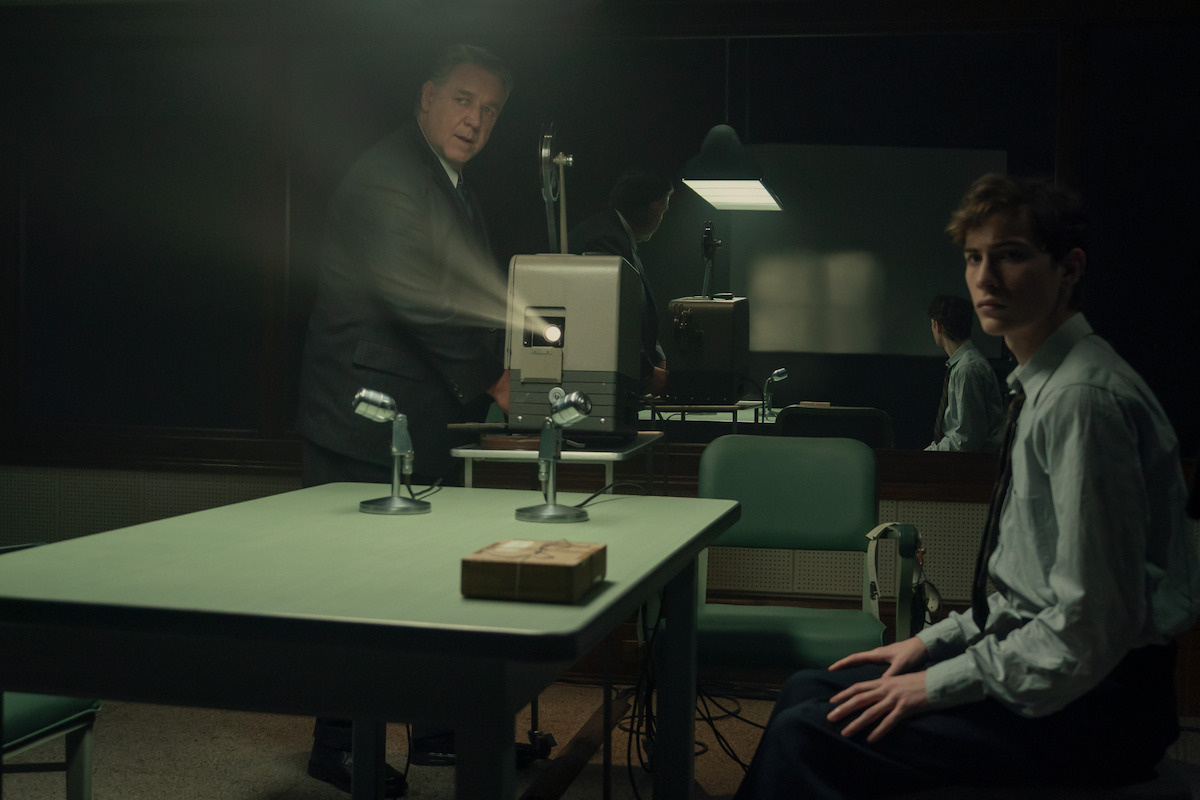
The Harvard Experiments Are at the Center of the Story
The most distinctive element of Unabomber is its attention to Kaczynski’s time at Harvard and his involvement in Murray’s psychological experiments.
According to the film’s premise, what initially appears to be an intellectual exercise becomes increasingly disturbing. Kaczynski is subjected to psychologically demeaning debates and experiments designed to observe his reactions under extreme stress. The experience becomes an important part of the film’s examination of the person he would eventually become.
The real-life history surrounding Murray and the experiments is complicated. Murray was a controversial figure, and allegations have long surrounded the possibility of connections between his work and MKUltra funding. The Washington Post has reported on the possibility of such a connection, although the exact relationship remains uncertain.
Kaczynski himself also had complicated feelings about the experiments. Reports indicate that he did not necessarily believe they had affected him to the extent others have suggested, while he nevertheless developed a deep distrust of mind-control techniques.
That uncertainty gives the movie a difficult question to explore: how much, if at all, did Kaczynski’s experiences at Harvard contribute to the person he eventually became?
The film does not have a definitive answer to that question, and the historical record cannot provide one either.

Jacob Tremblay Takes on a Very Different Role
For Tremblay, the role represents a significant departure from the kind of performances that first made him famous. The actor rose to prominence as a child with films including Room and Wonder, and Unabomber asks him to portray a deeply troubled young man whose life eventually takes a violent turn.
Director Janus Metz saw Tremblay as a natural fit for the role because of the actor’s ability to convey both vulnerability and intelligence. Metz has said that he wanted the young Kaczynski to feel like a real person rather than a caricature.
Tremblay has similarly emphasized the importance of portraying Kaczynski as a human being rather than simply recreating the public image associated with the Unabomber. He drew on his own experiences of being young while working in environments dominated by older people, particularly the feeling of not quite fitting in.
His transformation is particularly striking because the film asks audiences to meet Kaczynski long before the image most people associate with him: the isolated fugitive responsible for a nearly two-decade bombing campaign.

Russell Crowe Plays Henry Murray
Russell Crowe takes on the role of Henry Murray, the Harvard psychologist whose relationship with Kaczynski becomes one of the film’s central dramatic threads.
The trailer presents Murray as someone who recognizes something unusual in the young student and encourages him to participate in his experiments. What begins as an apparent intellectual relationship gradually becomes far more unsettling.
Crowe’s presence also gives Tremblay an experienced scene partner for some of the film’s most psychologically intense material. The experiments depicted in Unabomber require Kaczynski to endure increasingly stressful encounters while researchers monitor his reactions.
The film uses those scenes to examine the complicated relationship between ambition, isolation and psychological distress without providing a simple explanation for Kaczynski’s later actions.
The FBI Manhunt Brings the Story Into the Present
The second half of the story follows the FBI’s efforts to identify and capture Kaczynski.
Woodley plays Joanne Miller, the agent tasked with pursuing the Unabomber. Although Miller is a fictional character, she serves as the audience’s entry point into the investigation that unfolds decades after Kaczynski’s time at Harvard.
The two timelines allow the movie to place Kaczynski’s early experiences alongside the consequences of his later actions. One follows a gifted teenager struggling to find his place; the other follows an FBI investigation into a man responsible for a lengthy bombing campaign.
That structure also keeps the movie from becoming a conventional fugitive thriller. Instead, Unabomber is interested in the distance between the young man Kaczynski was and the criminal he became.

Unabomber Leaves the Bigger Question Open
The most intriguing aspect of the film is also the most difficult to resolve. Kaczynski’s Harvard experiments are presented as an important part of his history, but the movie cannot establish that they caused his later violence.
That distinction matters. There are documented facts surrounding Kaczynski’s time at Harvard, Murray’s experiments and the eventual Unabomber investigation, but the connection between those events and Kaczynski’s later actions remains a matter of interpretation.
Unabomber appears willing to explore that ambiguity rather than reduce Kaczynski’s life to a single explanation. By placing his Harvard years alongside the FBI manhunt, the film gives viewers two very different versions of the same person and asks them to consider how those pieces fit together.
Whether the approach ultimately proves thoughtful or exploitative will depend on the finished film. For now, the trailer suggests that Netflix is taking a broader look at Kaczynski’s story, with particular attention to a chapter of his life that has received far less screen treatment than his years as the Unabomber.
Unabomber premieres on Netflix on September 25, 2026.