The episode follows Rhaenyra Targaryen’s first full day as Queen of the Seven Kingdoms, and Ryan Condal constructs less of a triumph and more of an autopsy of what power actually looks like from the inside, once the dragons have stopped flying and the enemy has bent the knee. This is not the typical Game of Thrones formula — it is the formula the show should have arrived at years ago, but only hinted at with Daenerys. HoTD has hit the right note in 2026.
The Question Game of Thrones Never Properly Asked

The original Game of Thrones spent eight seasons constructing the most elaborate political thriller in television history. Then, in its final stretch, it lost interest in the very question its premise had always been building toward: what does it actually mean to rule? The show’s endgame was consumed almost entirely by who would sit on the throne, treating the question of rulership as secondary to the succession contest rather than as its inevitable, more demanding sequel.
When Daenerys Targaryen finally sailed for Westeros after six seasons of building power in Essos, the show had approximately nine episodes to dramatize what governing a kingdom she had never actually inhabited would look like. It chose instead to fast-track her into villainy and destruction, burning King’s Landing in the penultimate episode of Season 8.
Dany’s descent was a character turn that critics and viewers alike have spent seven years contesting as inadequately earned. The failure was not in the destination but in the journey itself. Game of Thrones had always gestured at the burden of rule — the Iron Throne literally drew blood from those who sat on it. The visual metaphor was so blunt that it barely needed any explanation.
Dany’s growing understanding that conquering the wheel was easier than breaking it, that the people who wanted her to liberate them frequently did not want the specific liberation she was offering, and that governing Mereen was a diplomatic and logistical nightmare compared to the medical clarity of taking it was present in the middle seasons but ultimately abandoned in service of the final arc.
House of the Dragon Season 3, Episode 3 is arriving at that point now, and it is taking its time with it. When Rhaenyra ascends the throne, her treasury is empty, drained by the Greens before their defeat. The High Septon refuses to anoint her without proof of Aegon’s death, and Aemond and Aegon are both at large. The Triarchy is ransacking villages across the realm, and the dragonseeds she knighted now expect land and coin that she does not have.
When Alicent tells Rhaenyra that being a queen will require her to do things she does not want to do, and Rhaenyra refuses to accept—laying track in a way that Game of Thrones never had the patience to. This track leads to the understanding that the Seven Kingdoms do not reshape themselves around the ruler, but the ruler could break apart trying.
Rhaenyra and Daenerys Have The Same Story, But Only One Does It Right
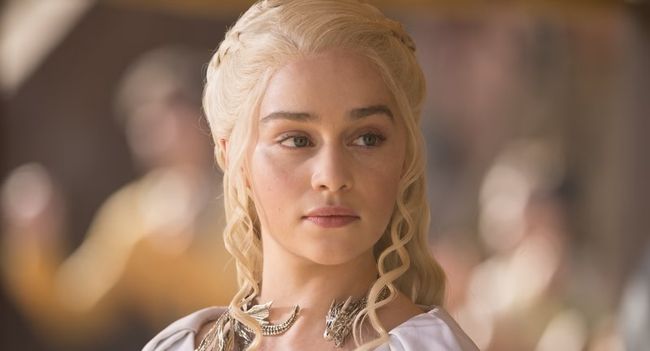
The most striking critical observation about “Rhaenyra Triumphant” is that the episode contains a deliberate visual echo of the Game of Thrones series finale: Rhaenyra seated at the head of a banquet table, facing assembled lords and ladies, her silhouette and silver hair mirroring Dany’s profile in the closing episodes of GoT. It was too similar to be a coincidence.
House of the Dragon is telling the same story Game of Thrones told about Daenerys Targaryen, but it does so with care, granularity, and respect for the audience’s intelligence that the original show abandoned in its final season. Daenerys and Rhaenyra share a lineage that is both literal and thematic.
Rhaenyra is Dany’s direct ancestor, and the Targaryen tendency toward what the show calls “madness” is the biological and dynastic thread connecting their arcs. Both women spent years fighting for a throne they were told was rightfully theirs, and both won it. In the aftermath of the victory, they both discovered that the harder fight had not even yet begun.
The key difference is that Dany’s discovery was compressed into a handful of episodes and resolved through catastrophic violence that the show had neither earned nor adequately prepared the audience for. Rhaenyra’s discovery is being given an entire season, at the very minimum, to breathe.
Rhaenyra’s first day is not dramatic, but involves rats in the Red Keep, a missing treasury, an uncooperative High Septon, a hallucination of her dead son, physical discomfort during a public audience, and a banquet at which she serves grilled rat to the minor lords she has robbed of their hoarded food.
There is little fire and blood, and more administration. The unglamorous, politically treacherous, and endlessly exhausting rigmarole of actually governing, which was what Game of Thrones consistently cut away from in favor of the next dramatic revelation. Ramin Djawadi’s score underscores the deliberateness of Ryan Condal’s approach, with strings that one reviewer described as turning every scene into a warning.
There is a school of critique that holds the Game of Thrones universe to a standard it cannot meet without GRR Martin’s source novels to adapt. The original show’s final seasons demonstrated the limits of what Benioff, Weiss, Condal and their respective writer’s rooms could achieve independently. House of the Dragon was suspected of hitting the same wall, but “Rhaenyra Triumphant” is the most persuasive counterargument to that position the franchise has yet to produce.
This episode knows exactly what it is doing and why it is being done differently from what came before. The HoTD creative team has identified and rectified a real failure in the franchise’s history.