‘Black Doves’ Has a Surprisingly Familiar Problem: Even Its Gay Assassin Can’t Escape the Damsel-in-Distress Trope
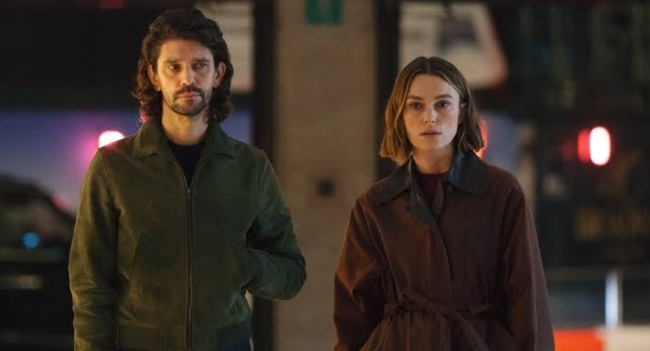
Ben Whishaw’s Sam is a ruthless assassin who can handle just about anything thrown at him. But in Black Doves season 2, there’s one thing he seemingly can’t escape: the familiar spy-thriller habit of putting a character’s love interest in danger just to make the hero suffer.
The Netflix drama has built much of its appeal around the unconventional friendship between spy Helen Webb (Keira Knightley) and Sam, her deadly assassin best friend. Romance and sex also play a significant role in the story. Yet while Black Doves embraces plenty of familiar espionage tropes, it gives one of the genre’s most frustrating habits an unexpected twist: this time, the people being used as emotional leverage are men.
And according to one Cosmopolitan critic, that makes the pattern feel different — even if it doesn’t make it any less frustrating.

Sam’s Love Life Keeps Becoming a Dangerous Liability
The problem first emerged in season 1, when viewers learned that Sam had previously been involved with Michael, played by Omari Douglas.
Sam had concealed his real profession from his boyfriend, maintaining the relationship through a lie about what he did for a living. Eventually, his violent work caught up with them. Michael was exposed to a terrifying situation involving gunfire and the revelation that the man he loved was a cold-blooded killer.
When Michael briefly returns in season 2, the emotional damage from that relationship remains. The betrayal and trauma have clearly taken their toll.
Sam then appears to find a safer arrangement with Jerry, a hotel concierge played by Samuel Barnett. Their connection begins as a casual sexual relationship, seemingly ideal for an assassin who wants to keep his private life separate from his dangerous work.
Jerry likes Sam, but their circumstances make it difficult for the relationship to become something more. They meet at the hotel where Jerry works, avoiding the complications of being seen together elsewhere.
There’s even something genuinely sweet about Jerry’s attempts to get Sam to open up.
But just as Sam begins to let his guard down and asks Jerry on a proper date, their situation takes a devastating turn. The bad guys discover the connection and use Jerry to get to Sam. The concierge is killed, leaving Sam to suffer the loss of someone he was only beginning to let into his life.
It’s a familiar action-drama formula: give the hero something to lose, then take it away to fuel the next chapter of his story.

Is ‘Black Doves’ Repeating a Harmful LGBTQ+ TV Trope?
The obvious question is whether this storyline crosses into homophobic territory, particularly given the history of television shows killing off LGBTQ+ characters to create emotional drama.
The Cosmopolitan writer argues that the situation is more complicated than that. Sam is not a supporting gay character whose sole purpose is to serve someone else’s storyline. He’s one of the show’s central protagonists, with his own motivations, relationships and substantial role in the narrative.
There’s also another important distinction: Black Doves features two other queer characters, Williams (Ella Lily Hyland) and Eleanor (Gabrielle Creevy), female assassins who are openly infatuated with each other.
Nicknamed the “murder lesbians” by another character, the pair have what the writer considers the least toxic romantic relationship in the series.
That makes it harder to argue that the show is simply denying its LGBTQ+ characters agency or treating queer relationships as inherently doomed.

Helen’s Relationships Are Just as Dangerous
There’s another reason the writer sees this as a broader Black Doves habit rather than a problem aimed specifically at gay characters: the show’s straight male characters are hardly treated any better.
Helen’s husband, Wallace (Andrew Buchan), is kept in the dark about her dangerous world under the pretence of protecting him. By the end of season 2, he too becomes a target, putting him in danger to drive Helen’s story forward.
Her extramarital love interest from the first season, Jason (Andrew Koji), also ends up dead.
In other words, the series has a remarkably grim approach to romantic partners, regardless of their gender. Men repeatedly find themselves caught in the crossfire of someone else’s dangerous life.
A Familiar Trope, But With a Different Perspective
The writer isn’t suggesting that killing off male love interests somehow makes the trope acceptable. In fact, the underlying criticism remains the same: romantic partners shouldn’t exist merely as disposable plot devices designed to motivate the main character.
Still, there’s something darkly refreshing about seeing a formula so often associated with female characters applied to men instead.
The article also reflects on the popularity of male-male romance stories such as Heated Rivalry, while questioning some of the commentary surrounding why women enjoy watching those relationships. The writer remains unconvinced by the appeal of the trope itself, but admits that seeing it play out through male characters makes the familiar formula a little less predictable.
Ultimately, Black Doves hasn’t solved the problem. Sam is still left grieving, and his attempts to build a lasting relationship keep ending in tragedy.
But that hasn’t stopped the writer from hoping he eventually finds something the show has so far denied him: a peaceful life and a romance that doesn’t end with another body.
For a character who makes his living killing people, that might be the most difficult mission of all.