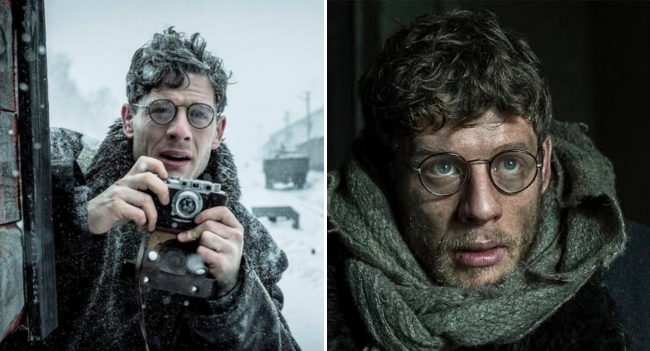
James Norton Reveals The Horrifying History Behind Mr. Jones — And The Unexpected Challenge That Pushed Him Into Uncharted Territory In The Nevers
James Norton was confronted with a disturbing chapter of history he had barely known existed. The more he discovered about the millions of lives lost during Stalin’s rule, the more determined he became to help bring one forgotten journalist’s extraordinary story to the screen.
In a revealing interview with Collider, the British actor opened up about transforming into Welsh journalist Gareth Jones for Mr. Jones, the devastating historical events that shocked him during his research, and the remarkable courage of a man who refused to stay silent in the face of political oppression.
But the conversation also took a very different turn. Norton discussed his experience filming Joss Whedon’s HBO science-fiction series The Nevers, where he stepped into the shoes of Hugo Swann — a flamboyant, unconventional character unlike anything audiences had previously seen him play.
From confronting a forgotten historical atrocity to embracing an outrageous new role, Norton offered a fascinating look at the challenges that make acting worthwhile.
THE HISTORICAL HORROR THAT JAMES NORTON HAD NEVER HEARD ABOUT
Directed by Agnieszka Holland and written by Andrea Chalupa, Mr. Jones tells the story of Gareth Jones, an ambitious young Welsh journalist who travels to Moscow to investigate the propaganda surrounding Hitler and Stalin in the years leading up to World War II.
What begins as an investigation into Soviet politics leads Jones toward something far more horrifying: the Holodomor, the devastating famine in Soviet Ukraine that claimed millions of lives.
His determination to expose the truth would eventually help inspire George Orwell’s celebrated novel Animal Farm.
For Norton, discovering the story was a deeply unsettling experience.
Despite being British, he admitted that he had never heard of Gareth Jones before reading the screenplay. Even more surprising was how little he knew about the Holodomor.
The contrast with his education about the Holocaust was particularly striking. While the Holocaust had received considerable attention, this devastating chapter of Ukrainian history had remained largely unfamiliar to him.
What troubled Norton most was the scale of the suffering and the fact that the Holodomor had not been recognized as a genocide by much of the international community at the time of the interview.
He saw Mr. Jones as an opportunity to bring an overlooked historical tragedy to a much wider audience.
Working alongside acclaimed director Agnieszka Holland made the project even more meaningful. Norton understood that the film was not simply about recreating the past; it was about telling a story that deserved greater recognition and serious discussion.
WHY PLAYING GARETH JONES WAS FAR MORE DIFFICULT THAN IT LOOKED
Taking on the role of a real historical figure presented Norton with a challenge that went well beyond learning his lines.
He explained that portraying someone who actually lived requires an actor to consider both their physical characteristics and their inner personality. In Jones’s case, the differences between the journalist and Norton were immediately obvious.
Contemporaries described Jones as a relatively short, serious Welshman who wore glasses and constantly filled notebooks with his observations.
Norton, meanwhile, stands nearly 6 feet 2 inches tall and isn’t Welsh.
Rather than allowing those differences to intimidate him, he treated them as part of the challenge.
What mattered most was capturing Jones’s defining characteristic: an almost relentless determination to uncover factual truth, regardless of the political forces standing in his way.
That conviction would ultimately cost him his life.
Jones was killed the day before his 30th birthday after refusing to abandon his pursuit of the truth in the face of terrifying totalitarian regimes.
Yet Norton was equally determined not to turn him into a one-dimensional figure defined entirely by tragedy.
Jones was undoubtedly serious about journalism, but he also possessed a playful personality and an appetite for adventure. Finding that balance became essential to Norton’s portrayal.
He wanted audiences to see the man behind the historical significance, not simply another solemn figure from the past.
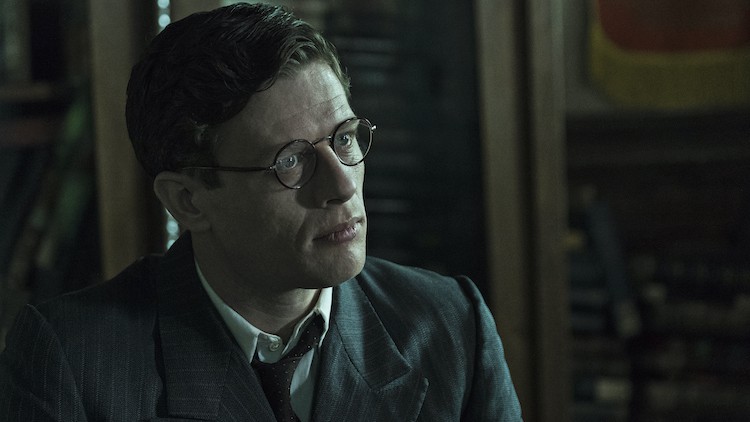
A FAMILY LETTER REVEALED THE SIDE OF JONES THAT HISTORY COULD HAVE MISSED
Norton’s preparation involved considerably more than studying historical documents and mastering a Welsh accent.
He immersed himself in the political climate of the period, researched the Holodomor and examined the circumstances surrounding Jones’s work.
He also worked on the journalist’s physical mannerisms.
But Norton believed there was an important distinction between understanding a character academically and actually bringing that person to life.
Once filming began, he felt an actor had to move beyond the research and concentrate on discovering the individual’s personality and emotional essence. Otherwise, there was a danger of simply performing historical facts instead of portraying a living, breathing human being.
One particularly revealing discovery helped him do exactly that.
It was a letter written by one of Gareth Jones’s great aunts, describing how he behaved when he returned from his travels and spent time with his young nieces and nephews.
The description was a world away from the image of a stern, constantly preoccupied journalist.
Jones would get down on the floor with the children, play with them and bounce around with the energy of a Labrador.
They absolutely adored him.
For Norton, this small family detail was invaluable. It revealed a warm, mischievous and almost childlike side of Jones that could easily have been overlooked beneath the weight of his historical achievements.
It also gave the actor a much clearer understanding of the personality he wanted to bring to the screen.

‘WE NEED AS MANY GARETH JONES AS WE POSSIBLY CAN’
The discussion of Mr. Jones inevitably led to a bigger question: what does it take to stand up for the truth when powerful people want it concealed?
Norton believed Gareth Jones’s story remained particularly relevant in a world where governments and political leaders could manipulate information to protect their own interests.
He admired the journalist’s willingness to put himself in danger to expose the suffering of millions and challenge Stalin’s regime.
For Norton, society needed more people prepared to defend the truth, even when doing so carried serious personal consequences.
He hoped the film might inspire a new generation of journalists to follow Jones’s example. If it encouraged even more people to pursue uncomfortable truths rather than look away, he considered that an extraordinary achievement.
But Jones’s story was not driven by moral conviction alone.
Norton also saw him as a restless, adventurous man who was constantly searching for his next challenge.
After finally getting his findings published in the British and American press and exposing the Soviet Union’s actions, Jones embarked on another journey, this time to Mongolia.
That journey would prove fatal.
Jones was kidnapped by a tribe believed to have been hired by the Soviet Union and killed just one day before his 30th birthday.
Norton did not suggest that Jones had deliberately set out to sacrifice his life. Instead, he saw his fate as the tragic outcome of an extraordinary combination of moral courage, selflessness and an insatiable appetite for adventure.
It was precisely those qualities that made Jones such a compelling figure to portray.
JAMES NORTON’S ADMIRATION FOR JOSS WHEDON WAS IMPOSSIBLE TO MISS
After discussing the emotional weight of Mr. Jones, Norton turned to an entirely different experience: working on Joss Whedon’s HBO science-fiction series The Nevers.
At the time of the June 2020 interview, production had been disrupted by the COVID-19 pandemic.
The cast and crew had completed approximately five episodes, putting them almost exactly halfway through the planned shoot. Another five episodes remained, with filming taking place in London.
Despite the interruption, Norton said the intention was still to complete the series.
There was no confirmed return date yet, but discussions were taking place about the safety measures needed to get production moving again.
What stood out most in his account, however, was his admiration for Whedon.
Norton described the filmmaker as an extraordinary creative mind, praising his energy, curiosity, imagination and humility.
He was particularly impressed by the contrast between Whedon’s considerable creative influence and his understated manner on set.
Despite holding enormous authority over the production, Whedon was, according to Norton, remarkably humble, soft-spoken and self-deprecating.
The actor spoke about him with genuine enthusiasm, making it clear that the opportunity to work with the filmmaker was something he valued enormously.
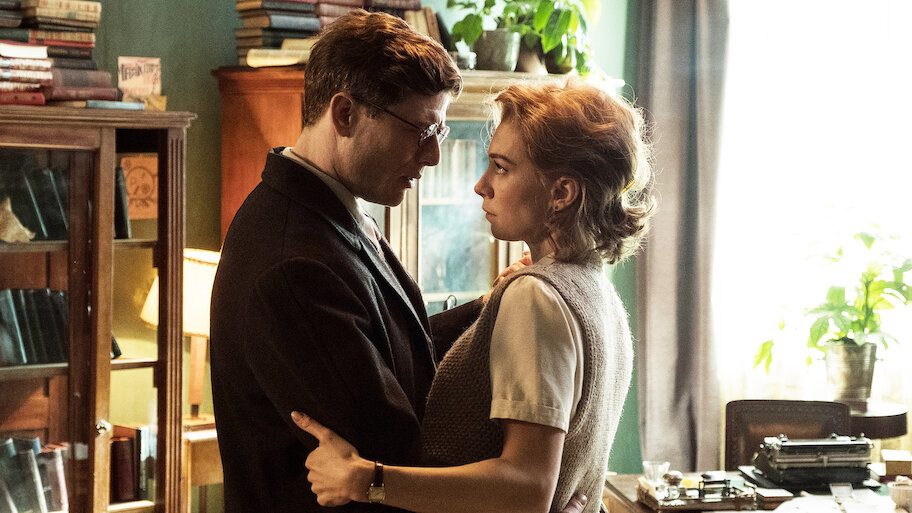
HUGO SWANN WAS NOTHING LIKE ANY CHARACTER NORTON HAD PLAYED BEFORE
Perhaps the most intriguing part of Norton’s experience on The Nevers was his character, Hugo Swann.
Even halfway through production, the actor admitted that he was still discovering exactly who Swann was and how his story would develop.
But one thing was already certain: this was no ordinary character.
Swann was a flamboyant, larger-than-life personality — playful, theatrical and completely unconventional. He was pansexual, obsessed with sex and the owner of a club.
The role gave Norton an opportunity to explore a much more outrageous side of his acting abilities.
Yet what attracted him wasn’t simply the character’s extravagant behaviour.
He was particularly interested in the emotional complexity beneath Swann’s colourful exterior.
Norton believed Whedon’s approach to storytelling would ensure that Swann was more than an exaggerated comic figure. There would be genuine depth behind the flamboyance, giving the actor something substantial to explore.
That combination was exactly what made the role so appealing.
He could embrace Swann’s outrageous personality while still examining the emotions, motivations and vulnerabilities that made him human.
Although much of the character’s journey remained undiscovered at that stage, Norton described the experience of playing him as an absolute joy.

NORTON WANTS MORE COMEDY — BUT HE WON’T LET GENRE DEFINE HIS CAREER
The interview also revealed something about the kinds of roles Norton hoped to pursue next.
Comedy, perhaps surprisingly, was high on his list.
He explained that he had experimented with comedy during his university years and thoroughly enjoyed it. However, opportunities to explore that side of his abilities professionally had been relatively limited.
Norton was careful not to describe himself as a natural comedian or someone whose career was built around comedy.
Nevertheless, working on The Nevers had given him an enjoyable opportunity to experiment with humour while still remaining connected to dramatic storytelling.
He was interested in taking on more comedic roles, but he had no desire to restrict himself to a particular genre.
Comedy, horror, science fiction or something entirely different — the label mattered far less than the character itself.
Norton explained that his decisions ultimately came down to the quality of the person he was being asked to portray. A fully developed character with emotional depth and something meaningful to explore would always attract his attention.
For him, the human story came first.
RELEASE DATES
- Mr. Jones became available digitally on June 19, 2020.
- Its on-demand release followed on July 3, 2020.