‘Exceptional’ Period Drama Belle Is a Must-Watch for Jane Austen Fans
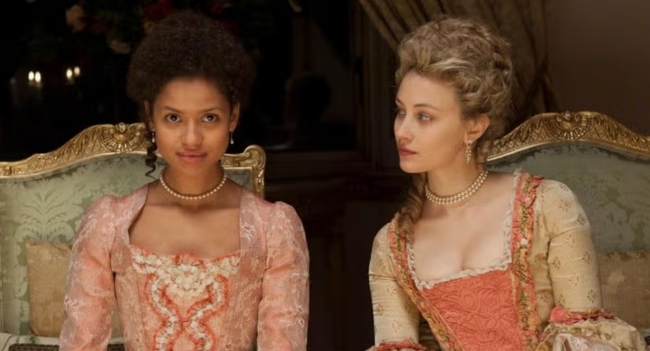
If you enjoy the elegance, romance and social intrigue of Jane Austen, Belle is a period drama worth adding to your watchlist. The 2013 film follows the remarkable life of Dido Elizabeth Belle, a mixed-race woman raised within Britain’s aristocracy at a time when race, class and marriage could determine almost every aspect of a woman’s life.
The film is loosely inspired by real people and events, but it should be viewed as historical fiction rather than a precise account of Dido’s life. The surviving evidence about her is limited, giving screenwriter Misan Sagay considerable freedom to shape the story and its characters.
For viewers looking for a period drama beyond the familiar Jane Austen adaptations, Belle offers lavish costumes, grand houses and romance alongside a story that explores Britain’s complicated relationship with race and slavery.

The real story behind Belle
Set in 18th-century England, Belle centres on Dido Elizabeth Belle Lindsay, the illegitimate daughter of Royal Navy officer Sir John Lindsay and an enslaved African woman named Maria Belle.
Born in the West Indies, Dido was eventually taken into the household of her great-uncle, William Murray, who became the Earl of Mansfield and served as Lord Chief Justice of England.
Murray and his wife raised Dido at Kenwood House in Hampstead, London, alongside her cousin Lady Elizabeth Murray. Dido occupied an unusual position within the household. Evidence suggests that she was brought up as a lady and educated in music and literacy, while also having responsibilities connected with Kenwood’s dairy and poultry yard.
The film takes the unusual circumstances of Dido’s upbringing and turns them into the foundation for a story about identity, privilege and the restrictions imposed by 18th-century society.

A famous painting inspired the story
One of the most important pieces of surviving evidence about Dido is the famous portrait showing her alongside Lady Elizabeth Murray.
The painting, commissioned while the two young women were living at Kenwood, became a major source of inspiration for the film. The original is now held at Scone Palace in Scotland, while Kenwood House displays a photographic reproduction.
The image itself raises fascinating questions about Dido’s position within the aristocratic household. Although she was clearly connected to the Mansfield family, the historical record suggests that her status was more complicated than the film sometimes portrays.
For example, evidence indicates that Dido was not always treated in exactly the same way as her white relatives. A visitor to Kenwood in 1779 recorded that she did not dine formally with the family and guests, although she joined the ladies afterwards for coffee.
Those details highlight the tension at the heart of Dido’s real-life story: she was close to one of England’s most powerful aristocratic families, yet her race and illegitimacy placed limits on how she could participate in their world.
Romance, class and prejudice
The film uses Dido’s social position to explore the expectations surrounding women in Georgian society.
As Dido and Elizabeth reach adulthood, their prospects for marriage become increasingly important. While Elizabeth is able to enter society in the conventional manner, Dido’s guardians are portrayed as concerned about how potential suitors and wider society will react to her mixed-race heritage.
That gives Belle a very different tone from a straightforward costume romance. Its beautiful houses and elaborate clothing sit alongside difficult questions about race, gender and social class.
Viewers have responded positively to that combination. One Rotten Tomatoes audience review described the film as “beautifully done and truly touching,” while another praised its cast and its handling of a difficult subject.

Gugu Mbatha-Raw leads an impressive cast
Gugu Mbatha-Raw stars as Dido Elizabeth Belle, with Tom Wilkinson playing Lord Mansfield.
The cast also includes Miranda Richardson, Penelope Wilton, Sam Reid, Matthew Goode and Emily Watson. Tom Felton, best known to many viewers as Draco Malfoy from the Harry Potter films, also appears as one of the men in Dido’s social circle who looks down on her.
Mbatha-Raw’s performance has been particularly praised. Critic Carla Renata described her portrayal of Dido as exceptional, highlighting the actor’s range and emotional depth. Rotten Tomatoes currently lists the film with an 84% Tomatometer score based on 152 critic reviews and an 82% audience score based on 25,000-plus ratings.

How much of Belle is historically accurate?
The film draws from genuine history, but several important elements were fictionalised or rearranged for dramatic purposes.
Dido really was raised by Lord Mansfield and lived at Kenwood. Her unusual upbringing and the surviving portrait of her with Lady Elizabeth are firmly rooted in historical evidence.
However, the movie brings various events together in ways that did not happen exactly as shown. The story’s romance and its connection between Dido and the legal debates surrounding slavery are part of the film’s fictional construction.
The real Dido did not marry at the age shown in the film, and the character John Davinier was substantially different from the real man who later became her husband. The historical record also suggests that Dido’s social position within Kenwood was more restricted than the movie depicts.
The filmmakers also did not actually shoot the Kenwood House scenes at Kenwood itself. Because the property was undergoing restoration, locations including Osterley House, Syon Park, Chiswick House and West Wycombe Park were used to recreate the setting.
That artistic licence is important to keep in mind, but it does not diminish the film’s central appeal. Belle takes the fragments of a fascinating real woman’s history and turns them into an accessible period drama about race, status, love and belonging.
.jpg?crop=8:5,smart&quality=75&auto=webp&width=1000)
A visually rich period drama with something to say
Costume drama fans will find plenty to enjoy in Belle. The film combines stately homes, elaborate period costumes and formal society gatherings with a story that deals directly with the inequalities of the period.
Its historical basis also gives the film an added layer of intrigue. Dido’s life is unusual precisely because so little survives to tell us exactly what her experience was like. English Heritage describes her upbringing as an extraordinary circumstance for the period: a mixed-heritage child born to an enslaved mother was raised within a powerful aristocratic family rather than as a servant.
That combination of historical mystery and fictional storytelling is what gives Belle much of its appeal.
For anyone searching for a period drama with the atmosphere of an Austen adaptation but a story rooted in a very different part of British history, Belle is well worth a look.
Watch the trailer
Belle is scheduled to air on Film4 at 6:45pm tonight, 23 September 2026, giving viewers the chance to watch the acclaimed period drama from home.