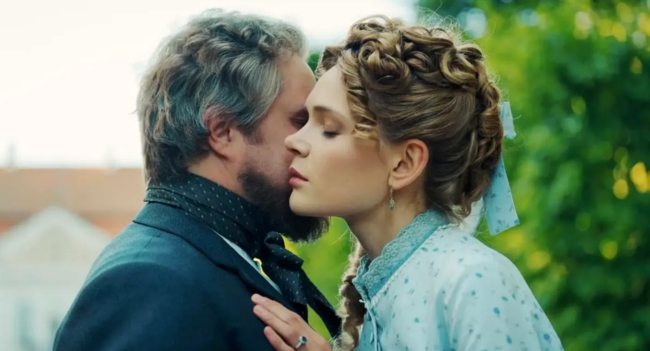
Netflix has recast one of Poland’s most familiar literary heroes at a moment when the country is asking a very modern question: what does success actually buy you?
For the past two weeks, one of Poland’s most discussed figures has been a fictional merchant created by novelist Bolesław Prus in 1887 and assigned to generations of Polish schoolchildren.
Netflix’s The Doll, a six-part adaptation of Prus’s 1890 novel Lalka, arrived on September 16 and quickly became a global streaming success. It recorded 2.5 million views during its first five days and ranked third in Netflix’s worldwide weekly chart for non-English-language series, with 16.9 million hours watched.
In Poland, however, the reaction has been about much more than viewing figures.
The series has reopened an old argument over Stanisław Wokulski, Izabela Łęcka and what their story is actually supposed to mean. For generations of Polish readers, Wokulski was the tragic self-made hero and Izabela the aristocratic beauty too cold and shallow to recognize his worth.
Netflix turns that familiar interpretation upside down.
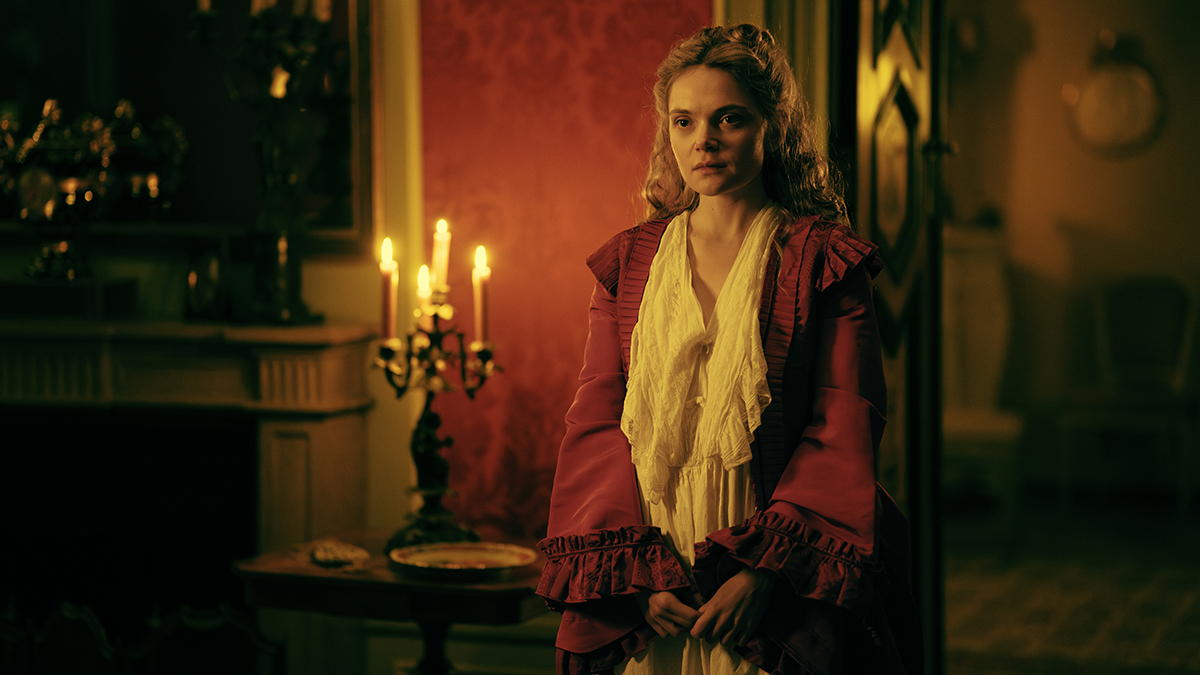
Its Wokulski is a wealthy man desperate for recognition who confuses love with control and social acceptance. Izabela, meanwhile, is no longer simply the heartless woman who destroys a great man. She is a woman trapped in a family drowning in debt, where her social position has made her part of the family’s economic survival.
That reinterpretation has landed at an unusually revealing moment for Poland itself.
Wokulski became rich enough to enter Warsaw’s aristocratic salons, only to discover that being allowed through the door did not mean being accepted once inside. Poland has spent the past 35 years making a remarkably similar economic journey, moving from a struggling post-communist state to a trillion-dollar economy. The country is now confronting the question of what that new wealth actually means, and how much influence it buys.

Wokulski, Poland’s original self-made man
For audiences outside Poland, Stanisław Wokulski can be understood as a kind of Polish Jay Gatsby, except that Prus created him 35 years before F. Scott Fitzgerald’s novel appeared.
Like Gatsby, Wokulski is a self-made man who acquires a fortune and uses it to pursue a woman from the social class that excludes him. Wealth gets him closer to the world he wants, but it cannot guarantee that its members will accept him as one of their own.
His story begins with politics and sacrifice.
Wokulski takes part in the failed January Uprising of 1863 against Russian rule and is sent into exile in Siberia. When he returns to Warsaw, he works as a shop assistant before marrying his employer’s widow.
After her death, he inherits 30,000 rubles and takes his money to the Russo-Turkish War of 1877-78, where he supplies the Russian army. He returns with 250,000 rubles, most of it in gold.
The fortune gives him something he had never possessed before: social mobility.
But Wokulski has only one real goal for his new wealth.
Izabela Łęcka.
She is the daughter of a bankrupt aristocrat, and Wokulski becomes determined to win her. He secretly buys up the Łęcka family’s debts and even acquires their tenement house, hoping his financial rescue will give him access to their world.
It does.
What it does not give him is their respect.
The Łęckis accept his money while continuing to look down on him.
That distinction is at the heart of The Doll, and it is also what makes Wokulski feel unexpectedly contemporary.

Why The Doll belongs to every generation of Poles
Prus’s novel has long occupied a special place in Polish culture.
It is compulsory school reading, while Wojciech Jerzy Has’s 1968 film and Ryszard Ber’s 1977 television series helped establish the visual identities of its characters for generations.
Prus himself was born Aleksander Głowacki. As a teenager, he fought in the 1863 uprising before becoming one of the leading voices of Polish Positivism.
That intellectual movement emerged from a very specific national trauma.
Poland had disappeared from the map in 1795 after being partitioned between Russia, Prussia and Austria. For the next century, Polish thinkers wrestled with a fundamental question: how could a nation survive without a state?
The defeat of the January Uprising intensified the disagreement.
The Romantics believed armed insurrection remained the essential path to national freedom. The Positivists increasingly argued that another doomed uprising would only bring more suffering. Their alternative was to strengthen Polish society through education, science, economic activity and practical work.
Wokulski embodies both visions.
He is the romantic who fights in an uprising and the modernizer who builds wealth through commerce. His tragedy has therefore always invited competing interpretations.
Did his romantic obsession destroy him?
Did his ambitions?
Did the aristocratic society he desperately wanted to join destroy him?
Or was the real problem that he expected money and sacrifice to purchase something money could never guarantee?
More than a century after Prus left those questions hanging, Netflix has chosen to reopen all of them.

Netflix turns a school classic into pop culture
The controversy began before audiences had even watched an episode.
Netflix deliberately marketed The Doll less like a solemn literary adaptation and more like contemporary pop entertainment. The campaign presented the nineteenth-century story as sexy, irreverent and ready for memes.
That was always going to provoke a reaction in a country where the novel remains part of the school curriculum.
One trailer used Radiohead’s “Creep” while showing Izabela licking cake from her fingers, whispering into Wokulski’s ear, kissing, screaming and eventually collapsing drunk in the street.
The promotional posters were equally playful.
Wokulski was presented with the question “Saviour or toy?” Izabela became “Femme fatale or feminist?” Her father was associated with “daddy issues,” while Starski was described as a “classic toy boy.”
Another campaign turned the characters into a Barbie-style playset titled Izabela’s Wonderful World. It included a dream townhouse, a father carrying a package of debts and Wokulski, “available with all his wealth.”
The television series carries that contemporary tone into the story itself.
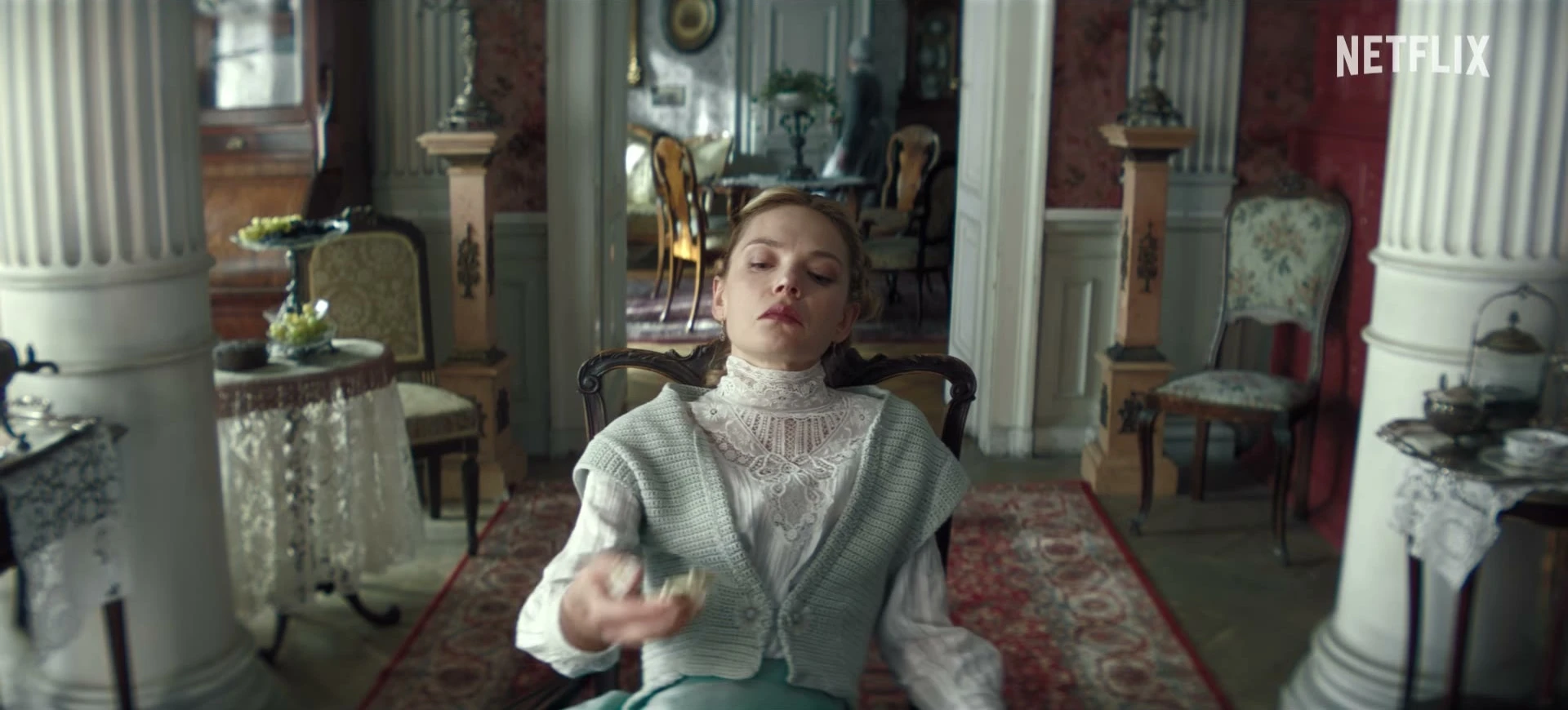
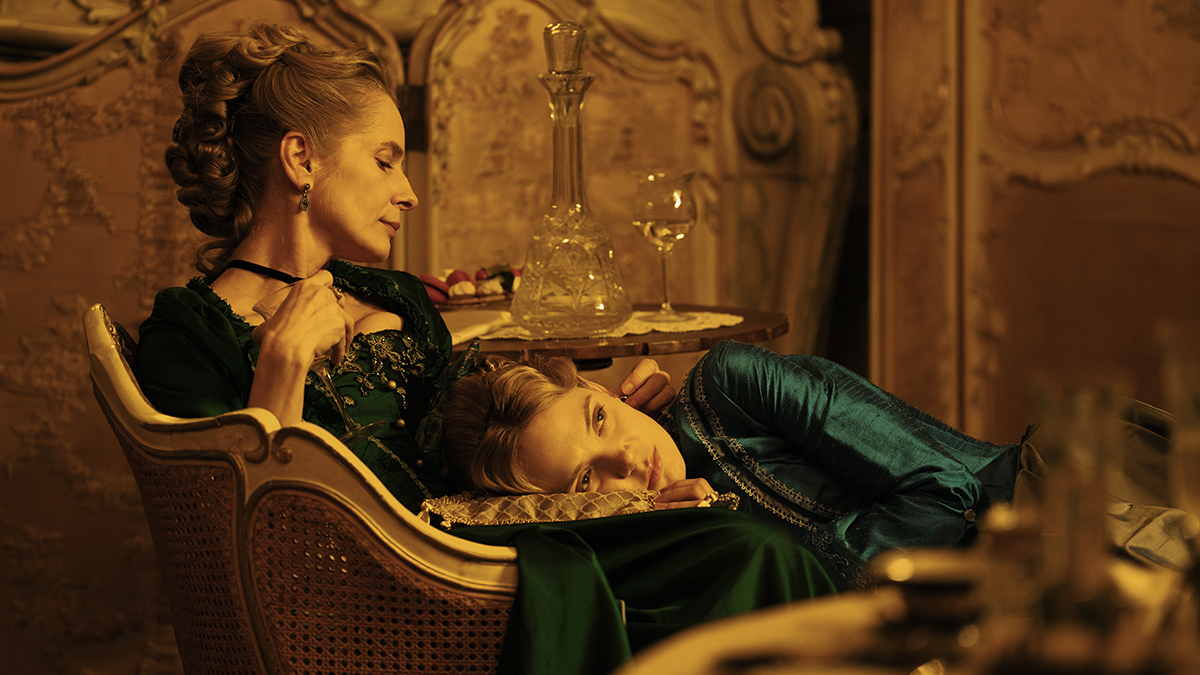
There is modern slang, heavy swearing, drunken balls, cocaine-taking characters, a crime plot and newly developed family secrets. The result has led critics to describe the adaptation as a combination of a nineteenth-century social novel with the energy of Bridgerton and TikTok.
For some viewers, that approach strips away the seriousness of a national classic.
For others, it does something a school reading list rarely manages to do: it makes The Doll feel alive again.
Netflix itself describes the series as a story of an impossible relationship between Izabela and Wokulski, shaped by class divisions, obsession, the desire for freedom and the seductive power of wealth. The adaptation also adds investigations, family secrets and conflicts over hidden interests, while deliberately moving away from romantic idealization of its central characters.
That is a significant change in emphasis.
The old question was often: why couldn’t Izabela see what a remarkable man Wokulski was?
The new question is harder.
Why did Wokulski believe that his money, devotion and sacrifices entitled him to her?

Izabela gets a new reading
The biggest challenge to the traditional interpretation may be Netflix’s treatment of Izabela Łęcka.
For generations, she has been remembered largely as the cold aristocratic beauty who fails to appreciate Wokulski and contributes to his downfall.
The Netflix version gives her circumstances more weight.
Her family is financially collapsing. Her father is bankrupt. Her social position, which appears enviable from the outside, also places her inside a system where marriage, money and status are tightly connected.
She is therefore not simply a villain standing between Wokulski and happiness.
She is another person trying to survive a social system whose rules were established long before either of them could change them.
That makes the relationship between the two characters considerably less straightforward.
Wokulski has money but lacks acceptance.
Izabela has aristocratic status but lives with financial insecurity.
He believes his wealth should allow him to enter her world.
She discovers that her social position may itself have become a commodity.
Both want security. Neither understands what the other is actually offering.

Poland sees something familiar in Wokulski
This may explain why the debate over The Doll feels larger than an argument about a television adaptation.
Poland itself has changed dramatically since the collapse of communism.
A CBOS survey conducted in March 2026 found that 39% of Poles said they lived well or very well, the highest result in the history of the survey. That included 32% who said they could afford many things without special saving and 7% who said they could afford some luxury. At the same time, 49% described their financial situation as average, meaning they could meet everyday needs but had to save for larger purchases.
For millions of Poles, economic progress has changed what is possible. More people are able to own homes, establish businesses and travel abroad.
Yet greater wealth does not automatically produce greater status or influence.
That is Wokulski’s problem in its simplest form.
He can buy the house.
He can settle the debts.
He can enter the salon.
He cannot purchase belonging.
Poland’s national experience has begun to raise a similar question on a much larger scale.
The country’s economy crossed the symbolic $1 trillion mark in 2025, placing it among the world’s largest economies. The United States subsequently invited Poland to attend the 2026 G20 summit in Miami as a guest. US Secretary of State Marco Rubio described Poland as a country that had once been behind the Iron Curtain and now ranked among the world’s 20 largest economies, saying it would take its “rightful place” at the G20.
The invitation was recognition of Poland’s economic rise, but it did not make Poland a formal G20 member.
That distinction matters.
As with Wokulski, crossing the threshold and being fully accepted into the room are not necessarily the same thing.
Wealth, influence and the question of recognition
The tension can also be seen in Poland’s relationship with Europe.
A CBOS survey conducted from July 3 to 13, 2025 found that 81% of respondents supported Poland’s membership in the European Union. Yet 64% said Poland did not have sufficient influence over EU decisions and actions.
The combination is revealing.
Strong support for membership can coexist with dissatisfaction over how much influence Poland has within the institution.
The same tension appeared in the country’s growing military role.
Poland planned to devote 4.8% of GDP to defense in 2026, putting it among NATO’s biggest defense spenders as a share of economic output. IMF analysis has also identified Poland as having the highest defense spending as a share of GDP among NATO members in its assessment of the country’s military buildup.
Yet on June 7, the leaders of Britain, France and Germany met Volodymyr Zelenskyy in London without Poland. The meeting brought together Keir Starmer, Emmanuel Macron, Friedrich Merz and Zelenskyy to discuss support for Ukraine and the next steps toward negotiations.
Two days later, Donald Tusk said that arrangements made without Poland “will not be binding on Poland.”
The symbolism is hard to miss.
A country can become economically powerful, spend heavily on defense and play a major role in European security while still asking whether its growing weight is being fully recognized.
That is the same frustration that sits inside Wokulski.
He has accumulated enough wealth to demand attention. What he wants is acknowledgment.
Wokulski’s ending leaves the door open
Prus never provides a definitive answer about what ultimately happens to Wokulski.
After overhearing Izabela flirt with another man, Wokulski lies down on a railway track. He is pulled away before he can die.
Then he disappears.
A witness later claims to have seen him enter some ruins shortly before an explosion. Nobody is found.
Perhaps Wokulski dies beneath the rubble.
Perhaps he survives and escapes to Paris, where he could join Geist, the scientist who offers him the possibility of beginning a new life devoted to discovery.
Prus deliberately leaves his fate unresolved.
Wokulski remains suspended between self-destruction and reinvention.
But his deeper failure is less ambiguous.
He becomes rich. He forces his way into a social world that once excluded him. Then he allows the people inside that world to determine the value of his money, his ambitions and ultimately himself.
That is why the character continues to provoke arguments.
His tragedy is not simply that he cannot get the woman he loves.
It is that he mistakes access for acceptance.
What comes after the threshold?
That distinction gives the Netflix adaptation an unexpected contemporary edge.
Poland has already accomplished the part of Wokulski’s journey that involves accumulating wealth and gaining entry to rooms once beyond reach. The harder question is what comes next.
The country’s economic model has been built heavily around manufacturing, exports, foreign investment and its role as a competitive European production base. But demographic decline is reducing the size of the workforce, while an aging population means fewer workers will have to support more pensioners.
Germany, Poland’s largest trading partner, has also stalled.
The next stage therefore raises a different set of questions about productivity, technology, innovation and the creation of Polish companies capable of competing globally.
That is where the Wokulski comparison becomes more than a clever literary metaphor.
A fortune is a means, not an answer.
Wokulski spends much of his life accumulating money without deciding what life should look like once he has it. By the time he realizes that wealth cannot buy the thing he actually wants, the fortune has already become part of the problem.
Poland’s circumstances are obviously different. But the question is familiar: what should a country do once catching up is no longer the main challenge?
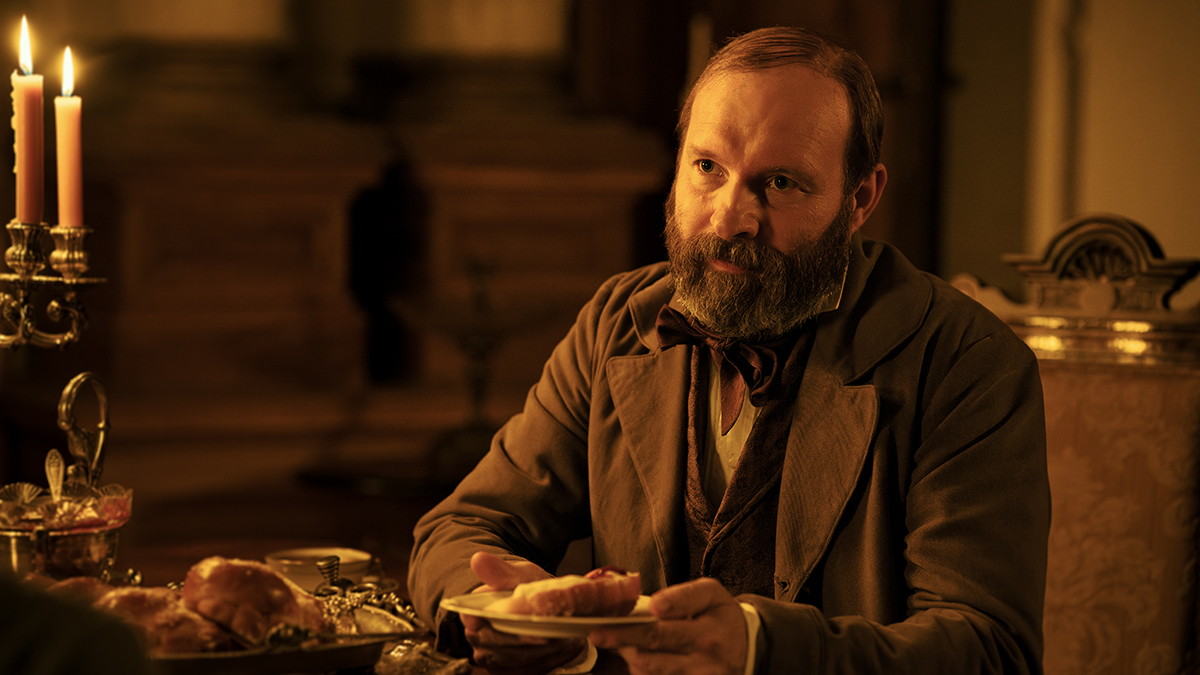
Two Dolls, two interpretations
The debate will not end with Netflix.
On September 30, Maciej Kawalski’s more traditional cinema adaptation of The Doll opened, giving Polish audiences a second version of Prus’s novel to compare with Netflix’s six-part series. The film was released in cinemas on September 30, 2026.
That makes the timing almost too perfect.
Poland now has two new interpretations of the same national classic arriving within days of one another. One takes Wokulski apart and asks uncomfortable questions about obsession, status and entitlement. The other offers another cinematic route into a story that has survived for generations.
The arguments over The Doll are therefore unlikely to be settled by deciding which Wokulski is the correct one.
The character has always contained a contradiction: romantic idealist and practical businessman, outsider and social climber, modernizer and dreamer.
Perhaps that is why he remains so useful.
Wokulski thought reaching the salon would complete his transformation. Instead, it exposed how little his fortune could control.
Poland has reached many of the doors it spent decades trying to open.
The more difficult question is what it wants to find on the other side.