Congratulations!
You've earned 1 point
One of Sci-Fi’s Best Thrillers Is a Five-Season Biopunk Series Leaving Netflix Soon
If you are looking for a sci-fi thriller that combines conspiracy, cloning, mystery, dark humor, and unforgettable performances, Orphan Black remains one of the genre’s strongest choices. The BBC America series premiered in 2013 and ran for five seasons, building a devoted following before concluding in 2017.
Now, however, Netflix subscribers in the U.S. have only a short time left to watch it there. All five seasons of Orphan Black are scheduled to leave Netflix on September 1, 2026. The good news is that the series will continue to be available through AMC+, so its departure from Netflix is not the end of its streaming life.
For anyone who has never experienced the show’s twisting mystery, this is a particularly good time to catch up.

Orphan Black Turns Human Cloning Into a Gripping Mystery
At the center of Orphan Black is Sarah Manning, played by Tatiana Maslany, a streetwise con artist whose life changes when she witnesses a woman who looks exactly like her die by suicide.
Seeing an opportunity, Sarah assumes the woman’s identity. What initially appears to be a straightforward case of impersonation soon develops into something far more disturbing.
Sarah discovers that the woman was one of several people who are genetically identical to her. As she searches for answers, she encounters more clones and begins referring to them as her sisters. Their similarities are only the beginning of the mystery. Sarah eventually learns that they are connected to an illegal scientific experiment, while someone is actively trying to eliminate the clones.
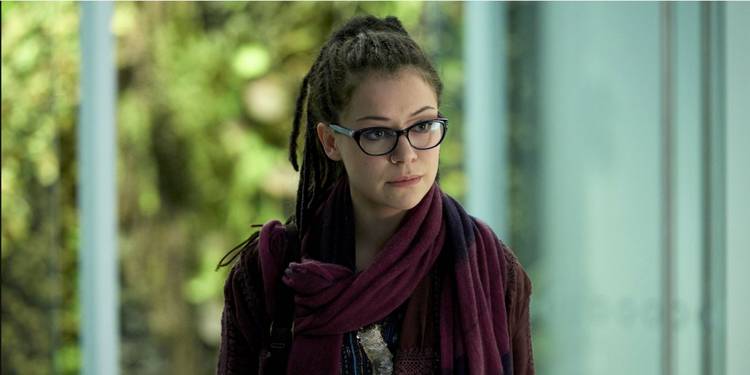
That revelation turns Sarah’s search for answers into a fight for survival. She and her sisters must uncover who created them, why they exist, and who is behind the conspiracy targeting them.
The premise gives Orphan Black an unusually strong foundation for a thriller because every new discovery changes what Sarah and the audience thought they understood about the situation.
AMC+ currently describes the series as a sci-fi thriller centered on Maslany’s character discovering that she is one of a series of clones, and its catalog confirms that the story spans five seasons.
A Sci-Fi Series Built Around Female Characters
One of Orphan Black‘s most distinctive qualities is its predominantly female ensemble in a genre that has often been dominated by male protagonists.
Sarah and the other clones may share the same face, but they are remarkably different people. Their personalities, backgrounds, motivations, and relationships give the series plenty of room to explore different sides of its central premise.
The cloning mystery also allows Orphan Black to tackle much larger questions. Identity, bodily autonomy, scientific ethics, and the limits of technological progress all become important parts of the story.
Rather than using science fiction simply as a backdrop, the series repeatedly asks what happens when scientific experimentation begins to interfere with the most fundamental aspects of being human.
That combination of an intricate mystery and larger ethical questions helped establish Orphan Black as something more than a conventional conspiracy thriller.
Tatiana Maslany’s Performance Is the Show’s Biggest Strength
The series would not work nearly as well without Tatiana Maslany.
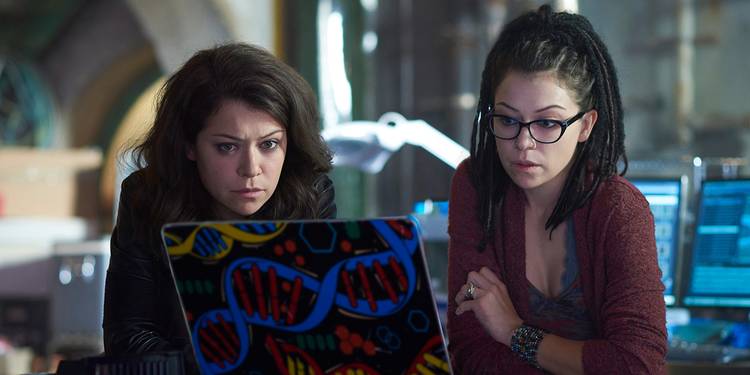
Across its run, Maslany played 17 different roles, turning what could have been a gimmick into one of the show’s defining achievements. Each clone has to feel like an individual character, despite being portrayed by the same actor.
The differences are not limited to accents or costumes. Maslany gives each character her own mannerisms, personality, physicality, and emotional presence, allowing viewers to recognize the clones as separate people even when they appear together on screen.
Her performance earned her the Outstanding Lead Actress in a Drama Series Emmy in 2016. The Television Academy records three nominations for Maslany for Orphan Black, with her 2016 performance winning the award.
That recognition is well deserved. The show’s central conceit requires Maslany to carry much of the story herself, often playing multiple characters within the same sequence while maintaining the illusion that they are completely different people.
Orphan Black Holds Up Across All Five Seasons
One of the biggest reasons Orphan Black remains worth revisiting is the consistency of its storytelling.
The series manages to balance its increasingly complicated mythology with the personal lives of its characters. The central mystery keeps expanding, but the show does not completely lose sight of the people caught inside it. There is also enough comedy woven into the drama to prevent the story from becoming relentlessly bleak.
That balance becomes especially important as the series progresses. Complex mysteries can become difficult to sustain when later seasons start relying on increasingly elaborate twists simply to surprise viewers.
Orphan Black largely avoids that problem by continuing to develop the questions surrounding its clones while allowing its characters to grow alongside the mystery.
AMC’s own material confirms that the fifth season was planned as the show’s final season, with the conclusion arriving in 2017.
The ending is another reason the series has maintained such a strong reputation. Finales are difficult under any circumstances, but wrapping up a story built around cloning, conspiracies, and years of unanswered questions presents an especially difficult challenge.
Orphan Black manages to give its long-running story a conclusion that left its audience satisfied. Saying goodbye to familiar characters can still be bittersweet, but the finale demonstrates that an ambitious genre mystery can reach a worthwhile ending without abandoning what made it compelling in the first place.

A Cult Favorite That Still Deserves Attention
More than a decade after its debut, Orphan Black continues to have a dedicated fanbase. Its distinctive premise, complicated characters, ambitious themes, and Maslany’s extraordinary central performance have helped it remain a cult favorite long after the original series ended.
The show’s short-lived spinoff, Orphan Black: Echoes, did not reproduce the same impact, but the original series remains readily available elsewhere. AMC+ currently carries all five seasons.
That makes the upcoming Netflix departure more of a change in where viewers can watch the series than a disappearance altogether.
Still, for Netflix subscribers who have been meaning to start Orphan Black, the deadline is approaching quickly. All five seasons leave Netflix in the U.S. on September 1, 2026.
If you have never watched it, the series offers a rare combination of science-fiction mystery, thriller elements, character-driven drama, and dark comedy. And if you watched it years ago, its tightly constructed five-season story makes it an especially strong choice for a return binge.