

Netflix’s Unbelievable Turns a Real-Life Crime Investigation Into an Unforgettable Eight-Part Drama
Some true-crime stories are difficult to watch because of what happened. Unbelievable is difficult for another reason: it asks what happens when a victim tells the truth and the people who are supposed to help her do not believe her.
Released on Netflix on September 13, 2019, the eight-episode limited series follows two investigations separated by three years and several states. At the center is Marie Adler, a teenager whose report of rape is questioned by police. Meanwhile, in Colorado, detectives Karen Duvall and Grace Rasmussen begin investigating a series of eerily similar assaults.
The series has continued to attract attention for the way it handles that story. Rotten Tomatoes currently lists Unbelievable at 98% from 84 critics, alongside an 89% audience score.
The numbers are impressive, but the reason the series has stayed with viewers is its approach to the material. Rather than turning the case into a conventional mystery built around shocking twists, Unbelievable puts the experiences of survivors and the women investigating their cases at the center.

A crime drama built around disbelief
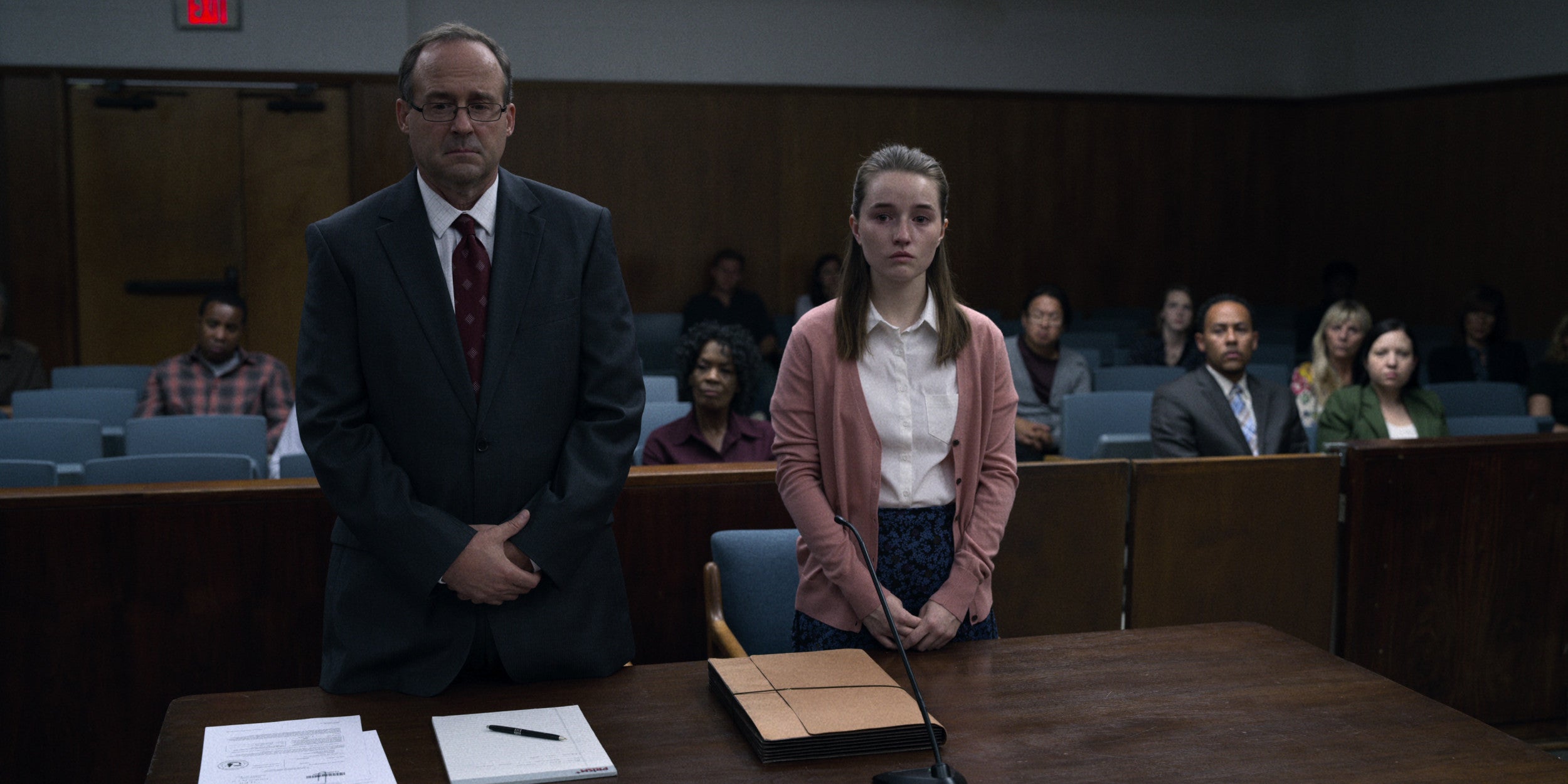
Kaitlyn Dever plays Marie Adler, a teenager who reports that an intruder sexually assaulted her.
Instead of being treated simply as a victim, Marie finds herself facing questions about whether her account can be trusted. Under pressure, she eventually recants her story, creating a new set of problems as doubts about her credibility begin to overshadow what she originally reported.
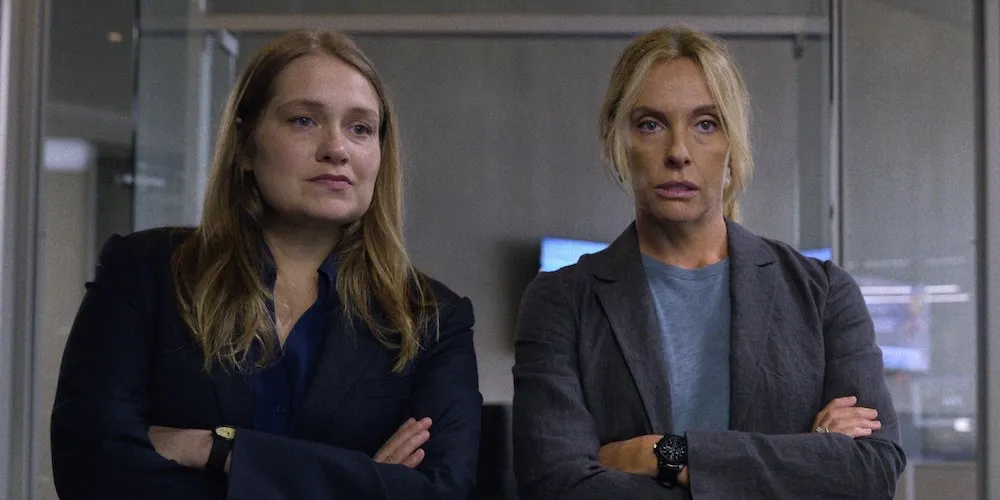
The series then shifts to Colorado, where Detective Karen Duvall, played by Merritt Wever, investigates another assault. The circumstances begin to resemble other cases, and Duvall eventually works with Detective Grace Rasmussen, portrayed by Toni Collette.
As the two detectives compare information, evidence begins pointing toward a possible connection between the attacks.
That parallel structure gives Unbelievable two distinct but connected storylines. One follows Marie as she deals with the consequences of not being believed. The other follows Duvall and Rasmussen as they methodically piece together a larger investigation.
Netflix’s official synopsis similarly centers on a teenager who reports rape and later recants her account while two female detectives pursue evidence that could uncover the truth.
The distinction matters. The series is interested in solving the crimes, but it also spends considerable time examining what happens to victims when institutions fail to respond appropriately.
The real investigation behind the series
Although Unbelievable is a scripted drama, its central story comes from documented real-world events.
The series was created by Susannah Grant, Ayelet Waldman and Michael Chabon. Its story draws from the Pulitzer Prize-winning investigative reporting of T. Christian Miller and Ken Armstrong, whose 2015 article An Unbelievable Story of Rape examined the Washington and Colorado cases that inspired the series.
The reporting began with the story of an 18-year-old woman in Washington who reported being attacked at knifepoint. Police questioned her account, and she ultimately said she had made it up. Years later, the investigation into a serial rapist in Colorado helped establish what had actually happened.
The reporting by Miller and Armstrong eventually won the 2016 Pulitzer Prize for Explanatory Reporting.
The Netflix series also draws from A False Report, the 2018 book based on the same reporting, as well as the This American Life episode Anatomy of Doubt. Netflix’s official trailer identifies the ProPublica and Marshall Project investigation and the radio episode as sources for the adaptation.
That foundation gives the drama a different weight. While the television version necessarily fictionalizes aspects of the story, the central investigation and the events that inspired it are rooted in real reporting.
:max_bytes(150000):strip_icc()/unbelievable-2000-e14d3bfb937a49deb28213e2184cf790.jpg)
Kaitlyn Dever, Toni Collette and Merritt Wever lead the cast
The performances are another major reason the series received such strong attention.
Dever leads the cast as Marie, while Merritt Wever plays Karen Duvall and Toni Collette portrays Grace Rasmussen. The ensemble also includes Eric Lange, Bill Fagerbakke, Elizabeth Marvel, Bridget Everett, Danielle Macdonald, Dale Dickey, Liza Lapira and Omar Maskati.
The three central performances received significant awards recognition. Dever, Collette and Wever were nominated at the Critics’ Choice Awards and Golden Globes, while Collette received a Primetime Emmy nomination and a Screen Actors Guild Award nomination.
At the Emmys, Unbelievable received four nominations, including Outstanding Limited Series, Outstanding Writing for a Limited Series, Outstanding Casting for a Limited Series, and Outstanding Supporting Actress in a Limited Series or Movie for Collette.
The series also won a Peabody Award. The Peabody organization specifically recognized its contrasting investigations and its humanized treatment of rape survivors, highlighting the performances of Dever, Wever and Collette.
Why critics responded so strongly
The critical response to Unbelievable has largely centered on what it does differently from a conventional police procedural.
The series certainly contains an investigation. There are clues, comparisons between cases and a growing effort to identify the person responsible. But the detectives are not presented as the only people whose experiences matter.
Marie remains central to the story even when the investigation moves away from her.
That choice changes the tone of the drama. Instead of using the crimes primarily as a vehicle for suspense, Unbelievable gives considerable attention to trauma, disbelief and the consequences of institutional failure.
Rotten Tomatoes’ critics’ consensus describes the series as heartbreaking and powerful, emphasizing the decision to move beyond familiar true-crime conventions and focus on survivors of abuse. The site currently lists the series at 98% from 84 critic reviews.
The Peabody Awards made a similar point, praising the series for combining a gripping investigation with a humanized exploration of rape survival.

Eight episodes that gradually widen the investigation
The story unfolds across eight episodes, allowing the investigation to develop rather than resolving the central mystery quickly.
The opening chapters establish Marie’s experience and the consequences of her decision to retract her accusation. Three years later, Karen Duvall encounters an assault in Colorado with similarities that raise new questions.
Duvall’s investigation eventually brings her together with Grace Rasmussen. As they compare cases and examine the available evidence, the possibility that multiple attacks are connected becomes increasingly difficult to dismiss.
The investigation expands as more victims and evidence come into view, eventually involving the FBI.
While the detectives work toward identifying the perpetrator, Marie’s own situation continues to deteriorate. The two strands of the story gradually move toward one another, bringing the Washington and Colorado investigations together as Karen and Grace approach a pivotal day in court.
The result is a tightly focused eight-episode narrative in which the tension comes from both the investigation and the human cost surrounding it.
Viewers found it difficult to put down
The audience response has also been notable.
Viewer reviews have repeatedly highlighted the performances of Dever, Collette and Wever, along with the writing and the sensitive treatment of the subject.
Some viewers have described becoming absorbed in the story much later than expected, while others have praised the way the series balances the investigation with the emotional experiences of its characters.
Several reactions emphasize the contrast between the devastating subject matter and the sense of determination that develops as the investigation progresses. Others have singled out the direction, performances and writing as reasons the series leaves a lasting impression.
That reaction is important because Unbelievable is not designed as disposable crime entertainment. Its subject matter is deeply uncomfortable, and the series does not attempt to make that discomfort disappear.
Instead, it uses the investigation to examine what disbelief can cost a victim and what can happen when investigators approach similar cases differently.
What makes Unbelievable different
The series does not need constant twists or sensational violence to maintain tension.
Much of its suspense comes from watching the detectives compare details, recognize patterns and gradually understand the scale of what they are investigating. At the same time, Marie’s storyline keeps the consequences of the investigation personal.
That balance helps explain why Unbelievable received both critical recognition and a strong audience response.
Rotten Tomatoes currently records a 98% Tomatometer score from 84 reviews and an 89% audience score, while the Peabody Awards honored the series for its combination of investigative storytelling and its humanized portrayal of rape survival.
For viewers interested in true-crime dramas that put character and investigation on equal footing, Unbelievable offers an eight-episode story built around a disturbing real-life case, acclaimed performances and a carefully constructed investigation.
Unbelievable is available to stream on Netflix.
Watch the official trailer
The official Netflix trailer was released on July 18, 2019, and describes the series as inspired by real events.