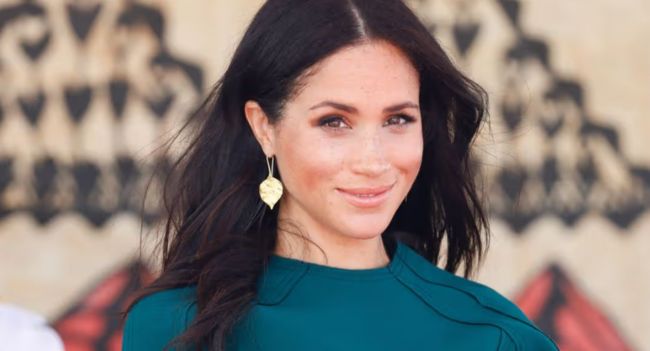
“SHE WAS NEVER GOING TO BE A ROUTINE ROYAL.” Meghan Markle’s “Dangerous Self-Belief” Exposed Palace Problem It “Didn’t Know How To Handle”

Meghan Markle’s arrival in the Royal Family was never going to be an ordinary chapter, according to royal historian Robert Lacey, who claims the Palace struggled to understand how to handle the Duchess of Sussex’s ambition and independence.
Speaking while promoting his book Battle of Brothers, Lacey argued that Meghan’s arrival exposed an old problem within the monarchy: what to do with the younger sibling of the heir—and, perhaps even more difficult, what role should be given to their spouse.
According to Lacey, the institution had long been structured around Prince William and Prince Harry remaining part of the same royal team.
That dynamic changed when Harry met Meghan.

“She is difficult. She has an incredible and dangerous level of self-belief,” Lacey said.
But his assessment placed responsibility on the Palace as well.
He argued that officials made a fundamental mistake by assuming Harry’s future wife would simply settle into the traditional role expected of a younger royal’s spouse.
“They made the mistake of dealing with the spare’s wife thinking she was just a routine royal,” he said.
Then came his blunt conclusion:
“She was never going to be a routine royal.”
Lacey suggested the difficulty was part of a much older royal problem.
The so-called “heir and spare” dilemma has existed for generations, with younger members of the Royal Family—including Princess Margaret and Andrew Mountbatten-Windsor—having had to establish identities of their own while remaining firmly behind the direct heir.
“They always treat the second-born badly, not to say cruelly,” Lacey claimed.
He added:
“They just don’t know what to do with the spare. And they certainly didn’t know what to do with the spare’s wife.”

Harry would later turn the word “spare” into the title of his 2023 memoir, using the book to explore his frustrations with his place within the Royal Family and his relationships with senior royals.
Lacey has also previously described Meghan as a “force of nature”, arguing that the couple’s popularity created another challenge for the Palace.
Harry and Meghan were capable of attracting enormous public attention—at times becoming, in Lacey’s description, royal “rock stars”—while their growing individual profile sat uneasily alongside an institution built around hierarchy, duty and collective responsibility.
Other royal commentators have offered similarly critical assessments of Meghan’s approach.
Royal author Tom Bower argued that Meghan’s eagerness to make an immediate impact contrasted with Catherine, Princess of Wales’s more cautious approach when she entered royal life.
In Revenge: Meghan, Harry and the War Between the Windsors, Bower questioned where Meghan’s rapid push into royal life was ultimately heading and whether she fully understood the expectation that senior royals operate collectively under the monarch.
Whatever view is taken of the competing accounts, Meghan and Harry’s time as senior working royals was remarkably brief.
In January 2020, the couple announced their intention to step back from their senior positions before completing their final engagements that March.
What began as the arrival of a highly ambitious and globally recognisable couple ultimately exposed something much bigger than personality clashes.
It raised a question the monarchy had wrestled with for generations:
What happens when the “spare” and his wife refuse to remain in the background?