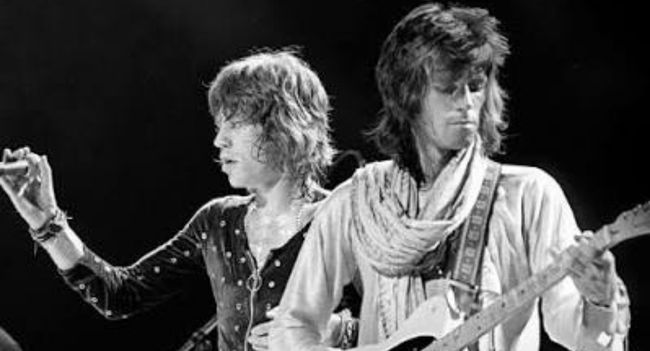
Keith Richards Once Said He Didn’t Buy Ricky Nelson Records — He Bought James Burton Records

“I never bought a Ricky Nelson record, I bought a James Burton record.”
That unforgettable declaration came from Rolling Stones guitarist Keith Richards when he helped induct James Burton into the Rock and Roll Hall of Fame in 2001.
For Richards, one of rock music’s most celebrated guitarists, the comment was more than a compliment. It captured just how influential Burton’s playing had been on generations of musicians.
Burton, who was born near Minden, Louisiana, on August 21, 1939, became one of the most distinctive guitarists in American music. Over a career spanning decades, his playing appeared on recordings associated with some of the biggest names in country and rock, including Elvis Presley, Johnny Cash, Jerry Lee Lewis and Ricky Nelson.
Richards would later refer to Burton as the “Master of the Telecaster,” a fitting description for a musician whose unmistakable sound helped define the electric guitar’s role in country and rockabilly.
Now, on Burton’s 87th birthday, his extraordinary journey from a Louisiana teenager with no formal guitar training to one of the most respected session and touring guitarists in music history is worth remembering.
The Guitarist Who Never Took a Lesson
One of the most remarkable parts of James Burton’s story is that he never had a formal guitar lesson.
Growing up in Shreveport, Louisiana, Burton was fascinated by music from an early age. Before he owned a guitar, he reportedly practiced by beating on broomsticks and experimenting with whatever he could find around the house.
His parents eventually bought him a Fender Telecaster when he was 13. It did not take long for Burton to turn his fascination into something much more serious.
By the time he was 14, he was already performing professionally. Because of his age, he even received a special permit from police allowing him to perform at local bars and clubs.
His teenage years also brought him to the Louisiana Hayride, the influential radio program that helped introduce audiences to future country music stars, including Hank Williams.
It was during this period that Burton began developing the distinctive guitar technique that would become closely associated with his name.
The Birth of His Signature “Chicken-Pickin’” Sound

Burton’s playing was different. Rather than simply relying on a conventional pick, he combined a fingerpick worn on his middle finger with a standard flat pick. The unusual combination helped him produce the sharp, staccato sound that became known as “chicken pickin’.”
He also experimented with his strings. Burton replaced his first four strings with banjo strings and moved the A and D strings up to D and E. The unusual setup allowed him to bend the strings in ways that contributed to his distinctive tone.
Looking back decades later, Burton described the sound as something that immediately felt different to him.
“It became my sound,” he explained in a 2019 interview with Guitar.com. That willingness to experiment became one of the defining characteristics of his playing. He wasn’t simply learning how to reproduce what other guitarists were doing. He was creating a vocabulary of his own.
The “Susie Q” Connection
As his reputation grew around Shreveport, Burton began working with a number of local musicians.
One of the most important collaborations came with Dale Hawkins, a pioneering rockabilly performer.
In 1957, Burton created a guitar melody that would become the foundation of “Susie Q.”
Hawkins later added lyrics to the instrumental idea, and the song became a significant hit.
“Susie Q” reached No. 7 on Billboard’s Hot R&B Sides chart and No. 27 on the pop chart. Burton later recalled that he had originally created the piece as an instrumental before Hawkins developed it further with lyrics.
Despite his contribution to the song, Burton did not receive songwriting credit or royalties for his work. Nevertheless, “Susie Q” became another important milestone in the guitarist’s early career.
Ricky Nelson Changed Everything
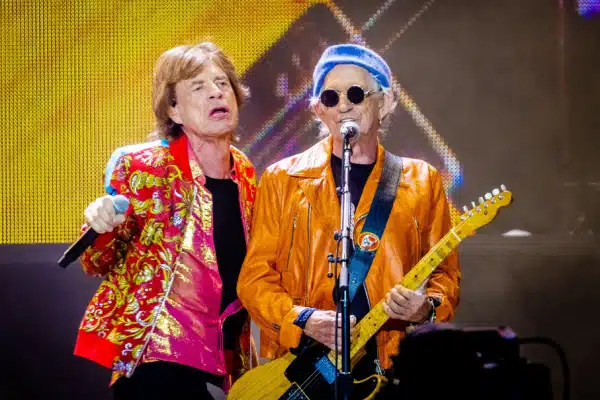
By the late 1950s, Burton’s talents had attracted attention beyond Louisiana. He eventually moved to Los Angeles, where his career took a major turn after teenage rockabilly star Ricky Nelson selected him for his band.
Initially, Burton played rhythm guitar. That changed in 1958 when he made his lead-guitar debut on Nelson’s single “Believe What You Say.”
The opportunity gave Burton a much larger platform and helped establish the guitar sound that would become one of his trademarks.
This period also explains the significance of Keith Richards’ later comment. For Richards, Nelson’s records were inseparable from Burton’s guitar playing. The singer may have been the star on the record sleeve, but Richards was listening closely to the guitarist behind the music.
And Burton’s influence was about to become even larger.
From Television to Endless Recording Sessions
In 1965, Burton joined the cast of Shindig, a musical variety television program. Johnny Cash reportedly played an important role in bringing him into that environment. The television work opened another door for Burton: studio recording.
Before long, he was reportedly working in recording studios as many as four to six times a day.
His list of collaborators continued to expand, with Burton contributing guitar work to recordings associated with artists including Merle Haggard and Buck Owens.
This was the beginning of the period in which Burton became not merely a successful guitarist but one of the most sought-after players in American popular music.
His ability to move comfortably between country, rockabilly, rock and other styles made him an invaluable musician.
Then Elvis Presley Came Calling
In 1969, Burton received one of the biggest opportunities of his career. Elvis Presley asked him to join his performances in Las Vegas.
Burton accepted and became a central figure in the TCB Band, the group that backed Presley during the final years of the singer’s career.
For Burton, the job represented another major chapter in an already extraordinary career.
He helped lead the band that accompanied Presley onstage until the singer’s death in August 1977.
The partnership also placed Burton at the center of one of the most important live music acts of the era.
Yet even while working with Elvis, Burton continued to collaborate with other major artists. After Gram Parsons died in 1973, Burton toured with Emmylou Harris as part of her Hot Band.
His career was becoming increasingly difficult to define by a single genre. He was a country guitarist, a rockabilly pioneer, a rock musician and a legendary session player all at once.
A Career That Continued Long After Elvis
Following Elvis Presley’s death, Burton entered another long-running musical partnership, this time with John Denver.
It was another indication of his extraordinary versatility. Burton could adapt his playing to different artists without losing the characteristics that made his guitar immediately recognizable.
Over the years, his reputation continued to grow. He eventually became a member of both the Rock and Roll Hall of Fame and the Country Music Hall of Fame, placing him among the rare musicians whose influence crossed the boundaries between major American musical traditions.
In 2009, Burton also won a Grammy Award for Best Country Instrumental Performance.
The award came for Brad Paisley’s “Cluster Pluck,” a collaboration featuring Burton alongside Vince Gill, Albert Lee, John Jorgenson, Brent Mason, Redd Volkaert and Steve Wariner.
Why Keith Richards’ Words Still Matter
Keith Richards’ 2001 comment has remained one of the most memorable descriptions of Burton’s importance.
“I never bought a Ricky Nelson record, I bought a James Burton record.”
Coming from Richards, the statement carried particular weight. Richards himself had become one of the most influential guitarists in rock history, and his appreciation for Burton highlighted the guitarist’s influence beyond country music.
Burton’s importance was never simply about technical ability. His contribution came from creating a recognizable sound — one that could be heard in the spaces between the vocals, in the bends of the strings and in the sharp, rhythmic attack of his playing.
He helped establish a guitar vocabulary that countless musicians could hear, borrow from and build upon.
The “Master of the Telecaster”
James Burton’s story is ultimately a story about sound.
A teenager from Louisiana who never took a formal guitar lesson developed a style that eventually found its way onto records and stages with some of the biggest names in American music.
From the Louisiana Hayride to Dale Hawkins, from Ricky Nelson to Elvis Presley, from Emmylou Harris to John Denver, Burton repeatedly found himself at the center of important musical moments.
And through it all, he remained identifiable by a guitar sound that was unmistakably his own. That is why Keith Richards’ tribute still feels so powerful. The comment was not simply about buying a record. It was about knowing who was really making the music speak.
For generations of listeners and guitarists, James Burton’s playing became a reason to listen more closely — and his influence remains woven into the history of American rock and country music.