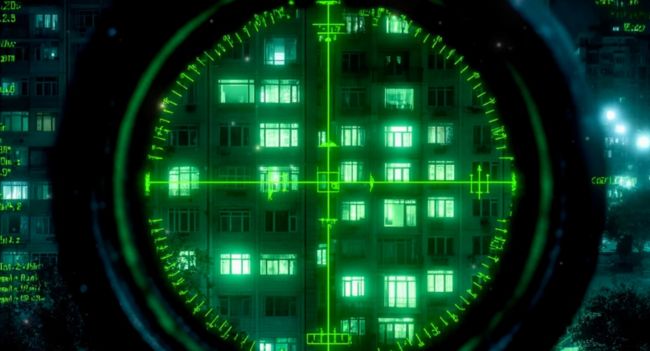

SEALs Said No One Hunts Snipers in the Dark — Then She Found and Dropped 5 Before Dawn
The mission briefing was clear: five enemy snipers had dug into positions across a three-kilometer urban sector and had been killing American forces for six days straight. Conventional approaches had failed. Thermal imaging couldn’t penetrate their hides. Counter-sniper teams couldn’t get angles. Drone strikes came up empty. The SEAL team had lost two men trying to locate even one of the positions. The brass was ready to call in heavy artillery, but that would risk civilian casualties, turning a tactical problem into a strategic disaster.
Then someone mentioned Lena Foster. The SEAL commander’s response was immediate. “No one hunts snipers in the dark,” he said. “It’s suicide. These aren’t amateurs. They’re professionals. Sending one person after five entrenched snipers with zero visibility is insane.”
Lena’s reply was quieter, but just as definite: “I’ll have all five down before sunrise.”
In the Tactical Operations Center, Lieutenant Commander James Reeves studied the digital map of Sector 7. Red circles marked approximate sniper locations. “Six days,” he said. “Five confirmed snipers, fourteen American casualties. We can’t move supplies. We can’t evacuate wounded. We can’t operate in three quarters of this sector without taking fire.”
Chief Warrant Officer Marcus Webb, the platoon’s senior sniper, rubbed his eyes. “These aren’t lucky shots,” he said. “Every hit is deliberate, precise, and followed by immediate displacement.”
Staff Sergeant Patricia Chen, their tactical intelligence specialist, pulled up surveillance footage. “They don’t move during daylight. Thermal imaging fails. Drone surveillance yields nothing. They’ve covered their tracks perfectly.”
Petty Officer Davis, the youngest member, suggested, “What about clearing the buildings? Root them out.”
Chen shook her head. “They’re spread across three kilometers. Each position has multiple exit routes. By the time you clear one, they’ve already moved. It’s like trying to catch smoke.”
Petty Officer Rodriguez added, “Then we level it. Call in fire support. Take out the entire block.”
Reeves’ jaw tightened. “There are still civilians here. Drop bombs and we win tactically but lose strategically. We can’t afford it.”
Everyone was silent. Conventional tactics had been exhausted. Then the door opened. Lena Foster walked in without announcement or escort, moving with the calm confidence of someone completely at ease in danger. Late twenties, average build, hair pulled back, dressed in civilian tactical gear. The operators’ attention was immediate and involuntary.
“Who the hell are you?” Davis asked.
“This is Lena Foster,” Reeves said. “She’s attached to the operation by someone high enough that I stopped asking questions.”
Lena didn’t shake hands. She approached the tactical map and studied it like a language. “Five snipers,” she said, not a question. “Independent, but coordinated. They’re professionals. They’re timing their shots for maximum psychological impact.”
Webb leaned in. “You can tell that from the map?”
“I can tell from your casualties,” Lena said. “Your losses aren’t random. They’re deliberate.”
Reeves looked at her. “What do you need?”
“Operational freedom. Minimal support. Zero oversight. Complete radio silence. I do this my way.”
The room erupted in objections.
“You want to go after five trained snipers alone? That’s suicide,” Webb said.
“Counter-sniper ops require team support,” Chen added.
“Everything you just described is doctrine,” Lena said. “This isn’t conventional. They’ve trained to defeat it. You need someone outside the paradigm.”
Reeves studied her. “And why should I believe you can do what my entire platoon hasn’t?”
“I don’t think like your platoon. I don’t move like them. I don’t hunt like them,” Lena said. “I use their own tactics against them.”
Reeves nodded. “You have four hours. If you fail, we…” He didn’t finish; everyone knew what failure meant.
“One thing,” Lena said. “When this is done, don’t investigate the bodies. Mark them neutralized and move on.”
She walked out, leaving the room full of elite operators staring after her.
Lena moved through the darkness like she belonged to it. The city at night hummed with distant generators, barking dogs, and occasional vehicles, but Sector 7 held a different silence—the kind that comes from fear.
She carried minimal gear: a custom rifle in a broken-down case, a sidearm, advanced night vision, and tools no one would recognize. No radio. No GPS. No electronic signature.
The first sniper operated from a six-story residential building. Four American casualties originated from that building. Lena didn’t approach it directly. Instead, she climbed adjacent rooftops, gaining elevation and concealment. From there, she observed the environment. Not the shooter—he was hidden—but subtle signs of human activity: a slightly open window, curtains hanging oddly, pigeons avoiding certain spots.
She identified the real position one floor above the obvious window, where the shooter had set a decoy. Through her scope, she monitored the building. Thirty minutes of observation revealed a secondary observation post on the second floor—a lookout position to spot threats while remaining hidden.
Lena calculated the stairwell between positions. When the sniper moved, he would expose himself. One hour later, he did. Three steps, then she fired. The suppressed shot barely whispered. The figure crumpled mid-step. One down, four to go.
The second sniper hid in a commercial district among rubble and collapsed storefronts. Lena approached via pre-war sewer tunnels, emerging in a ruined department store two blocks from the target. She moved visibly in the street, baiting the sniper to reveal himself. After thirty minutes, she identified a camouflaged hide built into a rubble pile. She fired six pistol rounds at the geometry where the sniper must be. Return fire erupted wild and uncontrolled. When the enemy tried to relocate, Lena fired two precise shots. Two down, three remaining.
The third and fourth snipers worked together in the industrial sector. Lena observed their rotation patterns for forty minutes, finding their synchronized cycle. A ninety-minute window allowed her to engage both. She positioned herself in a damaged water tower, acquired the closer target, fired through a suppressed rifle. Thermal readings confirmed the kill. She immediately transitioned to the second sniper, leading him by five feet as he moved tactically. He collapsed. Three and four down.
The fifth sniper was different: no pattern, irregular kills, extreme operational security. Lena positioned herself in an exposed building at the sector’s center. She fired once into the street as bait and waited. Thirty minutes before dawn, a previously closed window cracked open. The sniper had taken the bait. Lena memorized every detail, calculated distance and trajectory, and fired. The round passed clean through the narrow opening. Stillness followed. Five down.
At sunrise, Sector 7 was silent. Patrols moved freely. Thermal imagery showed five cooling bodies. Recon confirmed precise kills, no collateral damage. Webb studied the final report: the fifth sniper eliminated through a six-inch opening at 250 meters. Calculated, not visible.
A message appeared on Reeves’ secure terminal: Mission complete. Asset departed. AO. No follow-up required.
Three days later, Lena Foster sat in a café in another country, reading a book, sunlight on her face. Her operational gear was cleaned, returned, or stored. A phone buzzed: next assignment pending. She didn’t respond. She left, blending into the crowd, disappearing as completely as she had appeared.
Some people don’t follow doctrine. They rewrite it. Some legends exist because no one is allowed to prove they’re real.