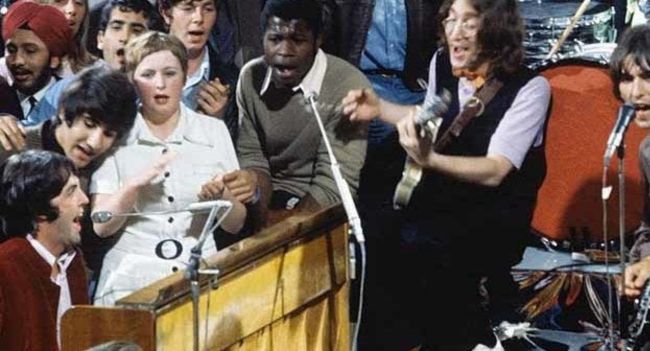
The heart of any great Beatles song was always rooted in the way John Lennon and Paul McCartney played off one another.
Although George Harrison and Ringo Starr deserve far more attention for what they contributed to each of the band’s albums, there’s no escaping the fact that The Nerk Twins captured a dynamic that every other rock and roll band had to take seriously once the Beatles became the biggest band in the world. Whenever Lennon and McCartney worked together, they complemented each other almost perfectly. Yet by the final years of the Beatles, both had developed into remarkably strong songwriters who were capable of creating great music completely independently of one another.
Looking at the songs they were writing on their own during that period, any number of them could have been enough to launch another artist’s entire career. Lennon was often the first to admit that he had little interest in making his music overly complicated, but even the simple melodies behind songs like ‘Dear Prudence’ and ‘Across the Universe’ could sound absolutely gorgeous when paired with the right arrangement.

With McCartney, however, things become a little more complicated. There were plenty of occasions when he seemed like one of the greatest melodists of his generation, but some of the lyrics he was writing could certainly have benefited from more refinement. Lennon was a master when it came to wordplay, whereas McCartney’s so-called ‘granny tunes’ occasionally became more than a little embarrassing for the rest of the band to sit through.
And it’s difficult to blame them for feeling that way. The Beatles were at the center of everything modern teenage culture represented, yet one of their members would occasionally turn up with songs that sounded as though they belonged in some eccentric 1920s cabaret. There’s nothing wrong with adding a little variety to an album, but McCartney was also capable of delivering a genuine nugget of wisdom on every record they made.
Lennon understood that his songwriting partner had the ability to create something truly beautiful. Even when Macca failed to recognize the magic in ‘Hey Jude’ after first playing it, it was Lennon who encouraged him to keep certain lines in the finished version. They could still bring out the best in one another, but as the curtain began to fall on the Beatles’ career, McCartney produced one final lyric that seemed to capture the entire journey on ‘The End’.
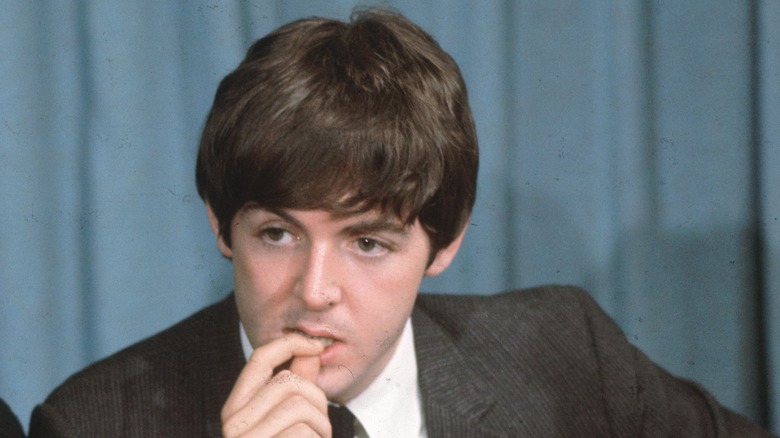
The closing moments of Abbey Road remain among the finest work the band ever recorded, but McCartney believed the final line of ‘The End’ was the sort of lyric that could remain meaningful for decades after the four of them were gone. He explained, “‘In the end the love you take is equal to the love you make’ just came into my head. I just recognized that would be a good end to an album. And it’s a good little thing to say– now and for all time, I think. I can’t think of anything much better as a philosophy.”
What makes the line especially powerful, though, is how perfectly it also seems to wrap up the Beatles’ entire career. Just a few years earlier, Lennon had been telling the world that all we needed was love. Now McCartney was suggesting that everything could ultimately work out if people simply shared their love with others whenever they had the chance.
Abbey Road did not turn out to be the final official release from the Beatles, but considering the way the band eventually brought its story to a close, ‘The End’ feels like the perfect epitaph to place on their artistic gravestone. They had spent nearly a decade singing about love every time they entered the studio, and if love had been powerful enough to carry them to the top of the charts, then it was surely powerful enough to guide them through the rest of their lives.