
Congratulations!
You've earned 1 point
Robert Plant Had No Idea He Was Writing a Rock Classic When He Started “Stairway to Heaven”
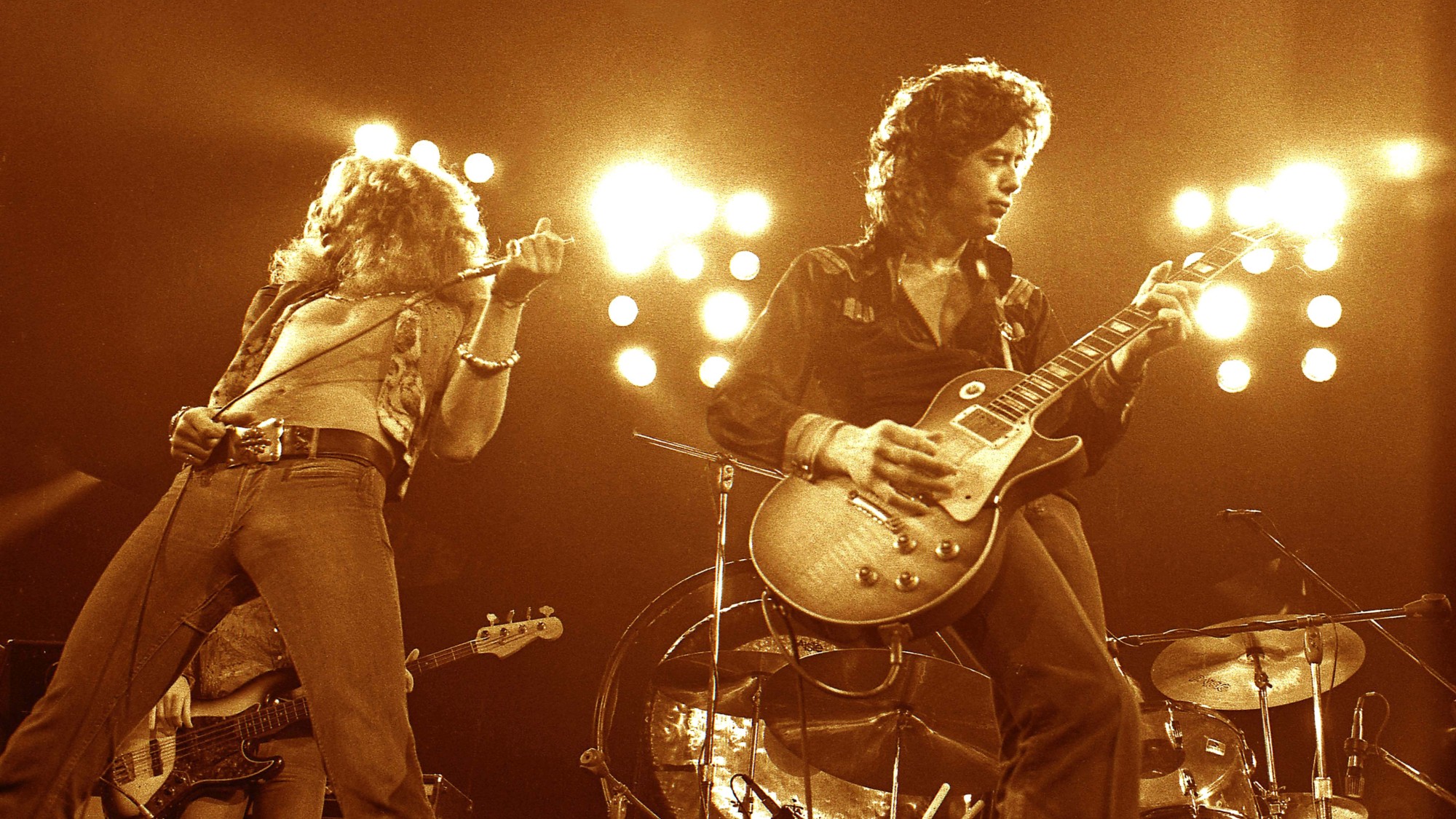
Few songs in rock history have achieved the enduring status of Led Zeppelin’s “Stairway to Heaven.” Released in 1971 on the band’s fourth studio album, Led Zeppelin IV, the more-than-eight-minute epic was written by Robert Plant and Jimmy Page and eventually became one of the group’s most recognizable songs.
Yet the story behind its creation is surprisingly uncertain. Plant later recalled that when the lyrics first came to him, he had no sense that he was creating what would eventually become one of rock’s defining songs.
The lyrics came to Robert Plant unexpectedly

Plant and Page were sitting beside a fire when the early ideas for “Stairway to Heaven” began to take shape.
Plant recalled holding a pencil and paper while he was in a particularly bad mood. Then, almost without consciously planning the words, he found himself writing:
“There’s a lady who’s sure all that glitters is gold…”
The moment reportedly caught Plant off guard. He looked down at what he had written and was so surprised by the result that he nearly jumped out of his seat.
At that stage, however, there was no indication that the words would eventually become part of one of Led Zeppelin’s most famous recordings.
Jimmy Page had a much bigger idea for the song
While Plant was developing the lyrics, Page was already thinking about the scale of the music.
Long before Led Zeppelin IV was finished, the guitarist had envisioned creating an unusually long track that would gradually build in intensity. His idea involved combining acoustic guitar and organ before eventually moving toward a much heavier electric sound.
Page initially imagined a song that could run for around 15 minutes, although the finished “Stairway to Heaven” ultimately came in at just over eight minutes.
That structure became one of the song’s defining characteristics. Instead of following a straightforward verse-and-chorus format, it continually develops, introducing new sections and gradually increasing its musical intensity.
Even the band had to adjust to its unusual structure
The song’s unconventional arrangement was not necessarily easy for the musicians to absorb at first.
Page later explained that “Stairway to Heaven” was complicated precisely because its sections did not simply repeat in the traditional way. The composition continually moved forward rather than settling into a predictable verse-chorus pattern.
That progression was intentional.
Page wanted the song to maintain a sense of movement throughout its entire runtime, with both the tempo and intensity changing as the arrangement developed.
He described the approach as being closer to the principles of classical composition, where a piece can continually evolve rather than remaining fixed around a repeated structure.
A song that never really stands still
One of Page’s central ambitions was to prevent the track from feeling static.
The song begins relatively quietly, with acoustic instrumentation, before gradually introducing greater complexity and eventually reaching its powerful electric climax. For the musicians, that meant maintaining the momentum for more than eight minutes without the kind of pauses or repeated sections that might normally give a performance a break.
Page specifically wanted the tempo to evolve from the beginning to the end, despite the fact that conventional musical training generally teaches performers not to speed up or slow down.
That deliberate change became part of what made the song so distinctive.
More than five decades after its release, “Stairway to Heaven” remains one of Led Zeppelin’s signature recordings — remarkable not only for its place in rock history, but also for how unexpectedly it began: Plant sitting with a pencil and paper, unaware that the words appearing in front of him would eventually become part of one of the most enduring songs ever associated with the band.