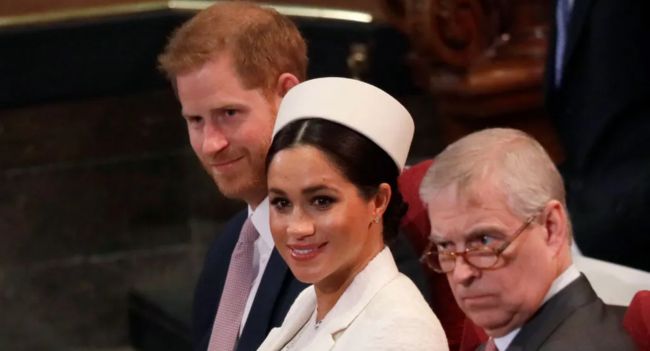
The gloves are off… Why the debate over Prince Harry and Meghan’s royal titles is refusing to go away

It has become one of the most divisive questions facing the modern monarchy.
Should Prince Harry and Meghan Markle keep their royal titles?
What was once an occasional topic among royal commentators has grown into a much wider public debate, with supporters and critics of the Duke and Duchess of Sussex arguing passionately over whether their titles still reflect their role following their decision to step back as senior working royals in 2020.
The discussion has gathered fresh momentum in recent months, with commentators, newspaper columnists and members of the public once again questioning whether King Charles should consider changes to the Sussexes’ royal status.
At the center of the debate is a simple but emotionally charged argument.
:max_bytes(150000):strip_icc():focal(662x253:664x255)/meghan-markle-cookie-queens-8626-e01434a5038f436eaeb2a2f46b6cb0db.jpg)
Critics contend that because Harry and Meghan no longer carry out official royal duties, continuing to use the Duke and Duchess of Sussex titles creates confusion about their relationship with the institution. Some also argue that repeated public disagreements between the couple and the Royal Family have intensified calls for a clearer separation.
Others strongly disagree.
Supporters point out that Harry was born a prince and that the Sussex titles were granted by the late Queen Elizabeth II upon his marriage to Meghan in 2018. They argue that removing titles would do little to resolve family tensions and could instead deepen divisions while generating even greater international attention.
The conversation has also been fueled by comparisons made by some commentators between the Sussexes and Prince Andrew.
Although the circumstances surrounding the two cases are fundamentally different, critics frequently cite Andrew’s loss of military affiliations and working royal responsibilities when discussing whether the monarchy should adopt a firmer approach to titles and public roles more broadly.
Constitutional experts, however, have repeatedly noted that altering royal titles is not a simple matter.
Different titles are governed by different legal mechanisms, and any significant change could involve constitutional and parliamentary considerations rather than being a straightforward personal decision by the King.
That legal complexity has done little to slow public speculation.
Every new appearance by Harry and Meghan, every interview and every business venture tends to revive the same question: what should their long-term relationship with the monarchy look like?
For King Charles, the issue is widely seen as part of a much larger balancing act.
The monarch has consistently sought to present a modern yet stable Royal Family while also navigating highly publicized tensions involving several senior family members. Any decision affecting Harry and Meghan would inevitably attract global scrutiny and be interpreted as carrying both personal and institutional significance.
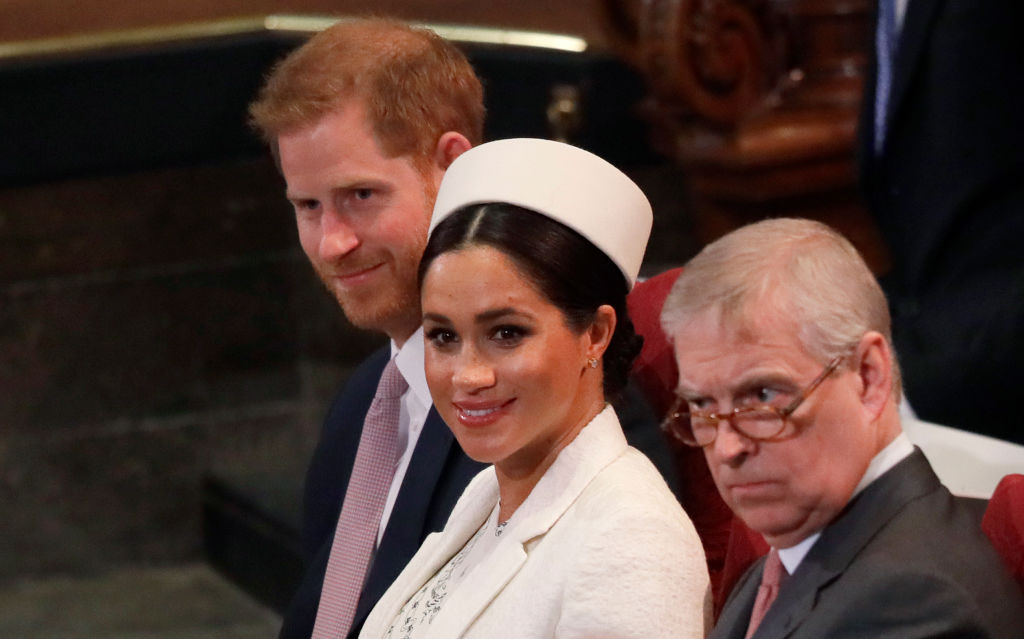
For now, there has been no official indication that the King intends to change the Duke and Duchess of Sussex’s titles.
Until any formal announcement is made, the discussion remains exactly that—a debate rather than a confirmed policy.
Yet the strength of public opinion on both sides shows no sign of fading.
Whether viewed as a matter of constitutional principle, family loyalty or public accountability, the question continues to divide royal watchers around the world.
One thing, however, is beyond dispute: whenever Harry and Meghan’s place within the monarchy is questioned, the conversation quickly grows far bigger than two titles—and becomes another chapter in the continuing story of a Royal Family adapting to the modern age.