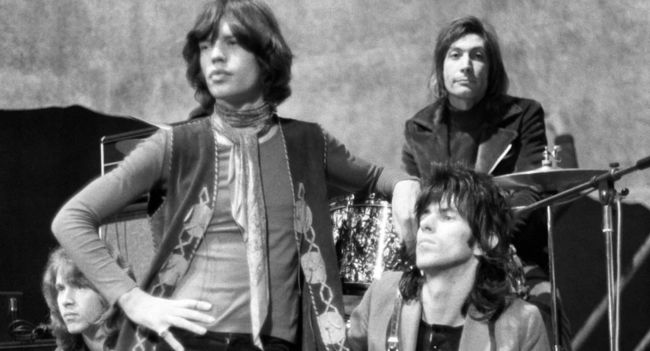
The Rolling Stones Initially Hated ‘As Tears Go By’ — Even as the Ballad Became a Major Hit

The Rolling Stones have spent more than six decades building one of rock music’s most celebrated catalogs, producing everything from rebellious early anthems to blues-heavy classics and some of the most recognizable songs ever recorded.
Yet commercial success did not always mean Mick Jagger and Keith Richards actually liked what they had written.
One of the clearest examples arrived surprisingly early in their career.
“As Tears Go By” would become a major international hit and eventually earn a place among the Stones’ best-known 1960s ballads. At the time, however, Jagger and Richards had a dramatically different opinion of it.
Richards remembered thinking it was a “terrible piece of tripe,” while Jagger later admitted that the band initially considered the song “crap.”
Even more remarkably, the Rolling Stones did not originally record it themselves.
The Song Began With an Important Challenge
“As Tears Go By” was written by Jagger and Richards with the Rolling Stones’ then-manager Andrew Loog Oldham.
During the early years of the band, Jagger and Richards were not yet known as the prolific songwriting partnership they would eventually become.
The Stones had built much of their early identity performing blues and R&B material written by other artists.
Oldham recognized that original songs could be crucial to their future and encouraged Jagger and Richards to begin writing their own material.
“As Tears Go By” emerged from that early period of experimentation.
But what they produced was very different from the raw, blues-based sound with which the Rolling Stones were becoming associated.
It was a gentle, melancholy ballad.
And its creators were far from convinced.
Marianne Faithfull Recorded It First

Instead of becoming a Rolling Stones recording immediately, the song was given to Marianne Faithfull.
Faithfull released her version in 1964.
The recording became an important early success for the young British singer, reaching the charts in Britain and Ireland and helping establish her during the height of the British Invasion.
Its success also demonstrated something Jagger and Richards had not necessarily expected: the song they were dismissive of had genuine commercial potential.
The Rolling Stones were rapidly developing a tougher image built around blues, rock and rebellion.
“As Tears Go By” sounded markedly different.
Its reflective lyrics and delicate arrangement belonged to a softer world than the one suggested by songs such as “(I Can’t Get No) Satisfaction.”
That contrast helped explain why Jagger and Richards were initially so reluctant to embrace it.
Keith Richards Thought It Was ‘A Terrible Piece of Tripe’
Richards later recalled the pair’s reaction in his memoir Life.
“We thought, what a terrible piece of tripe,” he wrote.
When they played the song for Oldham, however, their manager heard something they apparently did not.
“He said, ‘It’s a hit,’” Richards recalled.
Oldham turned out to be right.
Faithfull’s recording proved there was an audience for the song, while Jagger and Richards learned an early lesson about the difference between their own taste and what listeners might connect with.
Richards remembered their astonishment that something they regarded so dismissively could actually become profitable.
“We actually sold this stuff, and it actually made money,” he wrote.
“Mick and I were thinking, this is money for old rope.”
The Stones Eventually Recorded Their Own Version
The band eventually reconsidered.
The Rolling Stones recorded “As Tears Go By” themselves, releasing their version in the United States in December 1965. It followed as a UK release in February 1966.
Their rendition retained the song’s gentle character rather than attempting to transform it into a conventional Stones rocker.
Acoustic guitar sits at the center of the arrangement, accompanied by strings that give the recording a sound notably removed from the tougher singles surrounding it in the band’s catalog.
That difference did not hurt its commercial prospects.
Quite the opposite.
The Stones’ recording climbed to No. 6 on the Billboard Hot 100 in the United States and reached No. 1 on Canada’s RPM chart.
The “crap” ballad had become another hit.
It Was an Unusual Rolling Stones Song
Part of the band’s discomfort with “As Tears Go By” makes more sense when placed in the context of their image at the time.
The Stones were increasingly positioned as the dangerous alternative to the Beatles.
Their music drew heavily from American blues and rhythm and blues, while their public image emphasized rebelliousness.
A sentimental orchestral ballad did not obviously fit that identity.
“As Tears Go By” was therefore significant not only because it succeeded but because it demonstrated that the Stones could move beyond the narrow musical boundaries audiences might have expected from them.
The song contained none of the swagger of “Satisfaction.”
There was little of the menace that would later characterize recordings such as “Paint It Black” or “Sympathy for the Devil.”
Instead, its power came from melancholy.
The narrator watches children playing while contemplating the passing of time and a sense of emotional isolation.
For musicians still in their early twenties, the perspective sounded unusually reflective.
Jagger Was Still Calling It ‘Crap’ Decades Later
The passage of time did not immediately erase Mick Jagger’s reservations.
Looking back on the song in 2002, he remembered why the Rolling Stones had originally stayed away from recording it.
“It was pop, and we didn’t record it initially because it was crap,” Jagger said.
His summary of what followed was characteristically direct.
“We had a successful crap ballad.”
By then, however, Jagger’s attitude toward the song had changed.
The musician who once regarded it as disposable pop had come to recognize qualities that he and Richards had overlooked when they wrote it.
“I can say now it’s a wonderful tune,” he acknowledged, “but we didn’t think it was that great at the time.”
Its Success Helped Prove Jagger and Richards Could Write Hits
The importance of “As Tears Go By” extends beyond its chart positions.
It arrived during the formative period of the Jagger-Richards songwriting partnership.
That partnership would eventually produce “Paint It Black,” “Jumpin’ Jack Flash,” “Gimme Shelter,” “You Can’t Always Get What You Want,” “Wild Horses,” “Brown Sugar,” “Start Me Up” and countless other Stones staples.
But that enormous body of work did not appear fully formed.
Jagger and Richards had to learn how to write together.
“As Tears Go By” was part of that education.
Its success — first for Faithfull and later for the Stones themselves — offered evidence that the pair could create material capable of succeeding outside the blues covers that had helped launch the band.
Ironically, one of the songs they liked least became an early demonstration of just how versatile their songwriting could become.
Marianne Faithfull Remained Closely Associated With the Song
Although the Rolling Stones’ version became successful in its own right, “As Tears Go By” remained an important part of Marianne Faithfull’s musical story.
Her recording preceded theirs and helped establish the song with audiences.
That history gives the track an unusual place in the Stones catalog.
It was written by members of the band, became famous through another performer and only afterward returned to its creators.
By the time the Rolling Stones released their own rendition, listeners were already familiar with the composition.
Rather than diminishing its impact, that history helped turn it into one of the more distinctive songs associated with both Faithfull and the Stones.
The Ballad Eventually Became Part of Stones History
Time proved far kinder to “As Tears Go By” than its writers initially were.
What Jagger and Richards once saw as a piece of lightweight pop survived the era in which it was created.
Its restrained arrangement now provides a snapshot of the Rolling Stones at a fascinating moment — a young band beginning to discover that it could do far more than reproduce the blues and R&B music that had inspired it.
It also captures the unpredictability of songwriting.
Artists do not always recognize their most enduring work when they create it.
Sometimes the song its writers dismiss is precisely the one audiences embrace.
For the Rolling Stones, “As Tears Go By” became a particularly striking example.
Jagger and Richards thought they had written something terrible.
Andrew Loog Oldham heard a hit.
Listeners agreed with Oldham.
And decades later, even Jagger had to concede that the supposedly “crap” ballad was, after all, “a wonderful tune.”