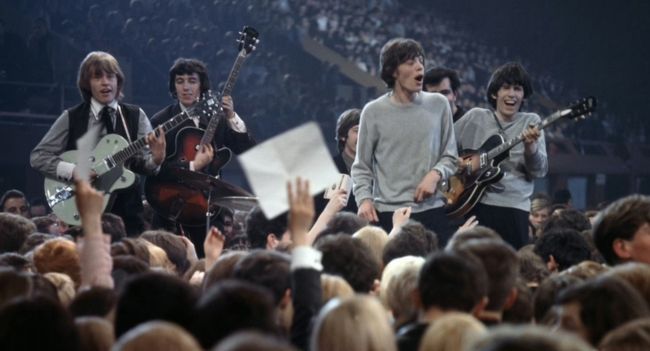
Mick Jagger Once Said He’d ‘Rather Be Dead’ Than Sing Satisfaction at 45 — More Than 50 Years Later, He’s Still Proving Himself Wrong

Mick Jagger once imagined there was an age when singing one of The Rolling Stones’ biggest hits would become unthinkable.
He just dramatically underestimated what that age would be.
Back in 1975, Jagger reportedly told People magazine: “I’d rather be dead than sing Satisfaction when I’m 45.”
The remark has aged in perhaps the most spectacular way possible.
More than half a century after making it — and more than 60 years after The Rolling Stones released “(I Can’t Get No) Satisfaction” — Jagger is still performing the song well into his 80s.
It’s an extraordinary contradiction that perfectly captures a band whose longevity has repeatedly exceeded even its own expectations.
Satisfaction Changed Everything for The Rolling Stones
When The Rolling Stones emerged in the early 1960s, there was little about them that resembled the polished pop stars dominating British music.
They were deeply influenced by American blues and R&B.
They were also scruffy, unruly and increasingly difficult to fit into the clean-cut image associated with many successful groups of the period.
Initially, there were attempts to smarten them up.
The young musicians were put into suits, but manager Andrew Loog Oldham soon realized that trying to compete with neatly dressed Merseybeat stars on the same terms wasn’t necessarily the answer.
Instead, he leaned into everything that made the Stones different.
Longer hair. Mismatched clothes. Attitude.
The transformation helped create their reputation as pop music’s dangerous outsiders.
But image could only take them so far.
The songs had to follow.
Writing Their Own Music Took Them to Another Level
The Stones initially relied heavily on cover versions, reflecting their passion for the American music that had inspired them.
Their trajectory changed as Jagger and Keith Richards increasingly began writing original material.
By 1965, they had the song that would become inseparable from the band’s identity.
“(I Can’t Get No) Satisfaction” didn’t merely give The Rolling Stones another hit.
Its instantly recognizable riff and rebellious attitude reinforced exactly the image Oldham had helped construct around them.
The Stones weren’t simply another successful British group anymore.
They were developing a sound and identity of their own.
More hit singles and albums followed, creating an extraordinary catalogue throughout the remainder of the 1960s.
Within only a few years, the group had gone from recording songs written by others — including material connected to The Beatles — to standing alongside the Fab Four as one of the era’s defining bands.
The Band Nobody Expected to Last Kept Going
That transformation makes Jagger’s 1975 remark even more fascinating in hindsight.
At the time, the idea of a rock singer continuing to perform the same rebellious anthem into middle age apparently seemed absurd enough for him to joke that he’d rather be dead.
Forty-five eventually came and went.
So did 50, 60, 70 and 80.
And “Satisfaction” remained.
The song that helped define the Stones’ youthful defiance became something else entirely: a piece of rock history capable of connecting audiences separated by generations.
Jagger’s presence onstage also became one of the great symbols of the band’s astonishing endurance.
From Beatles Rivals to Rock Survivors
The Stones’ evolution during the 1960s remains central to understanding why they lasted.
Their early blues obsession gave them a foundation.
Oldham helped provide the provocative image.
Jagger and Richards’ songwriting gave the band its own musical identity.
And the combustible chemistry between the musicians produced a catalogue that survived far beyond the decade in which it was created.
They had started as unlikely stars operating in the shadow of Britain’s more polished pop acts.
By the end of the 1960s, they were competing for recognition as one of the greatest bands in the world.
Decades later, the remarkable part isn’t simply that those songs survived.
The musicians did too.
And perhaps no image captures that better than Mick Jagger standing onstage in his 80s, still singing the very song he once couldn’t imagine performing past 45.
Jagger’s famous prediction failed by decades — but every time that unmistakable “Satisfaction” riff starts again, being wrong looks more like one of rock and roll’s greatest victories.