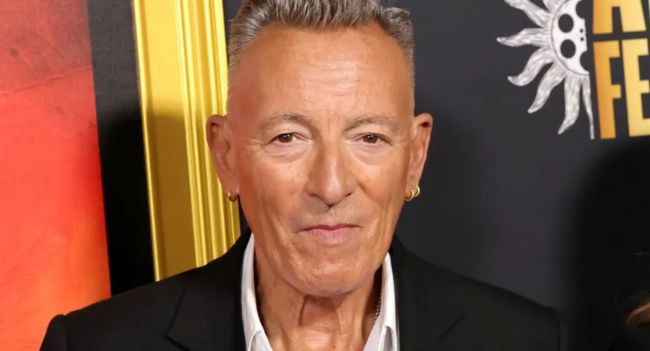
Bruce Springsteen Says He’s Fine Losing Fans Over His Political Shows — ‘I’m Old Now And I Do What I Want To Do’
:max_bytes(150000):strip_icc():focal(993x679:995x681):format(webp)/Bruce-Springsteen-2025-AFI-Fest-040226-fa17cbda677a43f9b951044cc6e8ee32.jpg)
Bruce Springsteen knows some longtime fans strongly disagree with the political messages he has brought onto the stage.
At 77, he says he is no longer particularly worried about that.
After building his 2026 Land of Hope and Dreams tour around songs and speeches reflecting his view of America’s political moment, Springsteen acknowledged that some listeners reacted angrily to the content.
For The Boss, that was a consequence he was prepared to accept.
“This was the show I wanted to make, the story I wanted to tell,” Springsteen told Rolling Stone.
He said he went out looking for the audience willing to hear that story — just as he has done throughout his career.
“I’m sure there were people, and I’ve read things where people were vehement about the content of the show,” he said. “And that’s just the way the chips fall.”
“And that’s okay with me right now.”
‘I’m Old Now And I Do What I Want To Do’
:max_bytes(150000):strip_icc():focal(749x0:751x2):format(webp)/Bruce-Springsteen-minneapolis-1-040126-cead4320f0774c61b642389d5fbc9615.jpg)
Springsteen offered a simple explanation for why criticism hasn’t persuaded him to change course.
“I’m old now and I do what I want to do,” he joked, before noting that the philosophy isn’t actually new for him.
According to Springsteen, he has approached his music in much the same way throughout his career.
“I always made the records I wanted to make and then went out and found the audience for them,” he explained.
The 2026 tour followed the same principle.
Rather than trying to design a show that would appeal equally to every section of his enormous fan base, Springsteen assembled the material he believed fit the moment and accepted that some people would reject it.
Springsteen Calls His Approach ‘Critical Patriotism’
Springsteen has described his political outlook in terms of what he calls “critical patriotism.”
Speaking to PBS News Hour earlier in 2026, he said loving the United States does not, in his view, require ignoring its problems.
Instead, Springsteen described patriotism as being willing to examine the country critically, acknowledge its shortcomings and push it toward something better.
That approach has been present in his songwriting for decades.
Perhaps the most famous example is “Born in the U.S.A.”
Its enormous chorus and title have sometimes led the 1984 song to be treated as a straightforward patriotic anthem.
But its narrative focuses on a Vietnam veteran struggling after returning home.
During the 2026 tour, Springsteen deliberately brought the song back into the center of his American set.
He told Rolling Stone that placing it directly after Edwin Starr’s “War” allowed him to “reclaim” and recontextualize the song so that his intended meaning was unmistakable.
‘Streets Of Minneapolis’ Helped Trigger The Entire Tour
One of the most immediate pieces of political songwriting in Springsteen’s recent catalog arrived in January.
He released “Streets of Minneapolis” after the deaths of Renee Good and Alex Pretti amid federal immigration-enforcement operations in Minnesota.
Contemporary reporting identified Good as having been killed by an ICE agent, while Pretti was killed during a confrontation involving federal immigration officers. Springsteen responded by writing a protest song that named both of them.
Springsteen later said the events in Minneapolis became the spark for the entire American tour.
“Minneapolis occurred, so I wrote ‘Streets of Minneapolis,’ and that fired the whole project, really, into being,” he told Rolling Stone.
His thinking was straightforward: if he had written a song specifically responding to that moment, he wanted to take it onstage.
“I’m out there to perform that music and to provide its message,” he said.
He Rebuilt 50 Years Of Songs Around 2026
Springsteen didn’t want the tour to rely only on newly written protest material.
Instead, he went back through approximately five decades of his own catalog and arranged older songs in a way that gave them a new context.
The resulting set included politically resonant material such as “Born in the U.S.A.,” “Death to My Hometown,” “No Surrender,” “Youngstown,” “American Skin (41 Shots),” “The Ghost of Tom Joad” and “Land of Hope and Dreams.”
The idea, Springsteen explained, was to make songs written across very different periods speak to the same present-day story.
“It was the state of the nation for 2026,” he told Rolling Stone.
His Opening-Night Speech Left Little Doubt
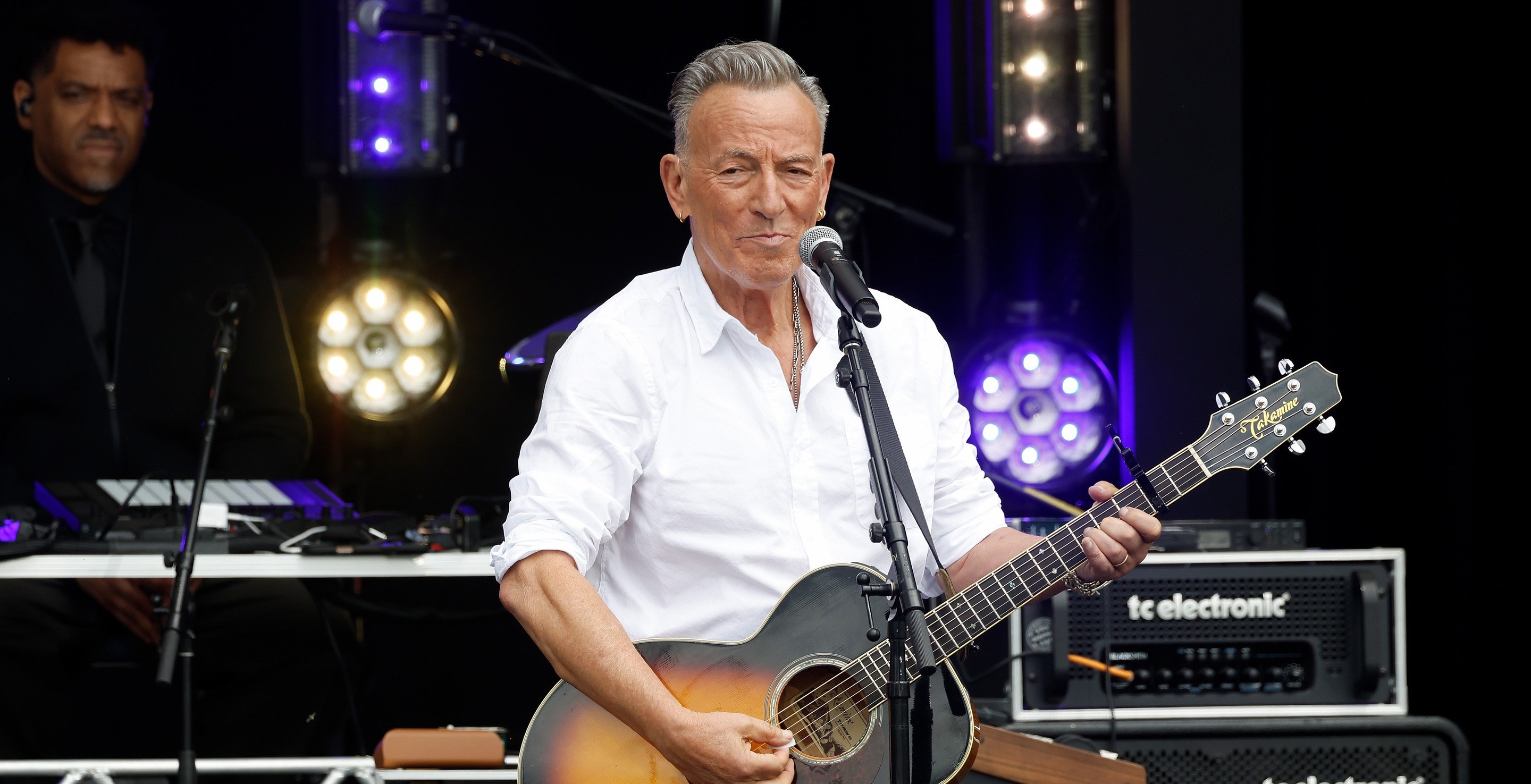
The political focus was apparent before the E Street Band had even properly launched into the opening-night set in Minneapolis on March 31.
Springsteen told the audience that the America he had loved and written about for 50 years was, in his words, “currently in the hands of a corrupt, incompetent, racist, reckless, and treasonous administration.”
Those were Springsteen’s characterizations of the Trump administration, and the tour continued to feature similarly explicit criticism.
He then called on the audience to choose what he described as hope over fear, democracy over authoritarianism, rule of law over lawlessness, unity over division and peace over war.
The band immediately launched into Edwin Starr’s “War,” followed by “Born in the U.S.A.”
The tour artwork also featured “No Kings” branding, further signaling its political theme.
He Knew Some Fans Might Walk Away
None of this came without consequences.
Springsteen has an audience built across generations, and his fans do not all share the same politics.
The Rolling Stone interview directly raised the possibility that the tour could cost him fans who support President Donald Trump.
Springsteen did not dispute that possibility.
Instead, he returned to the philosophy that has guided his career: create the work first and then find the people who want to hear it.
He had made the show he wanted.
If some listeners decided that the politics were too much, Springsteen said that was simply “the way the chips fall.”
Springsteen Remains Hopeful About America’s Direction
Springsteen also discussed electoral politics during the interview.
He said there were Democratic candidates he liked but declined to go deeply into the party’s internal debates.
He did say he wanted Democrats to regain congressional power and expressed his desire for the remainder of Trump’s term to become politically difficult for the president.
Those comments represented Springsteen’s own partisan preferences, not a prediction of election results.
Asked more broadly about America’s future, his answer was considerably simpler.
“I’m always hopeful.”
That combination of criticism and optimism is central to the “critical patriotism” Springsteen has described.
His argument is not that the country is beyond saving.
It is that criticizing what he sees as its failures can coexist with believing in what it could become.
The Tour Is Now Becoming A Concert Film
Springsteen is extending that message beyond the people who attended the concerts.
He is releasing Bruce Springsteen and the E Street Band: Land of Hope and Dreams American Tour (Philadelphia Freedom Cut) in installments.
The footage comes from the tour’s Philadelphia finale and is being released in sections rather than being held back until the entire film is finished.
Springsteen told Rolling Stone that once he saw the first edited songs, he wanted the material released immediately.
That urgency reflected the purpose of the tour itself.
He saw the project as something made for a particular moment and wanted audiences to experience it while that moment was still unfolding.
After 50 Years, Springsteen Isn’t Changing Course
Springsteen’s politics have attracted both support and criticism throughout different stages of his career.
But his latest comments make one thing about his artistic approach clear.
He isn’t planning his shows around avoiding disagreement.
At 77, Springsteen says he still works much as he always has: make the music he believes in, tell the story he wants to tell and then see who comes along.
The Land of Hope and Dreams tour tested that philosophy more openly than most.
Some fans embraced its message.
Others strongly objected to it.
Springsteen knows that.
And, in his words, that’s simply “the way the chips fall.”