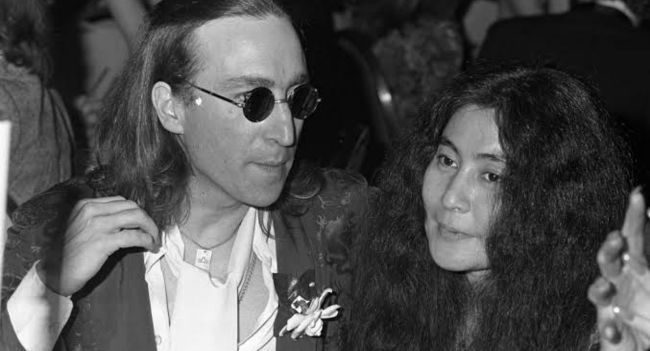
Inside John Lennon’s Final Day: From His Last Photo Shoot And Interview To The Fatal Shooting Outside The Dakota
John Lennon spent the final hours of his life looking firmly toward the future.
On December 8, 1980, the 40-year-old former Beatle moved through an unusually busy schedule in New York City: a haircut, an intimate photography session with Yoko Ono, a lengthy radio interview and an evening recording session. Music had returned to the centre of his life after a five-year break, and there was little indication that the day would end in tragedy.
By approximately 10:45 p.m., Lennon and Ono were returning to their home at the Dakota. Waiting outside was Mark David Chapman, the 25-year-old man Lennon had encountered — and given an autograph to — only hours earlier.
Moments later, Lennon was shot four times. He was rushed to Roosevelt Hospital, where doctors were unable to save him.
Details released after his death revealed the devastating extent of his injuries and how little chance there had been for him to survive.
Lennon Had Recently Returned To Music

December 8 came during an important new chapter in Lennon’s career.
After stepping away from the music business in 1975 and devoting much of his time to raising his son Sean, Lennon had returned to recording with Ono. Their album Double Fantasy marked his first album release in five years.
The morning of December 8 began under a clear New York sky.
“We woke up to a shiny blue sky spreading over Central Park,” Ono later recalled, according to the Smithsonian. “The day had an air of bright eyes and bushy tails.”

Lennon had his hair cut that morning before returning to the Dakota, where photographer Annie Leibovitz was waiting.
She was working on a Rolling Stone cover shoot involving Lennon and Ono, continuing a session that had begun the previous week.
Leibovitz later remembered Lennon appearing at the door in a black leather jacket with his hair slicked back.
“I was thrown a little bit by it,” she recalled. “He had that early Beatle look.”
The session would produce one of the most recognizable photographs of Lennon and Ono together.
Neither could have known that it would also become one of the final portraits taken of him.
John Lennon Gave His Final Interview That Afternoon
After the photography session, Lennon sat down with RKO Radio’s Dave Sholin for what became his final interview.
The conversation ranged across his life and career as Lennon reflected on turning 40 and discussed his relationship with Ono.
At one point, he made a remark that would take on a haunting significance only hours later.
“I hope I die before Yoko,” Lennon said, explaining that if she died first, “I wouldn’t know how to survive. I couldn’t carry on.”
There was no suggestion Lennon believed his own death was imminent. Instead, he was talking about the depth of his relationship with his wife as he continued rebuilding his public and musical life.
After the interview, Lennon and Ono prepared to leave the Dakota and travel to the Record Plant recording studio.
Outside the building, another encounter was waiting.
Lennon Signed An Album For The Man Who Would Later Kill Him
:max_bytes(150000):strip_icc():focal(749x0:751x2)/paul-mccartney-john-lennon-100923-3-bc893d4cddc74d5cbc79fc22a8079dfe.jpg)
Mark David Chapman was standing near the Dakota when Lennon and Ono emerged.
Chapman had a copy of Double Fantasy. Lennon noticed the album and asked whether he wanted it signed.
He did.
Photographer Paul Goresh captured the encounter, creating an extraordinary record of Lennon signing an autograph for the man who would murder him later that same evening.
Lennon and Ono then left for the Record Plant.
At the studio, the couple worked on “Walking on Thin Ice,” one of Ono’s recordings. The session continued into the evening before they eventually headed home.
At around 10:45 p.m., their car returned to the Dakota.
Chapman was still there.
Four Shots Outside The Dakota
As Lennon approached the entrance to his apartment building, Chapman called out to him and opened fire with a .38-calibre handgun.
Four bullets struck Lennon, with wounds to his back and shoulder.
Despite the severity of his injuries, Lennon was quickly transported to Roosevelt Hospital. The journey reportedly took less than 10 minutes.
Doctors attempted to save him, but his wounds were catastrophic.
Two days after the shooting, New York City’s chief medical examiner Dr. Elliot Gross explained just how rapidly Lennon’s condition had deteriorated.
“Death occurred within a very short time,” Gross said.
Lennon was described as “essentially pulseless” when he reached the hospital.
He was pronounced dead shortly after his arrival.
The Examination Revealed The Extent Of Lennon’s Injuries
The subsequent medical examination documented the enormous damage caused by the gunshots.
Gross attributed Lennon’s death to “massive hemorrhaging and shock” resulting from his wounds.
According to accounts of the findings, two bullets passed through Lennon’s left lung and exited through his chest.
Another bullet that entered through his shoulder struck a bone in his left arm, while another penetrated his left lung and became lodged in his neck.
The severity and location of those wounds explain why doctors had so little time to intervene.
Chapman remained at the scene following the shooting and was taken into custody.
As emergency personnel and police dealt with the aftermath in Manhattan, news of what had happened began spreading.
Within hours, millions of people around the world knew John Lennon was dead.
America Learned The News During Monday Night Football
One of the most memorable announcements came during ABC’s Monday Night Football broadcast.
The New England Patriots were playing the Miami Dolphins when commentator Howard Cosell interrupted coverage to tell viewers about Lennon’s death.
“We have to say it,” Cosell began, reminding viewers that the event they were watching was “just a football game” before announcing that an “unspeakable tragedy” had been confirmed by ABC News in New York.
He told viewers that Lennon had been shot outside his apartment building on Manhattan’s West Side and had been rushed to Roosevelt Hospital, where he was pronounced dead.
“Hard to go back to the game after that newsflash,” Cosell said.
The announcement became part of the collective memory of Lennon’s death, particularly in the United States, where countless viewers first learned of the shooting while watching the game.
Fans Gathered Outside The Dakota
Shock quickly gave way to public mourning.
Thousands of people gathered outside the Dakota, the place where Lennon had lived and where his life had ended so abruptly. Fans brought flowers, sang Beatles songs and stood together in grief as news of the killing spread around the world.
The tragedy was especially difficult to comprehend because Lennon had only recently returned to the public eye.
After five years largely away from the music industry, he had begun recording again. Double Fantasy represented a new stage in his partnership with Ono, and his final day had been filled with the ordinary business of continuing that comeback — photographs, interviews and studio work.
Hours before the shooting, he had talked about his future. He had posed beside his wife. He had worked on new music.
Then, after returning home at approximately 10:45 p.m., the man to whom he had casually given an autograph earlier that day was waiting outside.
John Lennon was only 40.
His murder brought an abrupt end to a career that had already transformed popular music, while the details of December 8, 1980 — particularly those final photographs, his last interview, the autograph outside the Dakota and the recording session that followed — have ensured that his final day remains one of the most haunting chapters in rock history.