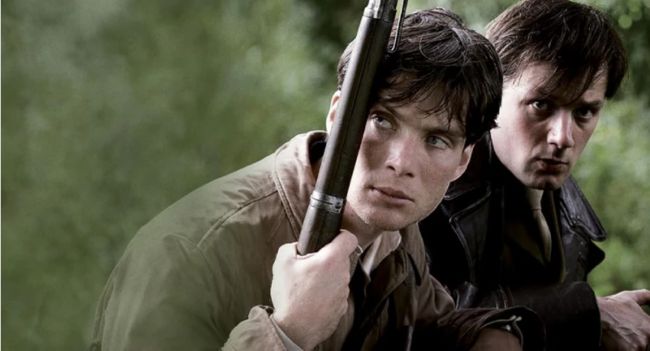
Cillian Murphy’s Harrowing Irish War Drama Returns to Streaming — Revisiting One of His Most Powerful Performances Before ‘Peaky Blinders’ and ‘Oppenheimer’
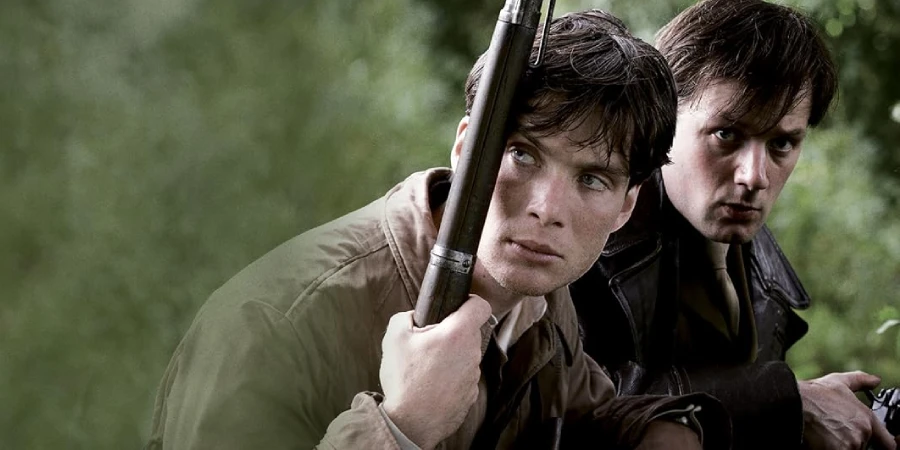
Long before Peaky Blinders made him a household name and Oppenheimer brought him Academy Award glory, Cillian Murphy delivered one of his most emotionally demanding performances in a historical drama that remains just as powerful two decades later. Now back in the streaming spotlight, the acclaimed film offers audiences another chance to experience the devastating story that helped establish him as one of Ireland’s most compelling actors.
Released in 2006, The Wind That Shakes the Barley stars Murphy as Damien O’Donovan, a young Irish doctor whose plans for a peaceful medical career are overturned by the violence surrounding Ireland’s fight for independence.
Directed by Ken Loach, the film combines political history with an intimate account of two brothers whose shared commitment to their country is ultimately tested by the divisions of war.
The film’s unflinching storytelling earned it the Palme d’Or at the Cannes Film Festival, cementing its reputation as one of Loach’s most significant works.
A Young Doctor Whose Future Is Changed by Violence

Set in Ireland during the 1920s, the story begins with Damien preparing to leave his homeland for London, where he hopes to pursue a career in medicine.
Unlike his brother Teddy, played by Pádraic Delaney, Damien initially has little desire to become involved in the escalating conflict between Irish independence fighters and British authorities.
But his determination to remain outside the struggle is challenged when he witnesses the brutality inflicted on people in his community.
The killing of a young man by the Black and Tans, British forces deployed during the War of Independence, becomes a decisive moment.
Unable to ignore what is happening around him, Damien abandons his plans for London and joins the Irish Republican Army alongside Teddy.
His decision places him in a dangerous world where loyalty, political conviction and personal relationships become increasingly difficult to separate.
For Murphy, the role provides an opportunity to portray a man whose transformation is driven not by ambition, but by the painful realization that remaining uninvolved is no longer something he can accept.
Two Brothers Find Themselves Divided by the Country They Fought For
![The Wind That Shakes the Barley – [FILMGRAB]](https://film-grab.com/wp-content/uploads/2018/06/3112.jpg)
As Damien and Teddy become involved in the independence movement, their shared purpose initially strengthens their bond.
However, the conflict takes a dramatic turn when a treaty between Britain and Irish representatives creates divisions within the movement itself.
Although the agreement offers a path toward ending the fighting, it also forces those who supported independence to confront fundamentally different visions of Ireland’s future.
The resulting Irish Civil War brings former allies into direct opposition.
For Damien and Teddy, the political disagreement becomes an intensely personal struggle as the brothers find themselves drawn toward opposing loyalties.
This development gives the film its greatest emotional weight.
Rather than focusing solely on battles or historical events, Loach examines how competing beliefs can destroy relationships between people who once fought for the same cause.
The brothers’ experiences demonstrate the human cost of political division, particularly when convictions become inseparable from family and friendship.
Ken Loach Brings a Distinctly Human Perspective to Irish History
Known for exploring social inequality and political conflict through the experiences of ordinary people, Ken Loach approaches the Irish War of Independence with the same grounded perspective that defines much of his filmmaking.
Written by his longtime collaborator Paul Laverty, The Wind That Shakes the Barley does not present history as a distant sequence of political decisions.
Instead, it follows individuals whose lives are permanently altered by events they cannot control.
The film shares thematic similarities with Loach’s 1995 drama Land and Freedom, which also explores how political movements can become divided by ideology and conflicting ambitions.
In both stories, the emotional consequences of political conflict are as important as the historical struggles themselves.
Barry Ackroyd’s cinematography complements the film’s realistic approach, while George Fenton’s score adds to its restrained but powerful atmosphere.
Running approximately two hours and four minutes, the drama allows its characters and their relationships to develop gradually, making the growing divisions feel increasingly consequential.

The Cannes Triumph That Became a Career Milestone
The Wind That Shakes the Barley premiered in competition at the 2006 Cannes Film Festival, where it received the event’s highest honor, the Palme d’Or.
The victory marked Loach’s first win of the prestigious award and brought international recognition to the film.
Despite its difficult subject matter and uncompromising depiction of violence, the production also achieved considerable commercial success.
The British Film Institute has identified it as Loach’s biggest commercial hit, an especially notable achievement for a historical drama that generated debate over its portrayal of British involvement in Ireland.
Its reception reflected the film’s ability to connect with audiences while provoking discussion about the historical events it dramatized.
The Cannes recognition also brought greater attention to Murphy, whose career was already developing through roles in films such as 28 Days Later and Batman Begins.
Years before his later television and Hollywood successes, the Irish actor had demonstrated his ability to carry a politically charged drama built around emotional complexity rather than spectacle.
One of Cillian Murphy’s Most Emotionally Compelling Early Roles
What makes Murphy’s performance particularly memorable is the gradual evolution of Damien’s character.
He begins as an educated young man hoping to escape the violence surrounding him, yet each experience forces him to reconsider what he believes and how far he is willing to go to defend those convictions.
Murphy portrays that transformation with remarkable restraint.
Rather than relying on exaggerated emotion, he allows Damien’s growing commitment, fear and inner conflict to emerge through his behavior and increasingly difficult decisions.
His performance becomes even more affecting through his scenes with Pádraic Delaney, whose portrayal of Teddy provides the film with an equally important emotional perspective.
Together, the actors capture the complicated relationship between two brothers who love each other but gradually become unable to reconcile their competing beliefs.
The result is a tragedy in which the emotional stakes extend far beyond the outcome of a war.
It also demonstrates the qualities that would later become familiar to audiences watching Murphy in Peaky Blinders and Oppenheimer: controlled intensity, vulnerability and an ability to communicate complex emotions without relying on lengthy dialogue.
A Historical Drama That Still Resonates 20 Years Later
Two decades after its original release, The Wind That Shakes the Barley remains a powerful examination of loyalty, national identity and the consequences of political conflict.
Its historical setting provides the foundation, but the relationship between Damien and Teddy gives the story its lasting emotional significance.
Loach avoids presenting the fight for independence as a straightforward journey toward victory. Instead, the film explores what happens when a movement united by a common purpose begins to fracture over the future it hopes to create.
For audiences discovering the film through streaming, it offers an opportunity to revisit a very different stage of Murphy’s career.
Before his portrayal of Tommy Shelby and his Oscar-winning transformation into J. Robert Oppenheimer, he had already demonstrated his considerable dramatic range through the role of a young doctor caught between personal conscience and political upheaval.
With its Palme d’Or-winning direction, emotionally charged performances and uncompromising historical storytelling, The Wind That Shakes the Barley remains one of Murphy’s most affecting early films — and a reminder that some of his finest work arrived long before he became a global star.