How Much of Netflix’s American Primeval Is True? The Real History Behind the Brutal Western
Netflix’s American Primeval brings viewers into a violent chapter of the American frontier, where Mormon settlers, Native American tribes, miners, trappers and the US military struggle to survive amid escalating tensions. Although the series tells a dramatized story, many of its central figures, locations and most devastating events are rooted in real history.
The six-episode Western was developed from an idea by executive producer Pete Berg, who approached The Revenant screenwriter Mark L. Smith to help create an authentic, uncompromising portrait of the American frontier. Smith, however, had already begun exploring the period years earlier.
While researching the 2015 film The Revenant, starring Leonardo DiCaprio, Smith became fascinated by pioneer Jim Bridger, who appears as a young boy in the film. That research inspired him to write a pilot about Bridger in 2016.
“I learned a lot about his character,” Smith told Netflix. “I knew I wanted to explore it more, and this gave me the opportunity.”
For American Primeval, Smith placed the story at Fort Bridger, approximately 50 years after the events depicted in The Revenant. The result blends historical figures and documented events with fictional characters and dramatic storytelling.
Here is how the series compares with the historical record.
Which Characters in American Primeval Were Real?
Several major characters are based on people who lived during the period, although the series takes creative liberties with their stories.
Jim Bridger (Shea Whigham)
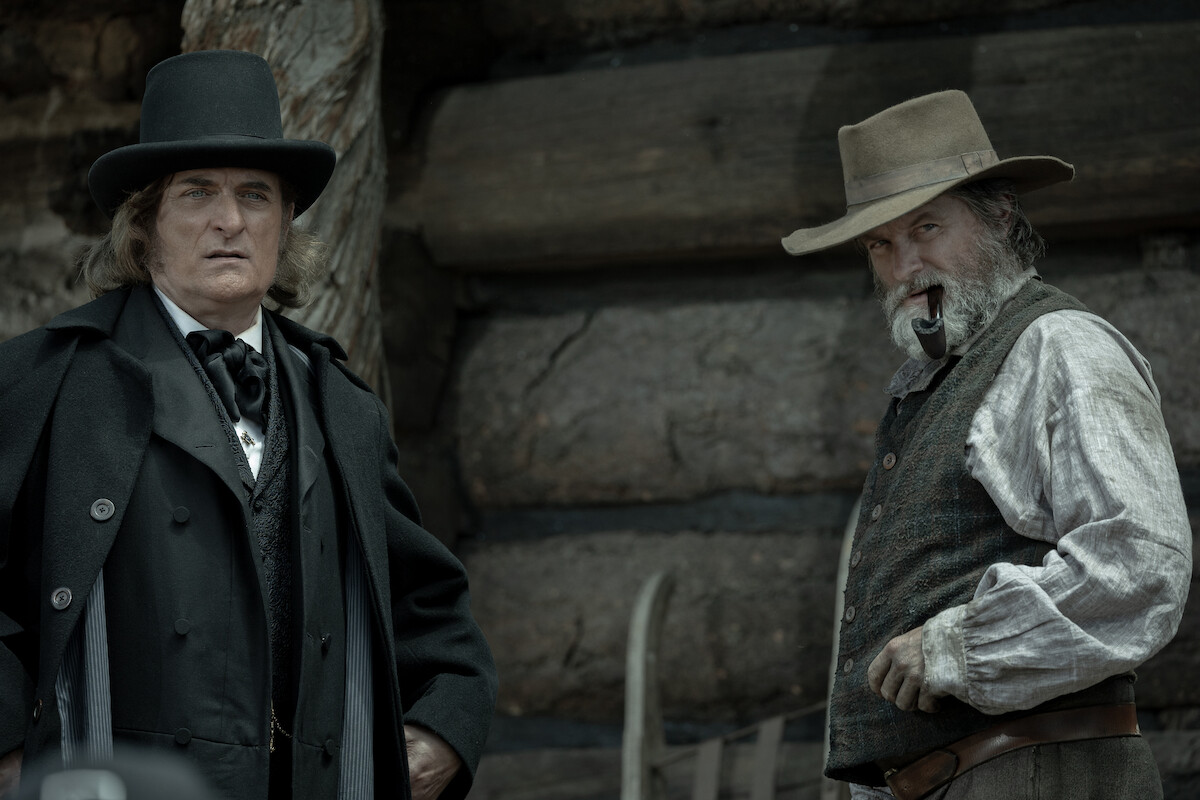
The real Jim Bridger was a celebrated frontiersman whose trading post, Fort Bridger, became an important stopping point for people traveling west. Its strategic position eventually placed Bridger in the middle of growing tensions involving Native American communities, Mormon settlers and the US government.
As the fort developed into a busy settlement on the edge of the expanding frontier, it became increasingly valuable to competing groups seeking influence and security in the region.
Brigham Young (Kim Coates)
Brigham Young, the historical leader of the Mormon church during this period, also features prominently in the series. He commanded the Nauvoo Legion, a Mormon militia that played a role in the conflicts surrounding the settlement of Utah.
Authenticity was a priority when portraying Young, according to executive producer Mark L. Smith. The production drew directly from historical documents, including sermons and speeches delivered by Young himself.
“For this type of story, it was very important that we stayed authentic,” Smith explained, noting that he incorporated Young’s actual words into the character’s dialogue.
Wild Bill Hickman (Alex Breaux)
Wild Bill Hickman was a real historical figure known as a lawman and a member of the Nauvoo Legion. His inclusion reflects the complicated relationships between frontier authorities, Mormon leaders and the military during a period of growing instability.
Winter Bird (Irene Bedard)
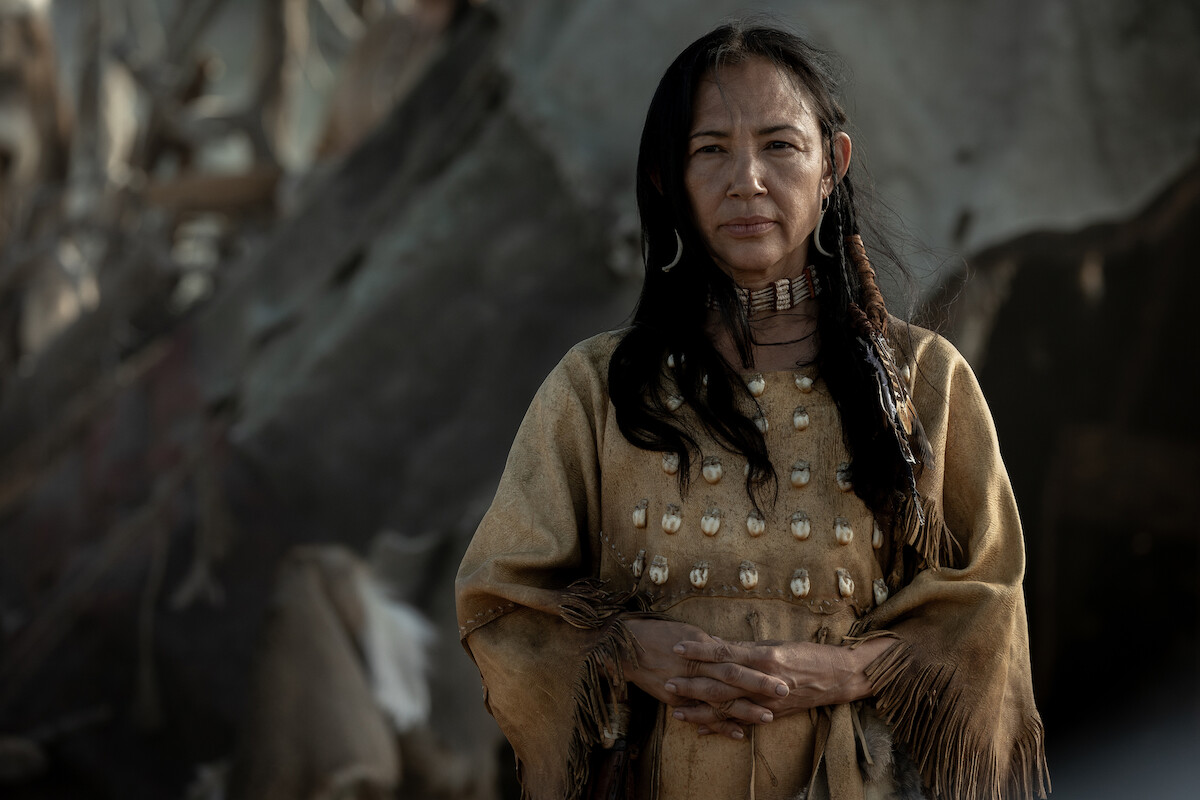
Unlike Bridger, Young and Hickman, Winter Bird is a fictional character. The Shoshone tribal leader was developed with inspiration from historical accounts of a real chief who was reportedly a lesbian and had multiple wives, according to Berg.
Her character therefore combines fictional storytelling with elements drawn from accounts of people who lived during the period.
James Wolsey (Joe Tippett)
James Wolsey was inspired by a historical figure who was executed for his involvement in the Mountain Meadows Massacre.
Executive producer Christine Newman explained that the creative team sought to ground each character in the realities of the period, even when the characters themselves were fictionalized or adapted for the story.
The goal was to ensure that the people on screen felt connected to the historical world rather than invented solely to serve the plot.
Why Are the Mormons, the Military and Native Tribes at War?
One of the defining features of American Primeval is its portrayal of a frontier where no single group has complete control and survival often takes precedence over moral certainty.
According to Berg, the Mormons fear that the US military will attack them, prompting them to organize their own militia, the Nauvoo Legion. Meanwhile, the American Army wants to remove Brigham Young and the Mormon community from Utah Territory, leaving soldiers fearful of a potentially deadly confrontation.
Native American communities, including the Shoshone and Paiute, face pressure from both sides as settlers and military forces encroach on their lands. At Fort Bridger, miners and trappers also fear losing their livelihoods as larger trapping companies move into the area and force smaller operators out.
As Berg explained, each group believes its future is threatened. The resulting atmosphere of fear, distrust and competition drives much of the series’ violence.
Rather than presenting the conflict as a straightforward battle between heroes and villains, the show emphasizes the competing interests and anxieties that shape the characters’ decisions.
The Mountain Meadows Massacre: The Real Tragedy Behind the Opening
One of the most harrowing sequences in American Primeval draws directly from a real historical atrocity: the Mountain Meadows Massacre.
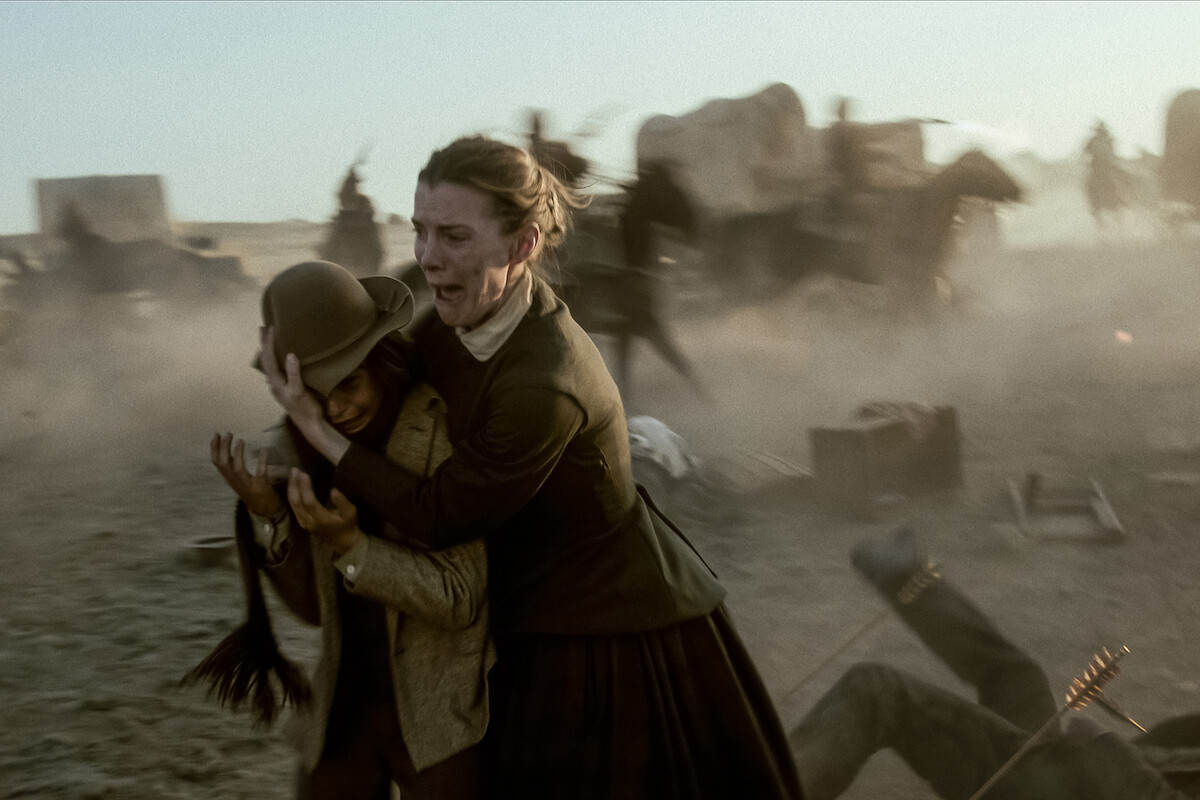
In the first episode, Sara Rowell (Betty Gilpin) and her son Devin (Preston Mota) struggle to find safety as arrows fly and people are killed around them. The scene depicts Mormon attackers disguised as Native Americans assaulting a group of emigrants traveling west.
The historical massacre did take place. In September 1857, members of a Mormon militia, assisted by some local Native Americans, attacked an emigrant wagon train at Mountain Meadows in southwestern Utah. After several days, the emigrants were persuaded to surrender under a promise of protection. Most of the members of the party, including men, women and older children, were then killed. Seventeen young children were spared. The event remains one of the darkest episodes in the history of the American West.
For the series, the massacre became a central event connecting the different groups and characters. Newman explained that the historical circumstances brought together Native nations, the US government, Mormon settlers and American citizens moving through the territory.
Smith also emphasized the importance of showing how the Mormon militia understood its actions, without losing sight of the violence involved.
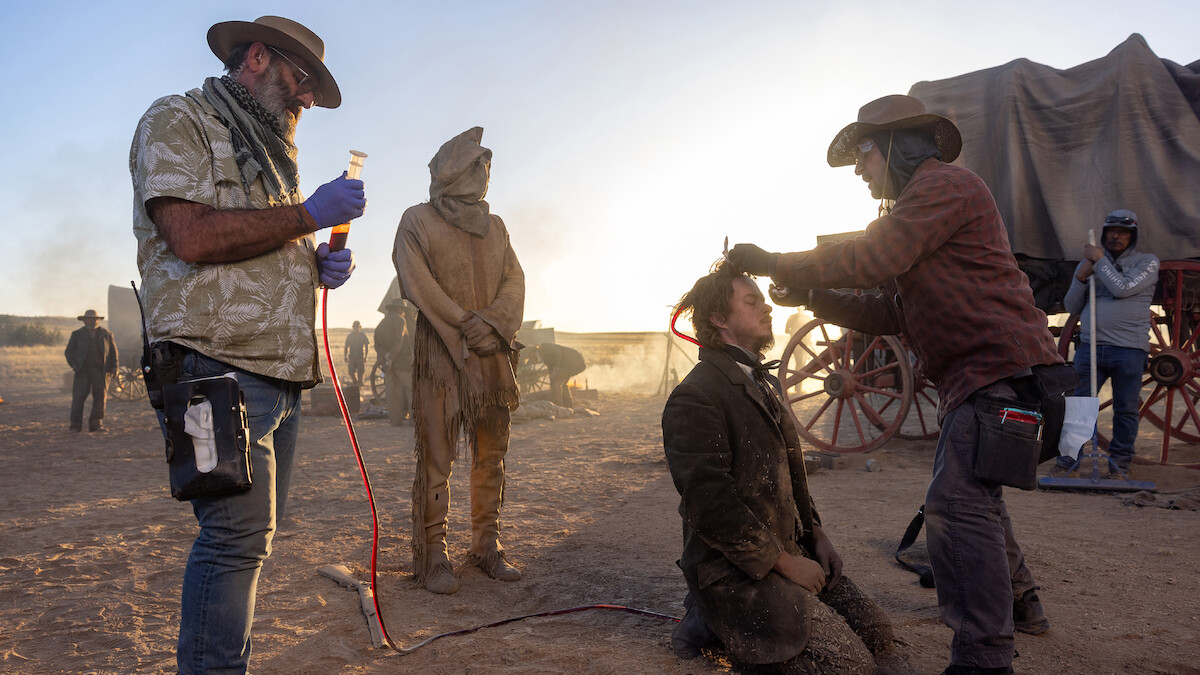
The production devoted considerable resources to recreating the attack. The sequence required approximately four months of planning and involved around 280 actors performing at the same time.
Berg described the scene as violent and chaotic, explaining that the filmmakers designed an extended sequence lasting approximately six or seven minutes. By following Sara and Devin as they struggle to survive, the camera presents the massacre through the perspective of people caught in the middle of it.
Creating the scene involved extensive blocking and action choreography, along with carefully coordinated camera movements across five or six shots that were stitched together.
Was Fort Bridger a Real Place?
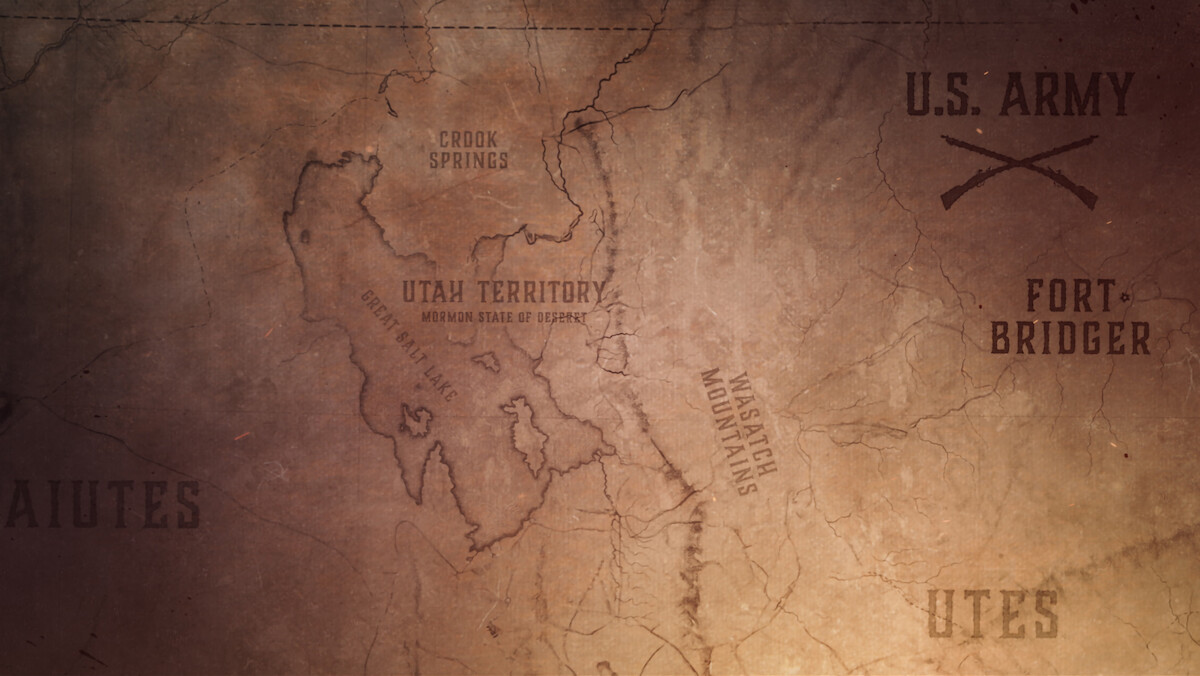
Yes. Fort Bridger existed in the 1850s and served as a trading post for emigrants traveling west. It was also used by Mormon settlers and eventually became a strategic location for the US military.
President James Buchanan’s administration sought to reassert federal authority in Utah during the conflict commonly known as the Utah War. Fort Bridger became an important gathering point for the military, Mormon settlers and other travelers moving through the territory.
Its importance made the fort a natural focal point for the series, bringing together people whose competing interests helped shape the frontier’s turbulent history.
To recreate the location, the production constructed an elaborate set in New Mexico, where American Primeval was filmed.
Berg revealed that hundreds of trees measuring approximately 80 feet were used to build the fort’s surrounding walls. Because power tools were unavailable during the 1850s, the construction team used hand tools and axes to recreate period-appropriate building methods.
The production also expanded the set beyond the scale of the original fort. Smith explained that the team wanted the location to feel like a functioning community rather than a collection of defensive walls.
The finished settlement included shops, a dentist, a doctor, baths and other facilities appropriate to the period, giving Fort Bridger a sense of daily life beyond its strategic importance.
Why Did Jim Bridger Sell His Fort to Brigham Young?
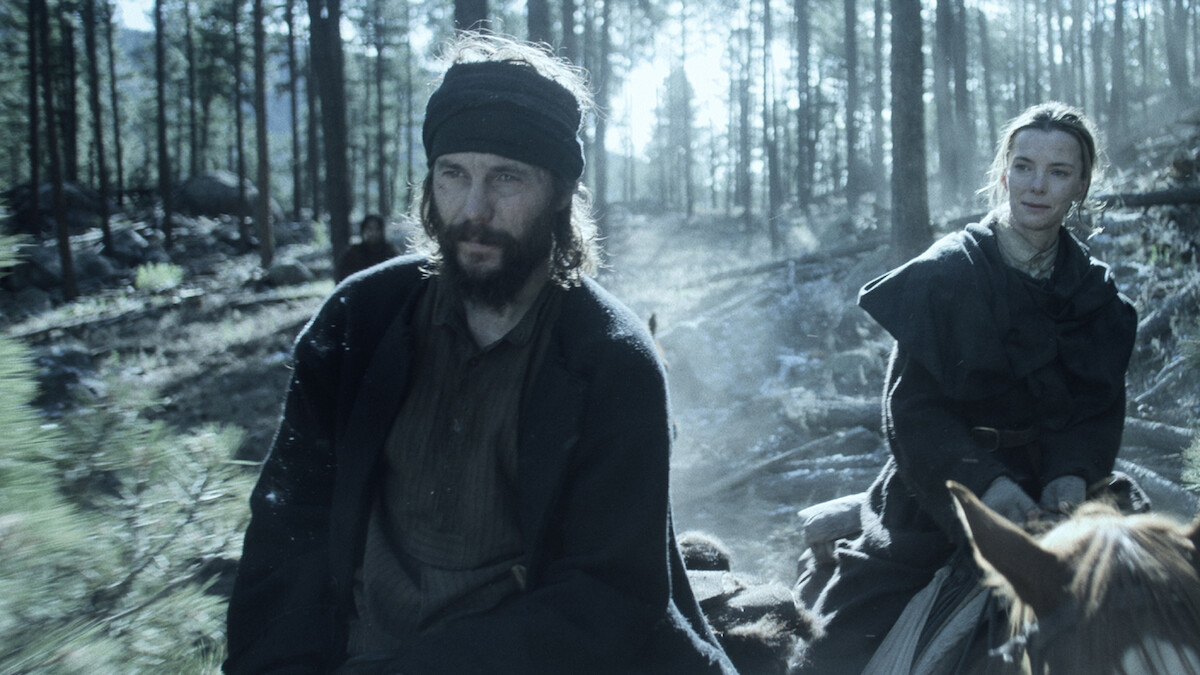
In Episode 6, Bridger sells Fort Bridger to Brigham Young before disappearing into the wilderness as the settlement burns. This storyline is also based on historical events.
The fort was a valuable strategic asset for both the Mormon church and the US military. According to Berg, Bridger understood its importance and held out before accepting the best deal available to him.
Young’s interest in acquiring the property was tied to defense rather than simply making money. As Smith explained, Young wanted control of the fort partly to prevent the US Army from using it.
For the Mormon leader, controlling the location offered a way to protect his community against perceived threats from the outside world.
The series also used a real fire to bring the story to life. Berg confirmed that the production burned down approximately half of the Fort Bridger set, recreating the destruction associated with the historical events.
The Research Behind American Primeval
The production team undertook extensive historical and cultural research to make the series’ setting convincing.
According to Berg, the filmmakers worked with military, Mormon and trapping consultants throughout production. He also spent five days visiting the real Fort Bridger in Wyoming with Dudley Gardner, curator of the Bridger museum, to learn more about life at the trading post.
Berg subsequently visited the site of the Mountain Meadows Massacre with Richard E. Turley Jr., co-author of Vengeance Is Mine: The Mountain Meadows Massacre and Its Aftermath.
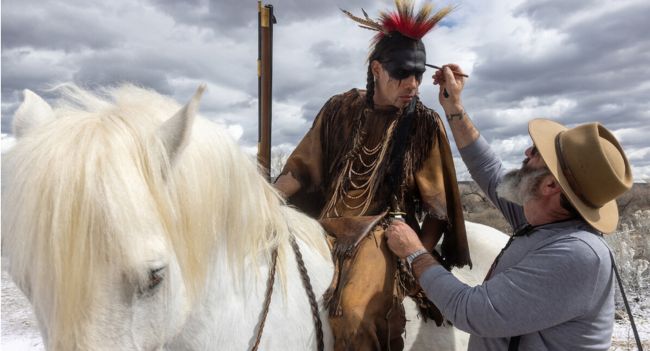
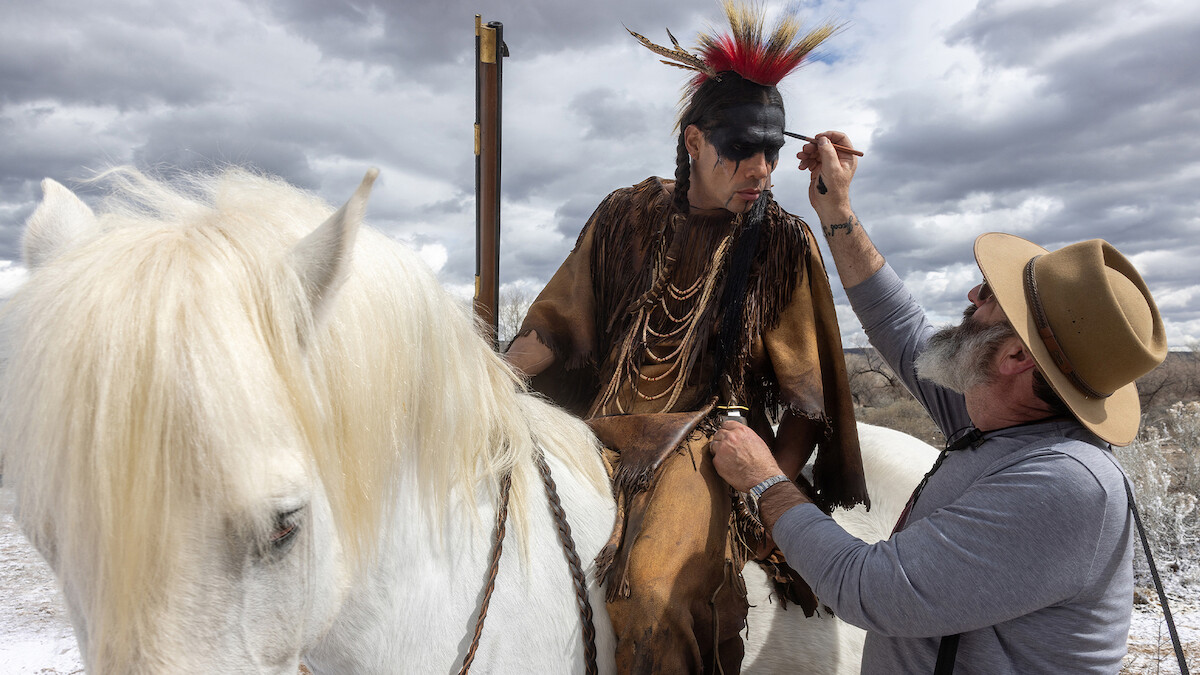
Native American perspectives were also an important part of the research process. The production consulted members of the Shoshone and Paiute tribes, with Indigenous cultural consultant and project adviser Julie O’Keefe coordinating the work.
O’Keefe explained that her role involved organizing teams of cultural experts, traditional artisans and language speakers from the tribes represented in the series. These specialists advised different departments to help ensure that the production reflected the communities’ cultural traditions.
She also worked with production designer Renée Read to develop historically informed camps for the Shoshone, Southern Paiute and Ute, and collaborated with costume designer Virginia Johnson on traditional clothing for principal and background characters.
The materials used in the costumes included buffalo hide, elk skin, buckskin, beads, broadcloth and blankets, informed by historical photographs and research.
Newman said the production’s commitment to authenticity extended across every department. Costumes, weapons, sets and other details had to be consistent with the period, because even a small anachronism could undermine the historical atmosphere the filmmakers were trying to establish.
Is Abish’s Story Based on Real Events?
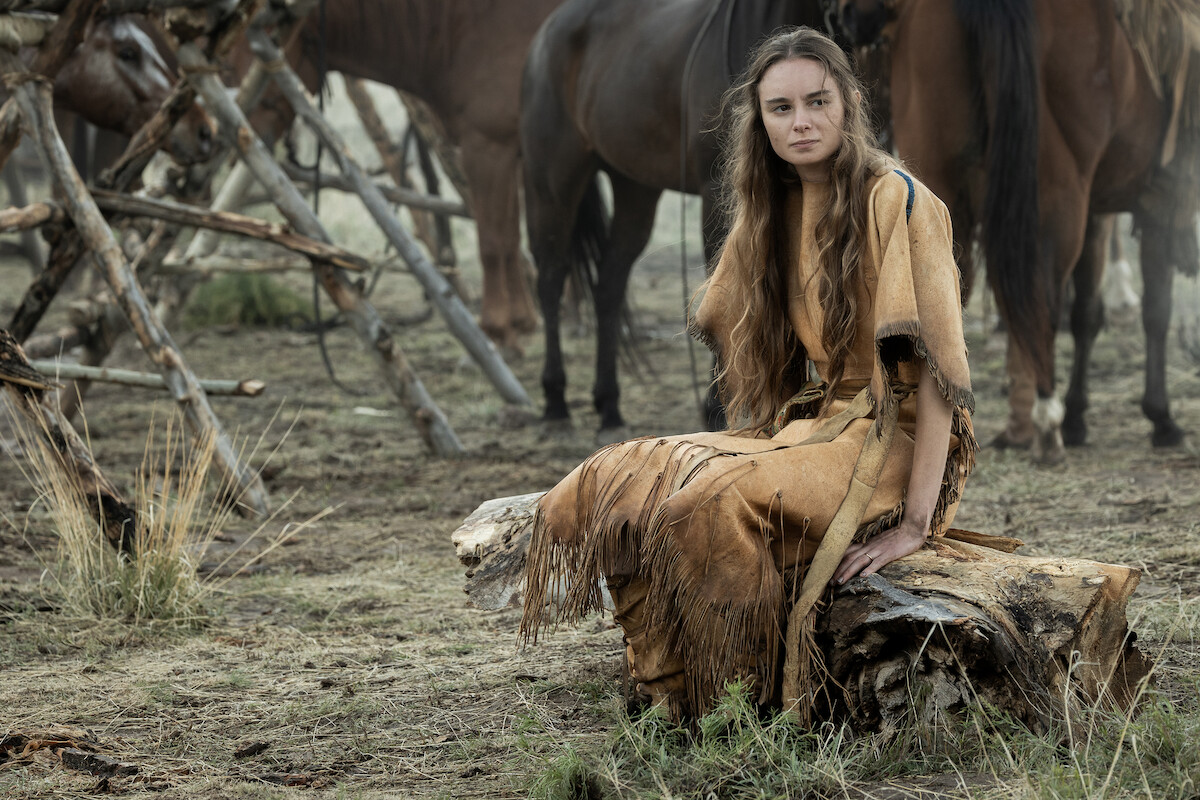
Abish, played by Saura Lightfoot-Leon, is another character whose storyline draws inspiration from historical accounts rather than a direct, documented biography.
Her arc was influenced by accounts of women abducted by Native Americans in what is now Utah.
Berg explained that the creative team wanted to explore the experience of a young Mormon woman pushed toward a life and marriage she had not chosen, only to find herself in a radically different world after a change in circumstances.
Her story examines the difficulties of belonging, cultural displacement and the challenge of finding a place in a society shaped by conflict.
Although Abish is part of the series’ fictional narrative, her experiences are intended to reflect some of the upheavals faced by women during the period.
What Does American Primeval Want Viewers to Understand About History?
Beyond its violence and survival drama, American Primeval seeks to challenge idealized versions of America’s past.
Newman emphasized the importance of recognizing both the capacity for human courage and the brutal realities of the nation’s history. She cited Howard Zinn’s A People’s History of the United States as an important influence, explaining that it challenged the more comforting narratives often associated with the country’s past.
For the creative team, examining history honestly means acknowledging the violence, competing interests and suffering that accompanied westward expansion rather than viewing the frontier solely through a nostalgic lens.
Newman also warned that overlooking these difficult parts of history can make it harder to recognize similar patterns when they emerge again.
That approach defines the series’ perspective: the characters are shaped by fear, ambition, loyalty and desperation, while the historical world around them offers few easy answers.
All six episodes of American Primeval are available to stream on Netflix.