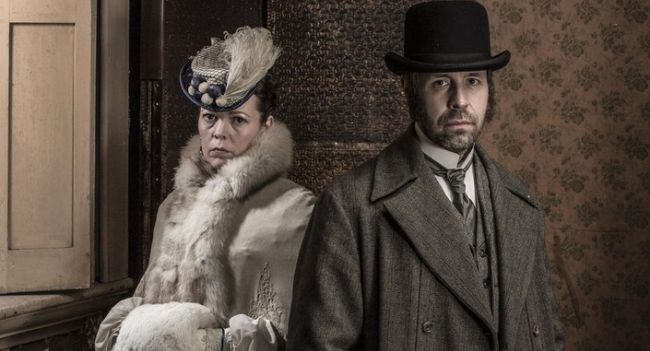
Olivia Colman Shines in a Dark Victorian Mystery Worth Rediscovering
Some mysteries are more effective when they take their time.
Rather than rushing from one clue to the next, The Suspicions of Mr Whicher: The Murder in Angel Lane builds its tension through murky streets, uneasy encounters and the suspicion that the people surrounding the case may all be hiding something.
Originally broadcast in 2013, the feature-length ITV drama brings Paddy Considine back as former detective Jack Whicher, with Olivia Colman co-starring as Susan Spencer. The result is a deliberately paced Victorian crime story that relies as much on atmosphere and character as it does on the investigation itself.
A Search for a Missing Girl Turns Into Murder
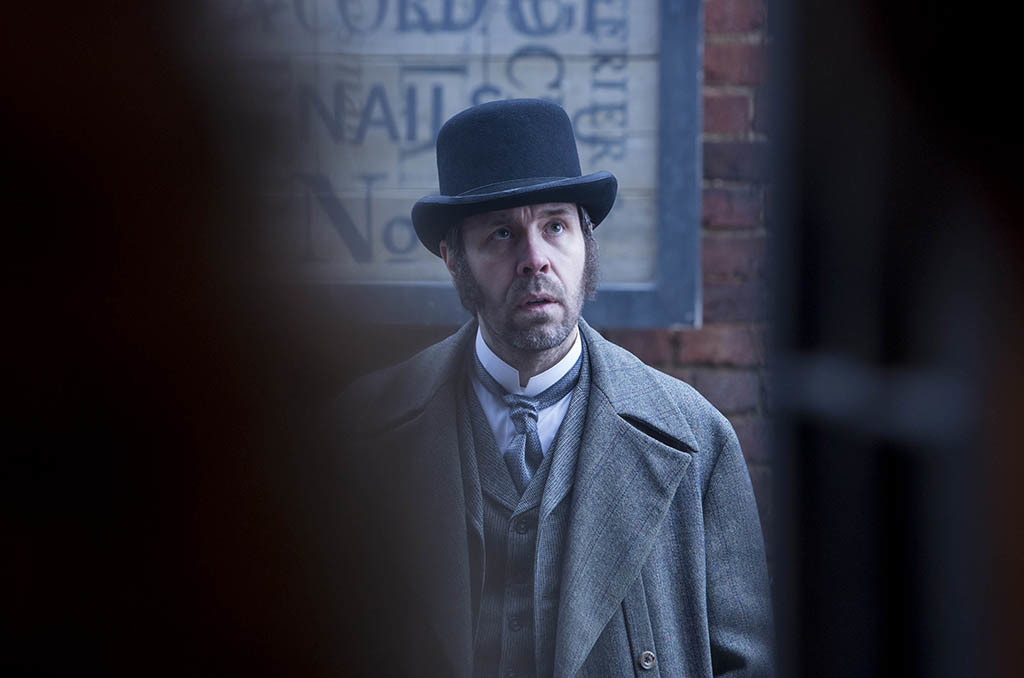
Susan Spencer arrives in London desperately looking for her 16-year-old pregnant niece, Mary Drew.
Her search leads her into Angel Lane, a notorious and dangerous part of Victorian London. There, she encounters Jack Whicher, a former Metropolitan Police detective whose career has ended under a cloud.
Whicher is no longer working for the police. Instead, he has become a private investigator, carrying the consequences of his troubled professional past with him.
After helping Susan, he agrees to investigate the disappearance.
But the case quickly takes a much darker turn. Mary is found murdered, and the investigation draws Whicher into a world of family secrets, powerful figures and uncomfortable questions about the people determined to protect their reputations.
The missing child becomes another crucial part of the mystery, while Whicher’s former police colleagues remain involved, creating an uneasy relationship between the disgraced detective and the force he once served.
Olivia Colman Brings Quiet Intensity
Colman does not play Susan as a character designed to dominate every scene.
Instead, her performance works through restraint. Susan’s determination to find her niece gradually exposes her to a side of London far removed from the respectable world she knows.
That gives the investigation an emotional centre.
While Whicher relies on experience, observation and instinct, Susan is driven by something much more personal. Their contrasting approaches give the drama much of its tension.
Considine, meanwhile, makes Whicher a particularly watchable detective. Time Out described him as a fragile and intuitive lawman, while other contemporary reviews highlighted the understated intensity he brings to the role.
Rather than presenting Whicher as a flamboyant genius, the drama makes him quiet, methodical and visibly affected by the professional downfall that forced him out of the police.
Victorian London Sets the Mood
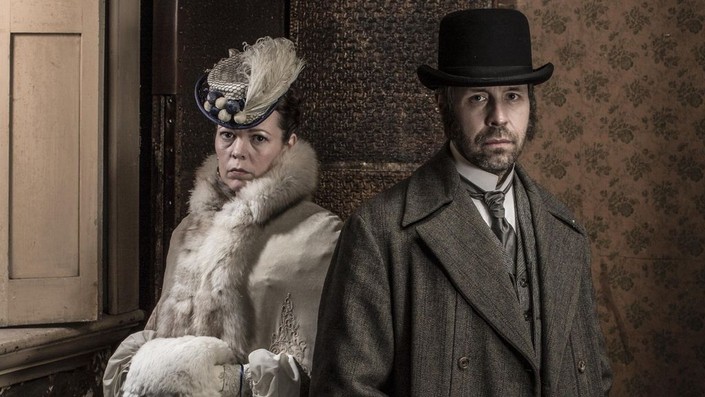
The setting is one of the production’s biggest strengths.
This is not a polished vision of Victorian London filled exclusively with grand houses and elegant society. Angel Lane is darker and more dangerous, populated by people living far beyond the comfort of the respectable classes.
The dim streets and enclosed interiors give the investigation a persistent sense of unease.
More importantly, the period setting serves a purpose beyond visual atmosphere. As Whicher digs deeper, the case exposes tensions between social classes and the lengths people may go to preserve their standing.
The mystery therefore becomes about more than identifying a killer. Whicher is also working within a society where reputation, influence and appearances can stand between an investigator and the truth.
A Deliberately Slow-Burning Investigation
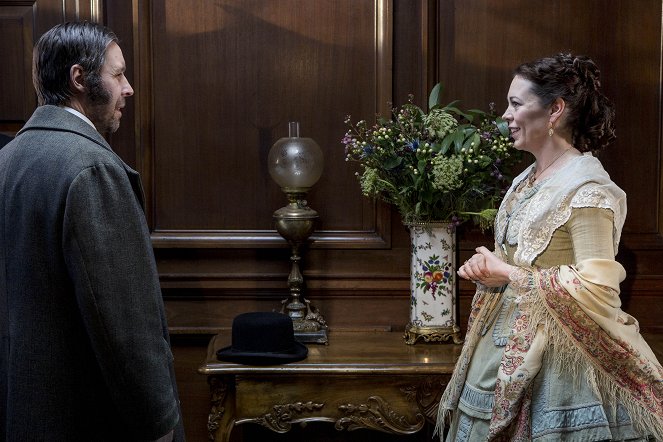
The drama takes its time.
For viewers accustomed to modern crime thrillers, its measured pace may feel restrained. There are no frantic action sequences or constant revelations designed to keep the story moving at breakneck speed.
Instead, clues emerge gradually, while Whicher pieces together the case through conversations, observations and connections that are not always immediately obvious.
The Arts Desk noted that the investigation proceeds at a gentle pace for much of the feature, while Time Out similarly praised Considine’s performance despite finding the plotting less remarkable.
That slower approach allows the atmosphere to remain central. The drama is less interested in turning every discovery into a spectacle than in letting the growing mystery create a sense of unease.
Paddy Considine Anchors the Story
Ultimately, The Murder in Angel Lane belongs to Considine’s Whicher.
His character is carrying more than a murder investigation. His past with the Metropolitan Police continues to shape how others see him, while his own instincts push him back toward the kind of work he can no longer do officially.
That gives the investigation an additional layer: solving the case is also an opportunity for Whicher to prove that the qualities that once made him an effective detective have not disappeared.
Considine keeps that conflict understated rather than turning it into melodrama. His Whicher is observant and determined, but also weary and vulnerable.
That quality fits the production’s broader approach perfectly.
Why The Murder in Angel Lane Still Holds Up

More than a decade after its 2013 broadcast, The Suspicions of Mr Whicher: The Murder in Angel Lane remains an intriguing choice for viewers who enjoy traditional British period mysteries.
Its current Rotten Tomatoes page lists a 65% Tomatometer score, while IMDb lists the drama at 7.4/10 from more than 1,600 ratings.
Its appeal comes from the combination of a shadowy Victorian setting, a layered murder investigation and two strong central performances.
Colman gives Susan Spencer a quiet determination, while Considine brings depth to a detective whose career has already been damaged by events beyond the case in front of him.
This is not a mystery built around constant spectacle. It takes its time, lets suspicion spread gradually and allows Angel Lane itself to become part of the story.
For anyone who enjoys British crime dramas where atmosphere and character matter as much as the final solution, this 2013 Victorian mystery is a compelling one to revisit.