
Wasteman: The 100% Rotten Tomatoes Prison Thriller Built on Tension
A tense prison thriller that wastes almost no time getting under your skin, Wasteman has earned a perfect 100% score from critics on Rotten Tomatoes, with reviewers highlighting its intense atmosphere and the performances of David Jonsson and Tom Blyth. The 90-minute film is now available to stream on Netflix.
Directed by Cal McMau, the 2026 British crime drama takes a familiar prison setting and turns it into a tightly contained story about survival, power and the fragile possibility of freedom.
With a runtime of just an hour and a half, Wasteman moves quickly. There is little room for detours as the film places its central character in an increasingly dangerous situation.

Taylor Is Almost Out — Until Dee Arrives
David Jonsson plays Taylor, a quiet and deeply troubled prisoner who has spent 13 years behind bars following a drug deal that ended in an accidental death.
Taylor has learned to survive by avoiding confrontation. He works around the prison, including as a barber, while continuing to struggle with drug addiction. After years inside, he receives news that he may be released early.
For Taylor, that possibility represents more than simply leaving prison. He wants the chance to rebuild his life and reconnect with his teenage son.
But his hopes are threatened almost immediately when Dee, played by Tom Blyth, becomes his new cellmate.
Unlike Taylor, Dee has no interest in keeping his head down. Confident, aggressive and heavily involved in the prison’s drug trade, he arrives determined to establish himself and expand his influence.
The contrast between the two men becomes the heart of the film. Taylor wants to stay out of trouble long enough to get his freedom, while Dee treats the prison as territory that belongs to him.
A Pressure Cooker Behind Bars
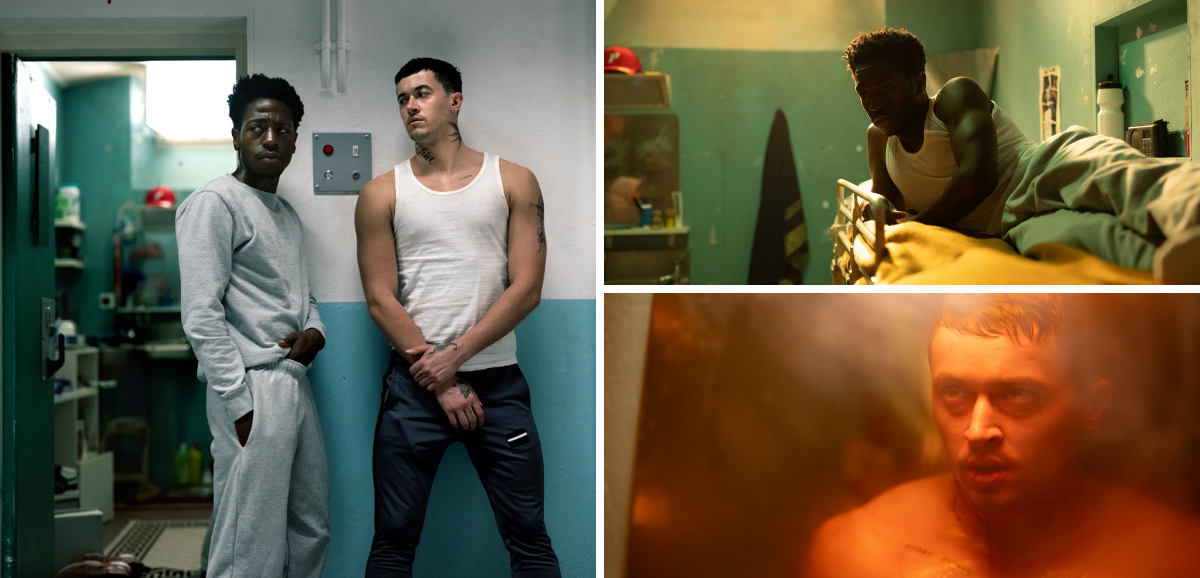
As Dee begins expanding his operation, tensions rise between him and the prisoners already controlling the drug trade, including Paul and Gaz.
Taylor is caught in the middle.
His instinct is to avoid conflict, but remaining close to Dee makes that increasingly difficult. What begins as an uneasy relationship between two cellmates gradually develops into something far more complicated, with Taylor’s potential parole hanging in the balance.
The film intensifies that pressure through its visual style. Conventional widescreen cinematography is mixed with vertical cellphone footage, creating a stark contrast between carefully composed scenes and chaotic images of violence inside the prison. The approach reflects the way modern technology can document and amplify intimidation among inmates.
The result is a deliberately claustrophobic atmosphere. Even relatively quiet moments carry the sense that something could go wrong.
David Jonsson and Tom Blyth Drive the Film
Much of Wasteman depends on the uneasy chemistry between its two leads.
Jonsson gives Taylor a restrained, vulnerable presence, allowing fear, guilt and uncertainty to come through without relying on constant dialogue. Critics have particularly praised the performance, with The Independent describing the film as an important showcase for the actor.
Blyth takes the opposite approach as Dee. His character is physically imposing and openly confrontational, but the performance also gives him a more complicated edge than a straightforward prison villain.
The tension between them keeps changing. Taylor needs Dee to survive the increasingly volatile prison environment, yet Dee is also the person placing Taylor’s future at greatest risk.
That relationship gives the film more weight than a conventional battle between rival inmates. As the story progresses, it becomes increasingly difficult to determine exactly who has control — or what either man is willing to sacrifice.
Critics Praise Its Intensity

The response from critics has been notably strong. Rotten Tomatoes currently lists Wasteman at 100% from 53 critic reviews, alongside an 86% audience score from more than 100 ratings. Its critics’ consensus praises the two lead performances and describes the film as harrowing while examining the forces that encourage violence within the correctional system.
RogerEbert.com awarded the film 3.5 out of 4 stars, calling it a genre piece with “tragic weight” and praising the pairing of Jonsson and Blyth.
The Los Angeles Times likewise singled out the relationship between the two prisoners, noting how the film gradually complicates the audience’s understanding of Taylor while keeping the tension between the characters at its centre.
Not every critic has been equally enthusiastic. Some reviews have argued that the prison-drama framework remains familiar and that the film’s experimental cellphone footage and chaotic camerawork do not always work. Even so, the performances and tightly controlled runtime have been recurring points of discussion.
A 90-Minute Thriller That Keeps Moving

At its core, Wasteman is about a man who can finally see a way out of prison — only to discover that freedom may be much harder to reach than he expected.
The film’s compact 90-minute runtime is part of its appeal. Rather than stretching the story across a lengthy running time, McMau keeps the pressure building around Taylor and Dee.
The result is a dark, tightly wound prison drama built around two sharply contrasting performances, a volatile relationship and the constant threat that Taylor’s chance at a new life could disappear at any moment.
Wasteman is streaming now on Netflix.