Trimming the Tree: Why Netflix’s ‘East of Eden’ Cut the Hamilton Family Storyline

Despite widespread critical praise for its performances and visual scale, Netflix’s seven-part adaptation of John Steinbeck’s East of Eden has sparked debate among book devotees over a conspicuous creative omission: the sidelining of the Hamilton family.
While Steinbeck’s 1952 epic deliberately parallels two distinct dynasties—the cursed, biblically freighted Trasks and the industrious, autobiographical Hamiltons—the limited series reduces the Hamilton presence almost entirely to brief appearances by patriarch Samuel Hamilton (Ciarán Hinds), who features in roughly two episodes.
The Cut: Narrative Momentum vs. Episodic Vignettes

Series creator and co-showrunner Zoe Kazan addressed the decision directly, explaining that structural limits inherent to limited television forced difficult pruning:
-
The Real Estate Constraint: Kazan noted that once the series was mapped to seven episodes, fitting two expansive family lineages became unfeasible without compromising narrative propulsion.
-
Plot Mechanics: Speaking to Variety, Kazan highlighted the functional difference between the two narrative arcs:“It became clear to me pretty early that if I was going to keep it at eight episodes or fewer, I was not going to have enough real estate for the Hamiltons… A lot of the Hamilton stuff is quite emotional and deeply meaningful to the greater themes of the book. Tom Hamilton is probably my favorite character in the whole thing. But at a plot level, it’s really episodic. It doesn’t build in a dramatic narrative sense; it doesn’t go someplace the same way that the Trask storyline does.”
Steinbeck’s Personal Dynasty: What Was Left Out
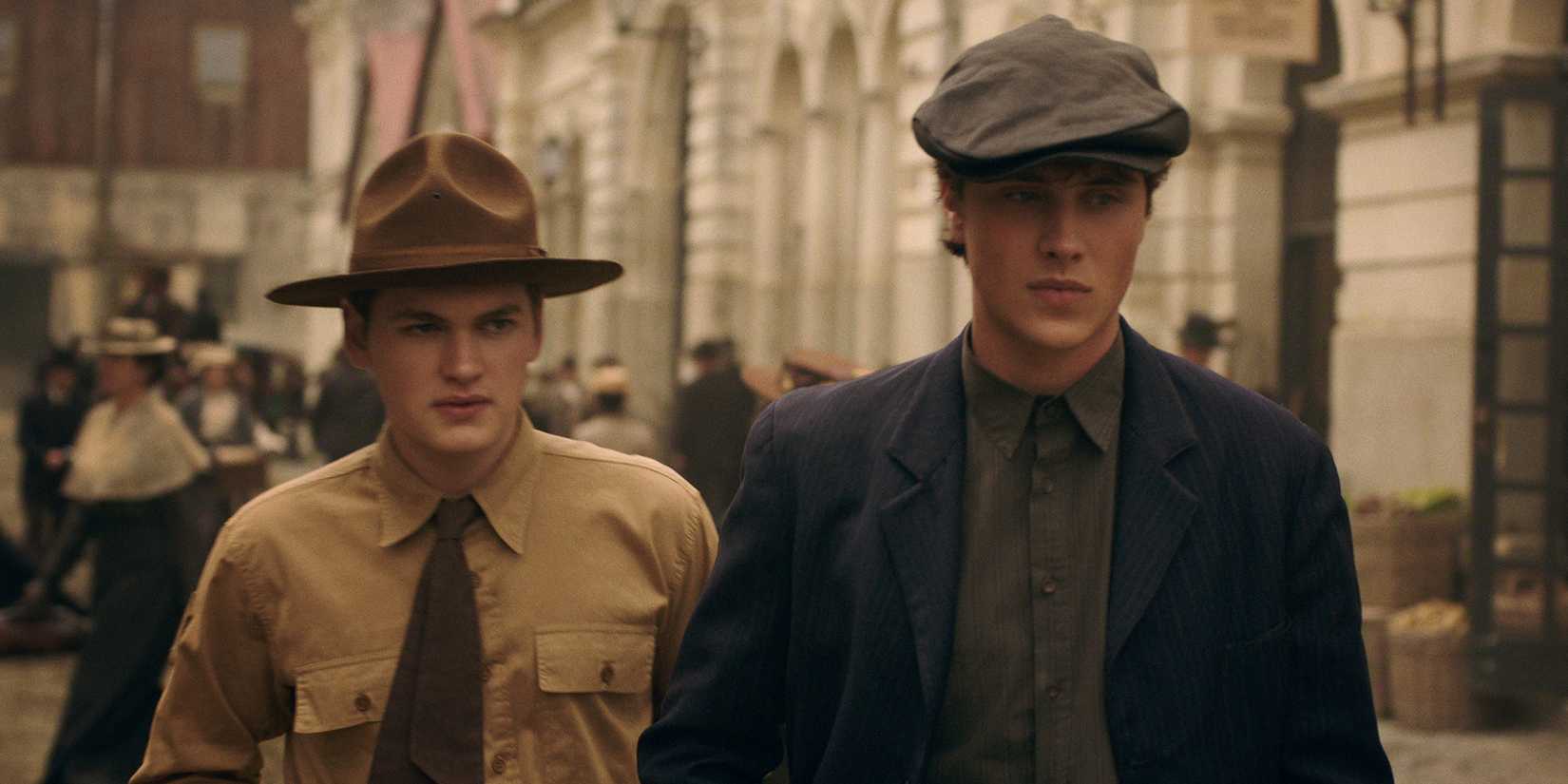
In the original novel, the Hamiltons are not background set dressing; Steinbeck modeled Samuel Hamilton directly after his maternal grandfather, using the narrator as a direct family descendant.
| Narrative Element | Steinbeck’s Novel | Netflix Miniseries Adaptation |
| Family Scope | Multi-generational Irish immigrant clan with 9 children, exploring labor and grief. | Condensed almost entirely to Samuel Hamilton (Ciarán Hinds). |
| Key Tragedies | Daughter Una dies on the Oregon Trail; son Tom takes his own life after causing a sibling’s accidental death. | Excluded entirely to maintain focus on the central Trask household. |
| Mentorship | Samuel acts as Adam Trask’s surrogate father figure, naming the twins and debating philosophy. | Limited to core philosophical debates with Lee (Hoon Lee) regarding immigration and timshel. |
| Generational Mirror | Serves as the grounded, hardworking immigrant counterweight to the Trasks’ destructive inherited sins. | Omitted, leaving the narrative spotlight primarily on the Cain-and-Abel dynamic. |
Centering Cathy as the ‘Plot Engine’
:max_bytes(150000):strip_icc():focal(749x0:751x2)/florence-pugh-east-of-eden-090226-2-2cd7bfe43f8443aaaff7b8912caec974.jpg)
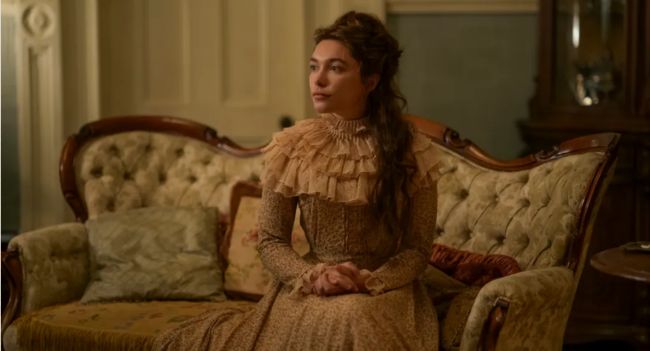
Kazan explained that shifting space away from the Hamilton homestead allowed the production to elevate Cathy Ames (Florence Pugh), correcting what she viewed as an imbalance in previous screen versions:
-
Reframing 1955: The landmark 1955 film directed by Kazan’s grandfather, Elia Kazan, largely sidelined Cathy to focus on the rivalry between brothers Cal (James Dean) and Aron.
-
The Creative Focus: Kazan rejected labels calling her perspective revisionist, arguing that Steinbeck himself was fixated on Cathy’s moral ambiguity:“Cathy is the plot engine of this book. She is the troublemaker. She fascinated me from the start. I’m so curious about her—and I think Steinbeck was too—so I don’t see it as being quite as revisionist as maybe some of the articles have been framing my take as.”
Potential for a Hamilton Spin-Off?
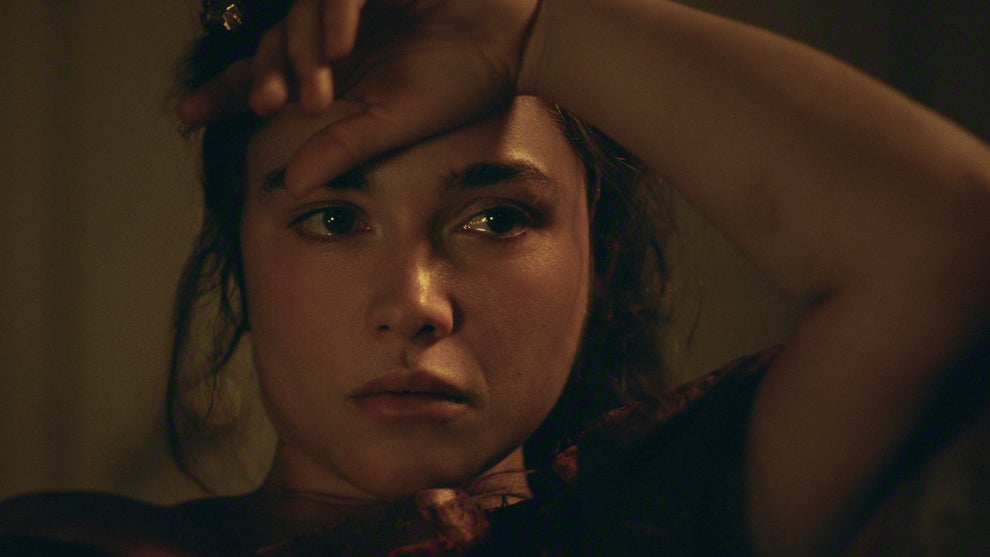
While Ciarán Hinds’ brief performance received strong viewer acclaim, Kazan left the door open for future adaptations to take up the pieces left behind. Noting that “these stories can be told again and again by different people” because “there’s so much that was unexplored,” the decision leaves room for a future production to center the rich, tragic folklore of the Salinas Valley’s immigrant settlers.