
Congratulations!
You've earned 1 point
:max_bytes(150000):strip_icc():focal(930x329:932x331)/Anne-Hathaway-and-Josh-Hartnett-are-seen-running-and-having-fun-on-a-untitled-movie-set-in-New-York-26-Feb-2025-022725-7060eb48e6084ef6b0908036b3ac6276.jpg)
After spending the next year headlining projects as varied as Christopher Nolan’s The Odyssey, the long-awaited The Devil Wears Prada 2, and the upcoming Colleen Hoover adaptation Verity, Anne Hathaway could have easily settled into another high-profile prestige role. Instead, she’s heading somewhere far less comfortable. Paramount+‘s impending limited series Fear Not asks Hathaway to inhabit someone whose faith, compassion, and resilience transformed one of the strangest true-crime stories ever told.
Based on Julie Miller’s Vanity Fair feature “Sympathy for the Devil,” the six-part series tells the story of Margy Palm, the final woman kidnapped by serial killer Stephen Morin in 1981. But unlike many adaptations inspired by infamous criminals, Fear Not isn’t positioning Morin as the central attraction. Everything about the project suggests that Palm’s experience — not the mythology surrounding a serial killer — is where the story finds its emotional weight.
Anne Hathaway’s Career Has Been Moving Toward Darker Characters for Years

People who still solely associate Hathaway with The Princess Diaries or The Devil Wears Prada have really missed out on the updates. Hathaway’s career has taken her into films in which she has played characters with internal turmoil behind an outwardly peaceful demeanor. From the unsettling psychological tension of Eileen to the complicated dynamics of The Idea of You, she’s spent the past several years choosing stories that leave easy answers behind. Her recent and upcoming slate continues that trend. Nolan’s The Odyssey delivers sweeping mythological drama, while Verity plunges into psychological suspense and moral ambiguity.
On that note, Fear Not feels like a natural extension of that evolution. The challenge isn’t playing fear, as plenty of actors can portray panic; Margy Palm’s story requires something far more delicate. Hathaway must balance terror, conviction, vulnerability, resolve, and compassion without ever suggesting that forgiveness erases violence. That’s an emotional balancing act that could easily collapse into sentimentality in less capable hands. Hathaway has built much of the last decade of her career around resisting exactly that kind of simplification.
‘Fear Not’ Isn’t Really About a Serial Killer

The easiest version of this adaptation would have been another serial-killer drama. Hollywood certainly hasn’t lacked for those. Many true-crime projects devote enormous attention to notorious murderers while the people whose lives they shattered become supporting characters in their own stories, but Fear Not appears to be taking the opposite approach.
The trauma that Margy Palm experienced did not last long, but its impact remained for years. Although Morin was on death row, Palm contacted him, visited him, and faced difficult questions pertaining to faith, accountability, and forgiveness.
Palm herself reportedly resisted offers to adapt for decades because she didn’t want her experience reduced to either a conventional thriller or a straightforward religious parable, as the reality, by her own account, was far messier. She doesn’t claim to possess definitive answers about Morin or what changed inside him. In contrast, her tale remains mired in awkward ambiguity, compelling viewers to confront issues that are not easily resolved by the final curtain.
The Six-Episode Format Could Be Exactly What This Story Needs

True crime often struggles with restraint. Long-running series sometimes stretch relatively straightforward events into sprawling multi-episode sagas, introducing unnecessary speculation or sensational details simply to justify their runtime. A short series made up of six episodes is a much better medium for Palm’s story.
There is enough space to show the kidnapping, its emotional effect, Palm’s journey of coming to terms with her trauma, and her complex bond with Morin after his arrest without glorifying violence for its own sake. Importantly, the limited scope allows the creators to focus on the emotional ramifications rather than simply treating survival as an endpoint.
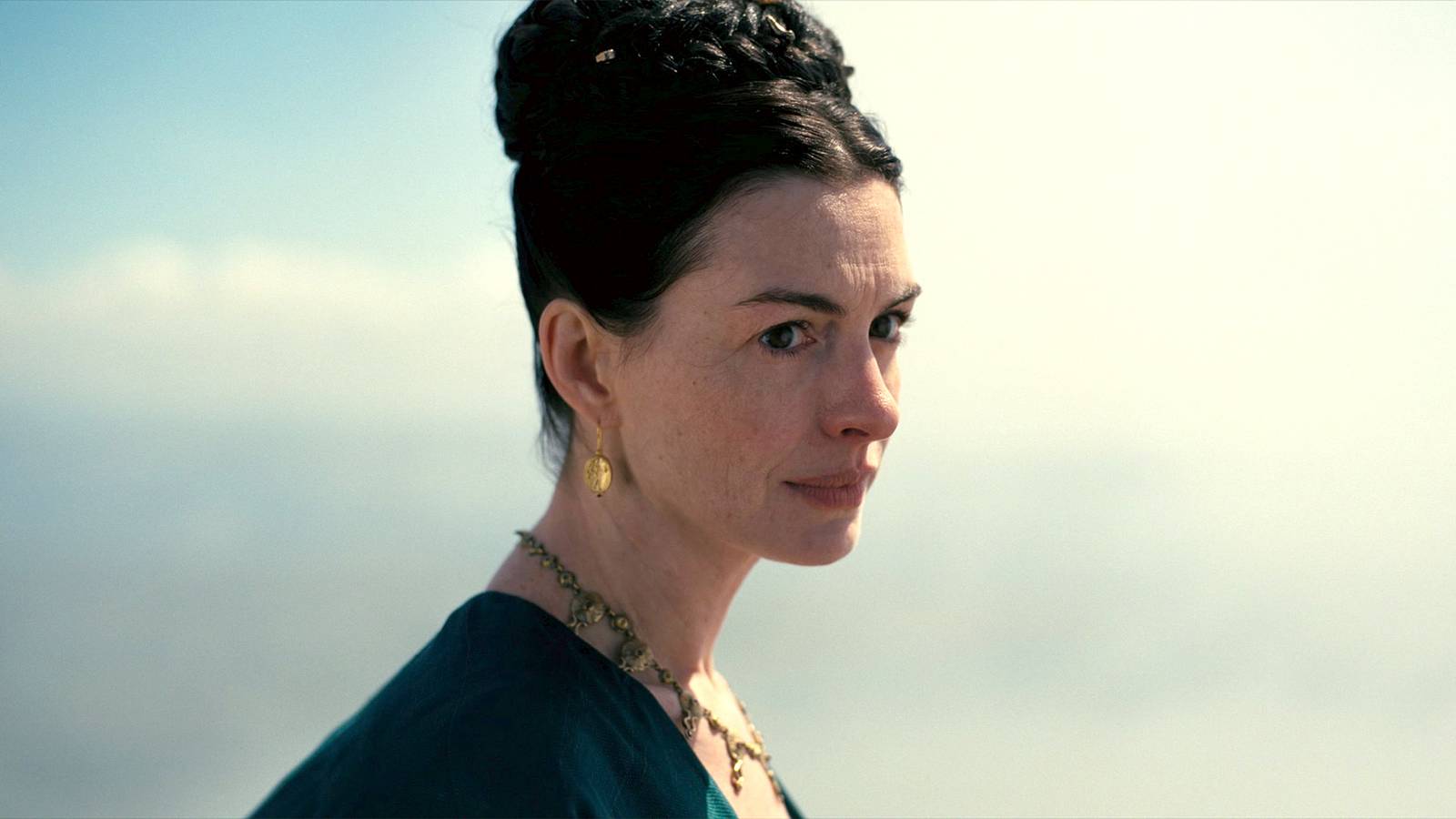
As both star and executive producer, she has an opportunity to help shape a series that prioritizes Palm’s humanity over Morin’s notoriety. If the adaptation stays true to Palm’s viewpoint, Fear Not could avoid several criticisms commonly leveled at new true-crime works. For Hathaway, this gives her an opportunity to show once again that her best work comes from dealing with discretionary characters rather than good guys and bad guys. After overcoming the challenges encountered in The Odyssey, Fear Not won’t require Hathaway to either fight or take part in a heroic venture. Instead, it’ll have her portray a woman whose greatest act of courage was surviving it without letting evil define her. If the series delivers on that promise, it could become the most emotionally challenging performance of Hathaway’s career—and one of Paramount+’s most compelling limited series yet.