
Congratulations!
You've earned 1 point
U.S. Army Field Band Honors Dolly Parton With Moving “Coat of Many Colors” Tribute After Her Passing
Among the many tributes that followed Dolly Parton’s passing, one of the most poignant came from musicians wearing a very different kind of uniform.
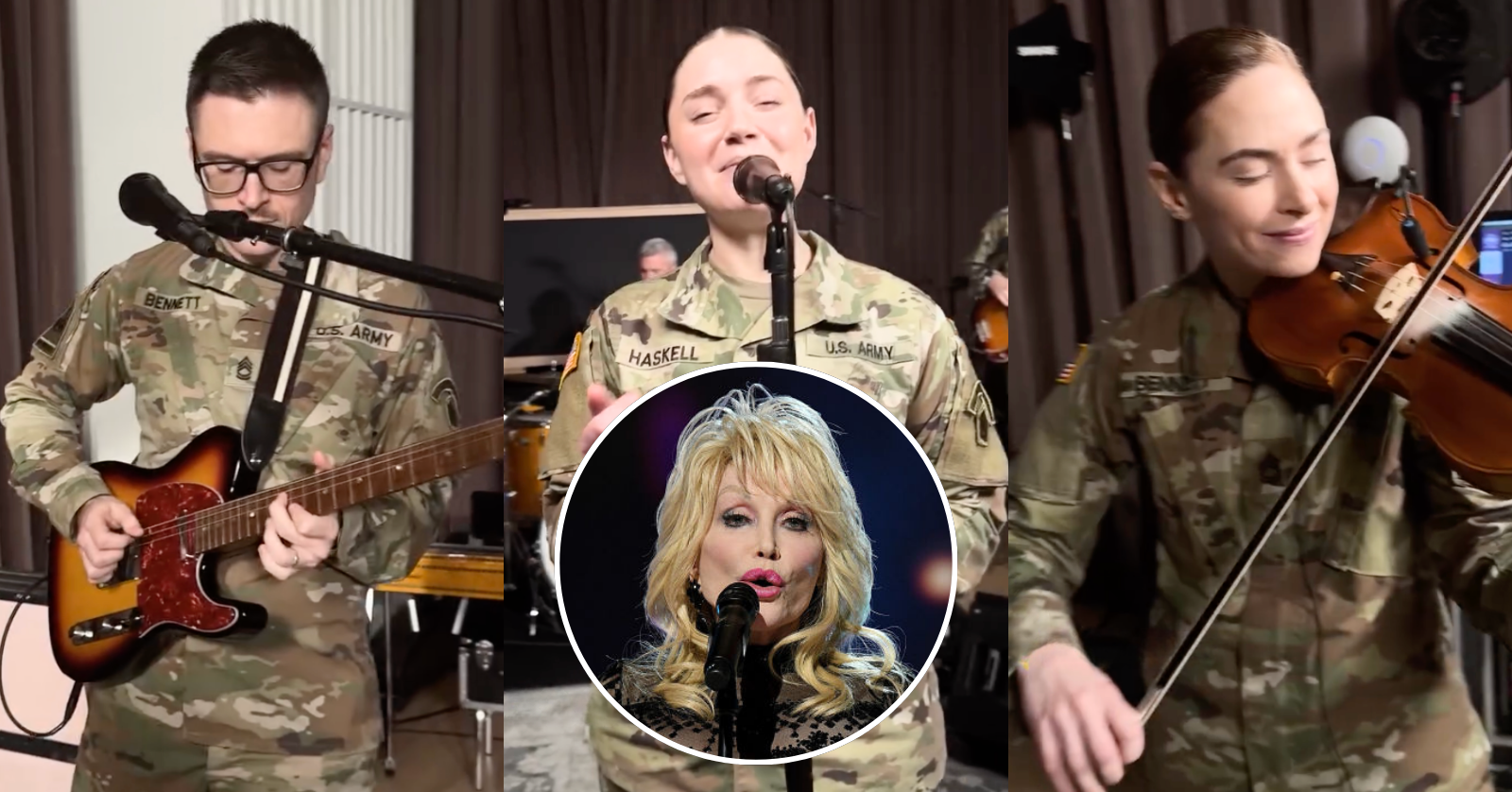
The U.S. Army Field Band’s Six-String Soldiers honored the country music legend with an acoustic performance of “Coat of Many Colors,” choosing one of the most personal songs Dolly ever wrote to remember both her extraordinary career and her long-standing support for U.S. service members and their families.
It was a fitting choice for an artist whose journey from a poor childhood in Tennessee’s Great Smoky Mountains to international superstardom became inseparable from the songs she left behind.
Why “Coat of Many Colors” Meant So Much to Dolly
“Coat of Many Colors” was never simply another hit in Dolly Parton’s catalog.
The song grew directly from her childhood, when Dolly was one of 12 children growing up in a family with very little money. Her mother, Avie Lee Parton, used scraps of fabric to sew her daughter a coat because the family could not afford to purchase a new one.
To other children at school, the patchwork garment became something to mock.
To Dolly, however, it represented something entirely different.
Her mother had made it especially for her, turning pieces of discarded fabric into something filled with love. That contrast — between material poverty and feeling emotionally rich — became the heart of the song.
The experience stayed with Parton throughout her life. A replica of the famous coat has even been displayed at Dollywood, while the story itself became one of the clearest expressions of the values and childhood experiences that shaped her songwriting.
Decades later, “Coat of Many Colors” remained among her most cherished compositions, alongside songs such as “Jolene” and “I Will Always Love You.”
Following her death, it also became one of the songs people repeatedly turned to in remembrance. A Kentucky radio station reported that during a three-hour tribute to Parton, “Coat of Many Colors” became its most requested song.
Six-String Soldiers Choose a Personal Song for Their Farewell
In the wake of Parton’s passing, the Six-String Soldiers stripped the song back to its emotional core.
The ensemble, made up of professional musicians serving in the U.S. Army, specializes in country and Americana music as part of the U.S. Army Field Band.
Their acoustic rendition offered a restrained way of remembering a performer whose relationship with American military families extended well beyond her music.
In a message accompanying the tribute, the group reflected on the worldwide mourning for Parton while highlighting her decades of support for service members and their loved ones.
They specifically remembered her USO visit to Fort Hood during Operation Desert Storm, as well as her later involvement with the USO’s Military Virtual Programming series.
Rather than choosing one of Dolly’s biggest crossover anthems, the musicians returned to the song about the little Tennessee girl wearing a coat stitched together by her mother.
That choice gave the tribute an especially personal quality.
View this post on Instagram
A post shared by U.S. Army Military District of Washington (@usarmyoldguard)
Dolly Parton’s Connection to Military Families
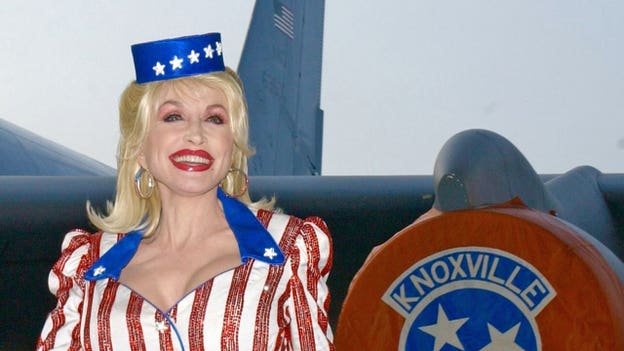
Parton’s relationship with the military community continued across different stages of her career.
As the Six-String Soldiers noted in their tribute, she supported service members during Operation Desert Storm and decades later continued connecting with military families through virtual programming.
In December 2022, Parton participated in the USO’s Military Virtual Programming initiative, which offered deployed personnel and their families an opportunity to connect with her remotely.
That history added another layer to the Army musicians’ decision to honor her.
They were not simply performing the work of an American music legend. They were remembering someone who had used her enormous platform to recognize the sacrifices made by military personnel and the people waiting for them at home.
A Song That Told Dolly’s Story Before the World Knew Her
The power of “Coat of Many Colors” lies partly in how little glamour exists within its story.
There are no bright stages or famous friends. There is no Dollywood, Hollywood career or international celebrity.
There is simply a mother, a daughter and a coat made from scraps.
That childhood perspective became central to the way Parton understood wealth and success. As she recalled in later writings, her mother taught her that a person’s richness could not simply be measured in money.
The story became so important to Parton’s public legacy that it later inspired the 2015 television movie Dolly Parton’s Coat of Many Colors, which dramatized experiences from her childhood.
Even after decades of extraordinary success, Dolly repeatedly returned to those early memories.
They reminded audiences where she came from — and perhaps helped explain why her music could feel so personal even after she became one of the most recognizable entertainers in the world.
Tributes Continue to Return to Dolly’s Songs
Since Parton’s death at 80 on August 25, musicians and fans have repeatedly turned to her own catalog to express what ordinary words cannot.
At the Grand Ole Opry, Rhonda Vincent was among the performers who honored Parton with “Coat of Many Colors,” while other tributes have drawn from “Jolene,” “9 to 5” and “I Will Always Love You.”
The tributes have stretched well beyond Nashville. Buckingham Palace even honored Parton during the Changing of the Guard with a rendition of “9 to 5,” demonstrating just how far her music had traveled from the Tennessee mountains where her story began.
But there was something particularly appropriate about the Six-String Soldiers choosing “Coat of Many Colors.”
It brought the focus away from the scale of Dolly Parton’s fame and back to the foundation beneath it.
Before the awards, movies and worldwide recognition, there was a young girl whose mother turned scraps of cloth into something priceless.
Decades later, musicians from the U.S. Army returned to that story to say goodbye — honoring not only the superstar Dolly Parton became, but the Tennessee girl she never forgot.