Congratulations!
You've earned 1 point
The TV Shows To Watch This Week: From Dublin Murders To The Name Of The Rose
From a dark murder mystery set in Dublin to a bloody medieval investigation and the return of some of Britain’s most familiar television favourites, this week’s schedule offers plenty of choice.
At the centre of the new drama lineup is Dublin Murders, an ambitious eight-part BBC crime series adapted from the novels of Tana French. Alongside it comes the lavish Italian production of The Name of the Rose, bringing Umberto Eco’s famous mystery to the screen.
And for viewers who prefer something more familiar, The Apprentice, The Great British Bake Off and Strictly Come Dancing continue their latest runs.

Dublin Murders: A Familiar Crime Formula With An Irish Setting
As the nights grow darker, Dublin Murders looks like the sort of crime drama designed to keep viewers coming back week after week.
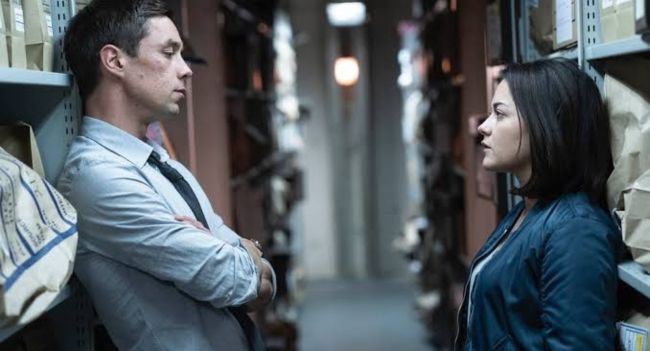
The eight-part series follows detectives Cassie Maddox and Rob Reilly, played by Sarah Greene and Killian Scott, as they investigate a disturbing murder involving a young girl found in the woods.
Her body has been arranged in a highly theatrical manner on a sacrificial stone, immediately suggesting that this is not an ordinary homicide.
The two detectives are also dealing with their own complicated lives and a difficult professional relationship, adding another layer to an investigation in which there are initially few obvious answers.
There is, admittedly, something familiar about the setup. Television has spent decades sending detectives into grim landscapes to investigate ritualistic murders, with stories ranging from Oxford and San Francisco to Shetland, Sicily, Oslo and Guadeloupe.
The formula can sometimes feel reassuringly predictable: a troubled male-and-female detective partnership, a gruesome killing and a mystery that gradually reveals itself.
But Dublin Murders has a strong foundation.
The series is based on the novels of Tana French, described as the “first lady of Irish crime,” and adapted for television by Sara Phelps.
That literary pedigree gives the BBC drama plenty of reason to stand out despite the familiar conventions of the genre.
The Reliable Favourites Are Still Going Strong
For viewers who would rather stick with established favourites, there is no shortage of familiar choices.
The Apprentice, The Great British Bake Off and Strictly Come Dancing are all well into their respective runs, offering the kind of dependable television that has kept audiences returning year after year.
They may not represent the shock of something completely new, but there is something to be said for programmes that know exactly what their viewers expect.
Each remains as watchable as ever, even if their familiarity is precisely what makes them so dependable.

Still Open All Hours: Nostalgia With A Question Mark
The same cannot quite be said for Still Open All Hours.
For viewers who remember the original series, the nostalgia is considerable. Ronnie Barker’s unforgettable shopkeeper Arkwright remains one of British television’s great comic creations, while Granville — famously delivered with Arkwright’s exaggerated “G-G-G-Granville” — was his much younger assistant.
The original series first appeared decades ago, and David Jason has since returned as the grown-up Granville, now carrying on the story around Arkwright’s old shop.
Jason’s comic ability remains undeniable, and his presence gives the programme some of its enduring charm.
But the bigger question is whether the series has simply been around for too long.
Original writer Roy Clarke, now 89, continues to write the scripts, but there is an unmistakable sense that the format has passed its natural prime.
The humour still relies heavily on simple innuendo and carefully timed jokes, much as it did in the original series.
For some viewers, that familiarity will be part of the appeal. For others, it may feel increasingly dated.
There is certainly affection for the characters and their old-fashioned style of comedy, but the argument remains that the original run might have been better left to its earlier era.

The Name Of The Rose Brings Murder To Medieval Italy
For something considerably darker, The Name of the Rose offers a very different kind of mystery.
Based on Umberto Eco’s celebrated novel, the Italian-produced eight-part drama transports viewers to the year 1327, where a series of deaths unfolds inside a remote abbey.
At the centre is William of Baskerville, played by John Turturro, a Franciscan friar tasked with investigating the mysterious death of a monk.
His young companion, Adso of Melk, is played by Damian Hardung.
The investigation soon becomes more complicated as another death occurs and William attempts to gain access to the abbey’s forbidden library.
The series combines historical drama with murder mystery and thriller elements, creating an atmosphere filled with religious conflict, secrecy and increasingly disturbing deaths. BBC’s programme records confirm the eight-episode run and the involvement of Rupert Everett as Bernard Gui.
Rupert Everett’s Bernard Gui Is A Major Attraction
One of the biggest reasons to watch is Rupert Everett as Bernard Gui, the papal inquisitor.
Everett brings a distinctly sinister presence to a character associated with interrogation and torture, adding another source of danger to William’s investigation.
The violence is not limited to threats in the background, either.
One of the week’s episodes begins with the discovery of a young monk dead in a vat of pig’s blood — a gruesome image that immediately establishes the series’ taste for macabre horror.
And that is only the beginning.
As the investigation develops, further deaths and disturbing discoveries pile up, while Bernard Gui’s arrival increases the pressure on those inside the abbey.
The result is a visually sumptuous but undeniably bloody historical thriller — and, for anyone who enjoys murder mysteries with a medieval setting, a particularly tempting choice.

The Football Match To Watch
Away from television drama, the week’s major sporting attraction is England’s Euro 2020 qualifier against Bulgaria, broadcast by ITV on Monday evening.
At the time, much of the anticipation centred on Gareth Southgate’s wealth of young attacking talent and the difficult choices facing the England manager.
Among the players attracting attention were Tammy Abraham, Mason Mount, Marcus Rashford and Trent Alexander-Arnold.
The match ultimately became notable for another reason. England’s players were subjected to racist chanting in Sofia, with the game stopped twice following complaints. England eventually won 6-0, with Ross Barkley and Raheem Sterling scoring twice each, alongside goals from Rashford and Harry Kane.
The events made the fixture far more significant than a routine qualifier and placed the issue of racism in football firmly at the centre of the night’s coverage.
For this week, then, the television schedule offers something for almost every taste: a new Irish crime mystery, a gruesome medieval thriller, familiar British entertainment and a major international football fixture that ultimately became about much more than the result.