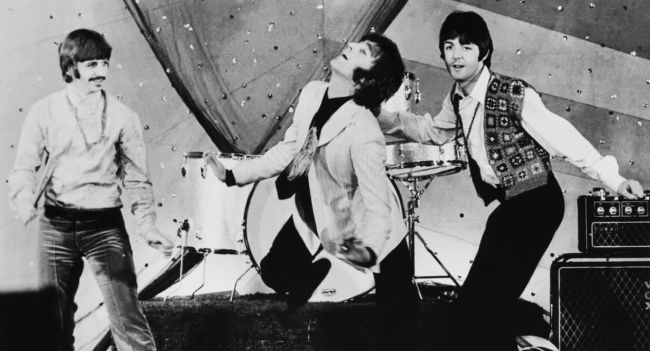
Three years after the Beatles broke apart, getting John Lennon, Paul McCartney, George Harrison and Ringo Starr involved in the same project might have seemed almost impossible.
Yet in 1973, Starr managed it.
His third solo studio album, Ringo, featured contributions from all three of his former bandmates. They did not record together as the Beatles, but the album became the closest thing to a reunion at the time — with Lennon, Harrison and McCartney each helping their old drummer in different ways.
And according to the story behind Paul’s involvement, Starr did not need an elaborate sales pitch.
With Lennon and Harrison already participating, he simply challenged McCartney: “You don’t want to be left out, do you?”
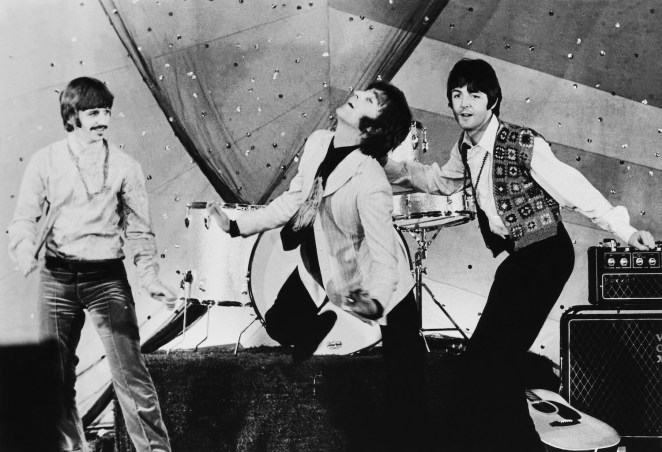
Ringo and George Harrison had already rebuilt their musical partnership
The collaboration did not come completely out of nowhere.
Harrison and Starr were among the first former Beatles to resume working together after the group’s split.
Starr contributed drums to Harrison’s monumental 1970 solo album All Things Must Pass, appearing on tracks including “Wah-Wah” and “My Sweet Lord.”
Harrison, meanwhile, played an important role in Starr’s early solo career.
He co-wrote and produced Starr’s 1971 hit “It Don’t Come Easy,” although his songwriting contribution went uncredited. Harrison was also involved with “Back Off Boogaloo,” released the following year.
Their partnership continued when Starr played on Harrison’s 1973 album Living in the Material World.
Then Harrison returned the favor for Ringo.
George gave Ringo three more songs

Harrison contributed to several pieces on Starr’s 1973 album.
Among them was “Photograph,” which Harrison and Starr co-wrote.
Harrison also wrote “Sunshine Life for Me (Sail Away Raymond)” and helped write “You and Me (Babe).”
But he would not be the only former Beatle involved.
John Lennon also contributed a song — and his recording session produced a particularly significant moment for the former bandmates.
John Lennon brought ‘I’m the Greatest’
:max_bytes(150000):strip_icc():focal(749x0:751x2)/paul-mccartney-john-lennon-100923-3-bc893d4cddc74d5cbc79fc22a8079dfe.jpg)
Lennon wrote “I’m the Greatest,” which was recorded at Sunset Sound in Los Angeles in March 1973.
He played piano and provided backing vocals, while Harrison and Starr also performed on the recording.
It meant Lennon, Harrison and Starr were working together on a record for the first time since the Beatles had separated.
The song itself was perfectly suited to Starr.
Lennon built it around a humorous look back at growing up in Liverpool, becoming part of “the greatest show on Earth” and eventually moving into a new stage of adulthood.
Its autobiographical humor even references being 32 — Starr’s age at the time.
With Lennon and Harrison now involved in the album, only one Beatle was missing.
Ringo knew exactly how to approach Paul
Starr wanted McCartney on the record as well.
Rather than allowing his former bandmate to become the only Beatle absent from Ringo, he reportedly appealed directly to him.
“You don’t want to be left out, do you?” Starr told him.
It worked.
McCartney agreed to contribute, bringing Linda McCartney into the project with him.
The result was “Six O’Clock.”
Paul and Linda wrote specifically for Ringo
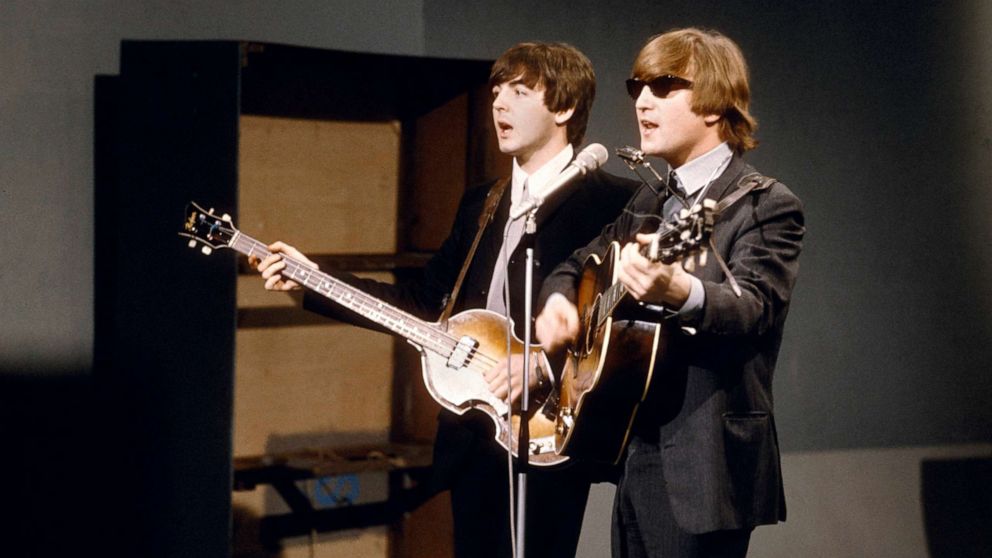
Starr had asked McCartney for a song while the album was being assembled, and there was even a deadline involved.
Producer Richard Perry was expecting the material by Wednesday.
Paul and Linda McCartney came through with “Six O’Clock,” a song deliberately constructed with Starr’s voice in mind.
The McCartneys also sang on the recording alongside him.
Years later, Starr pointed to the opening lyric as evidence of just how well his former bandmates understood him.
“Paul wrote that,” Starr said after reading the opening line.
Then he explained why receiving songs from Lennon, McCartney and Harrison worked so well for him.
“They knew me so well,” Starr said. “They would write songs that they felt I could get away with.”
Ringo accomplished something none of them had managed since the breakup
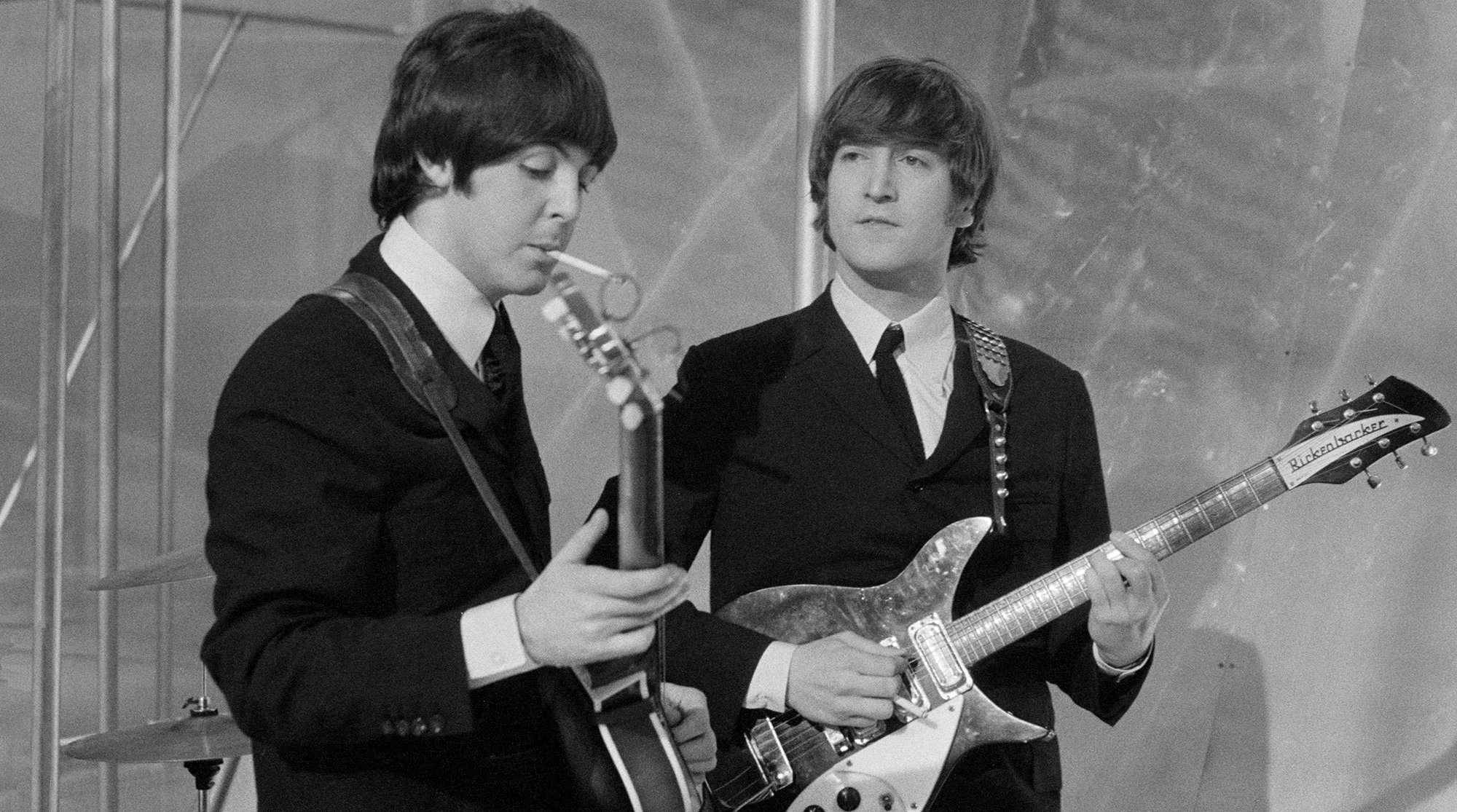
The significance of Ringo went beyond any individual track.
Only three years had passed since the Beatles’ breakup, yet Starr had persuaded Lennon, McCartney and Harrison to contribute to the same solo album.
It was not a full Beatles reunion.
The four did not assemble in one studio and perform together as a group.
Their contributions were recorded separately, with different combinations of musicians appearing across the album.
Still, seeing all four names connected to one record inevitably carried enormous significance.
At a time when relationships within the former band had become complicated, Ringo remained someone each of them was willing to work with.
‘I’m the Greatest’ came particularly close
Of all the sessions surrounding Ringo, “I’m the Greatest” perhaps came closest to capturing the feeling of the old band.
Lennon was there.
Harrison was there.
Starr was there.
Three former Beatles were once again playing together.
Paul was the missing piece from that particular recording, but his contribution elsewhere on the album meant Ringo ultimately contained work from every member of the group.
And Starr had done it without pretending the Beatles themselves were back.
Instead, he simply asked his old friends to help make his record.
The Beatles connection became part of what made Ringo special
Starr had always occupied a unique position within the group, and Ringo demonstrated that relationship particularly clearly.
Harrison helped him with “Photograph,” “Sunshine Life for Me (Sail Away Raymond)” and “You and Me (Babe).”
Lennon handed him “I’m the Greatest.”
Paul and Linda McCartney supplied “Six O’Clock.”
Each former Beatle brought something different, but Starr was the person connecting all of them.
The album therefore became an accidental kind of reunion — not the Beatles returning as a functioning band, but four musicians who had shared an extraordinary history finding separate ways to appear on the same record.
And Paul McCartney’s involvement apparently began with one wonderfully simple piece of persuasion from Ringo:
“You don’t want to be left out, do you?”