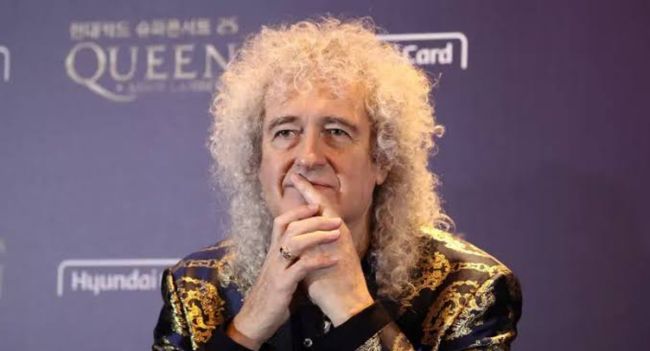
Brian May Seriously Planned A Queen Show That Could Bring The Band’s Glory Days Back To Life — Then One Problem Made Him Back Away From The Entire Idea
Brian May has imagined a future where Queen fans could walk into a venue and experience the band performing at its peak again — regardless of how many decades have passed.
For a while, it wasn’t merely a fantasy.
The Queen guitarist says he seriously explored the idea of creating an immersive Queen concert experience, even spending considerable time planning what the production might look like after seeing what the Eagles achieved at the Sphere in Las Vegas.
The possibilities were enormous.
Freddie Mercury and Queen’s greatest eras could potentially be recreated for audiences who never had the chance to witness them firsthand.
But the further May explored the concept, the more uncomfortable he became with one part of the technology required to make it happen.
Artificial intelligence.
“I’ve kind of backed off now because you can’t do it without massive use of A.I., with all the consequences of that,” May explained.
ABBA And KISS Showed What Could Be Possible

The idea of extending a band’s live legacy through technology is no longer science fiction.
ABBA helped demonstrate just how ambitious the concept could become by creating a concert experience built around digital versions of the group.
KISS has also explored an avatar-based future, presenting technology as one possible way of carrying its live identity beyond traditional touring.
Even the Osbourne family has experimented with giving Ozzy Osbourne an avatar treatment.
For artists with decades of history behind them, the appeal is easy to understand.
Technology could potentially bring different eras of a legendary act together in ways a conventional concert never could.
For May, that possibility was particularly fascinating when applied to Queen.
The Sphere Made Brian May Take The Idea Seriously
May’s thinking moved beyond casual curiosity after he experienced the Eagles at the Sphere in Las Vegas.
The venue’s enormous visual capabilities convinced him that a Queen production could potentially become something extraordinary.
“We looked at it very seriously, particularly after I saw the [Las Vegas] Sphere and what the Eagles did with the Sphere, which I thought was amazing,” May said.
He didn’t stop at admiring what another band had created.
“And I spent a lot of time planning out what I thought could be a Queen show.”
That raises an irresistible possibility for fans.
Queen has an enormous visual and musical archive stretching across different stages of the band’s career. An immersive production could theoretically combine those eras into one experience rather than simply recreating a single concert.
But turning that vision into reality introduced a dilemma May couldn’t ignore.
AI Became The Sticking Point

May’s hesitation isn’t necessarily about whether the technology can create something spectacular.
His concern is what has to happen behind the scenes to produce it.
Artificial intelligence has rapidly expanded what entertainment companies can recreate, alter and generate.
For musicians, actors, filmmakers and other creative professionals, those capabilities have also brought questions about ownership and how existing work is used to train or produce AI-generated material.
May said those concerns changed his enthusiasm for the Queen project.
“I’ve kind of backed off now,” he admitted.
The reason, he said, was that the type of show he imagined would require extensive use of AI.
And May isn’t comfortable ignoring the wider consequences simply because the technology could create something exciting for Queen fans.
‘I Don’t Wanna Be Stealing The Work Of Other People’
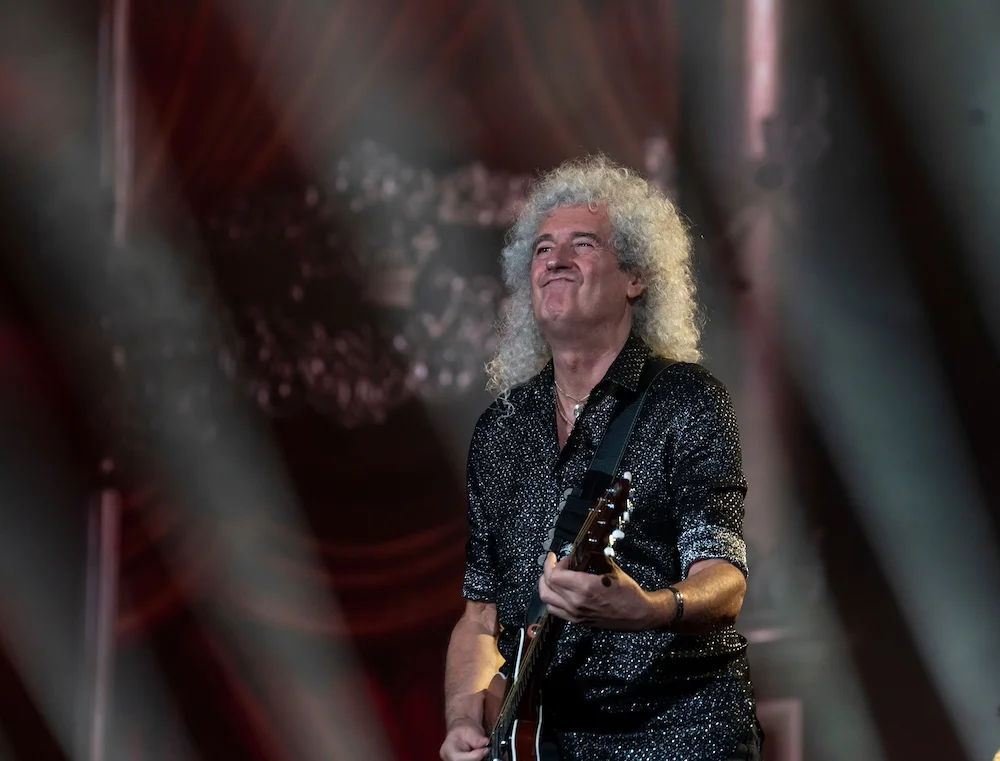
May’s biggest concern centers on artists and ownership.
“I don’t wanna be stealing the work of other people,” he said.
The Queen situation, however, presents an unusual complication.
If AI were being used primarily to reconstruct Queen from Queen’s own archive, would that still represent the same ethical problem?
May isn’t certain.
“If you’re stealing your own work, I’m not quite sure where I stand on it, because you would be stealing from the Queen oeuvre, which maybe is OK, because that’s ours,” he explained.
It’s a distinction that gets directly to the heart of his dilemma.
Queen possesses its own enormous body of music, imagery and performances.
Using that material to construct a new Queen experience might seem fundamentally different from taking creative work belonging to unrelated artists.
But May still sees a larger issue.
Even Using Queen’s Own Work Leaves May Uncomfortable
For May, the question doesn’t end with who owns the source material.
There is also the broader impact of supporting increasingly powerful AI systems within creative industries.
“But at the same time, you’re adding to the stresses that A.I. is putting on the world,” he said.
“So, I don’t know. I’m not so keen as I was.”
That doesn’t sound like a permanent rejection.
Instead, May appears caught between two positions.
As a performer and someone deeply involved in protecting Queen’s legacy, he can see enormous creative potential.
As an artist, he’s uncomfortable with how the technology necessary to deliver that vision could affect other creative people.
For now, the second concern is winning.
May Still Loves The Idea Of Queen Existing In A Permanent Space

Despite stepping back from his plans, May hasn’t lost his fascination with the experience itself.
He can still imagine a permanent Queen destination where fans could encounter the band in a way that resembles seeing them live.
“I think it would be great to have a permanent place where people could go and feel like they’re seeing us play live in our peak,” he said.
And his vision doesn’t necessarily stop with one version of Queen.
May imagined something even more ambitious.
“Maybe all over the world, maybe at all points in time.”
For a band with a history as visually distinctive as Queen’s, that idea opens extraordinary possibilities.
Audiences could theoretically experience different versions of the group rather than being limited to one moment in its history.
The attraction is especially obvious for generations who never saw Queen with Freddie Mercury.
It Could Give Younger Fans Something They Never Had
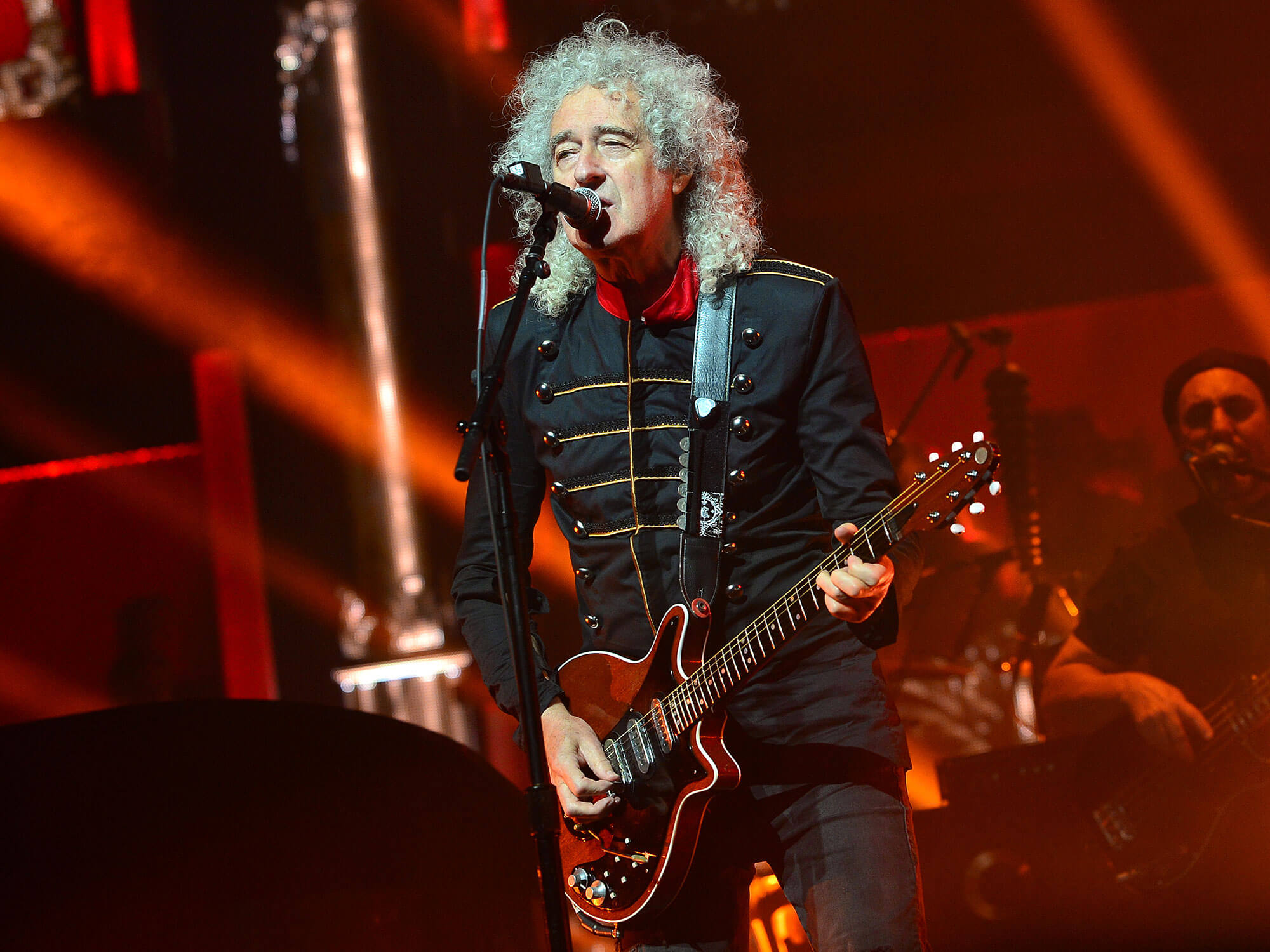
Queen’s music has continued reaching audiences far beyond the generation that originally watched the band perform.
Millions of younger fans know the songs, the videos and the legendary concert footage.
But watching an archival performance on a screen isn’t the same as standing inside a purpose-built experience designed to recreate the scale and atmosphere of Queen at full power.
That gap is precisely where avatar and immersive concert technology becomes so tempting.
May can see it.
He has thought about it.
He has even planned what a Queen version could become.
The obstacle isn’t a lack of imagination.
It’s whether the method of creating that experience is something he can support.
‘The Doors Are Open’
May hasn’t completely closed the possibility.
Technology will continue developing, and the questions surrounding AI, ownership and creative rights are likely to develop with it.
That means a Queen immersive experience could still emerge someday under circumstances that make May more comfortable.
“The doors are open [with A.I.],” he acknowledged.
Then came the qualification that currently keeps the project in the realm of possibility rather than reality.
“But I don’t know if we’re gonna walk through.”
For Queen fans, that’s both tantalizing and frustrating.
May has already imagined a venue where audiences could once again feel as though Queen were performing in their prime.
He has seen technology powerful enough to inspire serious plans for it.
But until he is convinced that creating the spectacle doesn’t come at a cost to the artists and creative world around him, Brian May appears willing to leave Queen’s digital curtain closed.