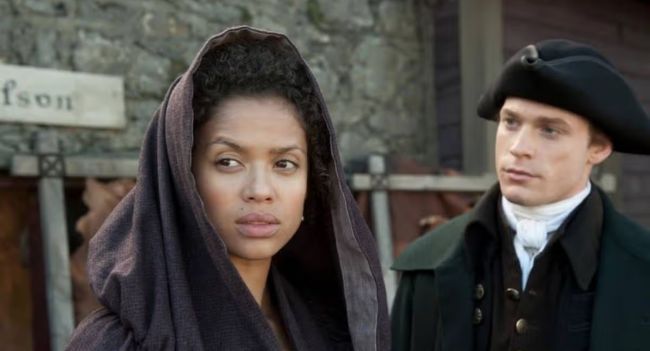
Belle: The Beautiful Period Drama Inspired By The Extraordinary Life Of Dido Elizabeth Belle
For fans of Jane Austen-style romance, lavish period settings and Bridgerton-era social drama, Belle offers a story with a remarkable historical foundation. The 2013 film follows Dido Elizabeth Belle, a mixed-race young woman raised within an aristocratic English household whose position in 18th-century society placed her between privilege and prejudice.
Starring Gugu Mbatha-Raw in a widely praised lead performance, the film combines romance, family drama and questions of race and class against the elegant backdrop of Georgian England.

A Woman Caught Between Two Worlds
Dido Elizabeth Belle was the daughter of Royal Navy officer Captain Sir John Lindsay and Maria Belle, an enslaved African woman. Born in the West Indies, Dido was brought to England and raised by her great-uncle, William Murray, 1st Earl of Mansfield, and his wife at Kenwood House in Hampstead, London.
Lord Mansfield was not only an aristocrat but also Lord Chief Justice, placing the family at the centre of Britain’s powerful legal and social establishment.
In Belle, Dido grows up alongside her cousin Lady Elizabeth Murray, who is also being raised under Mansfield’s care. As the girls approach adulthood, their contrasting positions within society become increasingly apparent.
Elizabeth is prepared to enter the world of marriage and aristocratic society, while Dido’s family worries that her mixed-race heritage could expose her to prejudice and limit her opportunities.
That tension becomes one of the film’s central themes: Dido has the education, upbringing and wealth associated with the upper classes, yet the society around her does not necessarily regard her as their equal.

Inspired By A Remarkable Portrait
The film takes its inspiration from the famous portrait of Dido Elizabeth Belle and Lady Elizabeth Murray, which depicts the two young women together at Kenwood.
The real Dido’s life, however, is only partially documented. English Heritage notes that the surviving portrait is an unusual piece of 18th-century British art because it presents a Black woman and a white woman as near equals.
That limited historical record gave screenwriter Misan Sagay considerable creative freedom. Belle is therefore best understood as historical fiction rather than a precise reconstruction of every event in Dido’s life. English Heritage describes the film as a fictionalised version of her story, while historical accounts confirm that Dido was raised at Kenwood House.
Some of the film’s central relationships and events were created or significantly reshaped for the screen. For example, the character of John Davinier, played by Sam Reid, is not a straightforward depiction of a real-life romantic partner. Historical records show that the real John Davinier was a French manservant rather than the idealistic young lawyer portrayed in the film.
A Powerful Cast

Gugu Mbatha-Raw leads the film as Dido, with Tom Wilkinson as Lord Mansfield and Sarah Gadon as Elizabeth Murray.
The ensemble also includes Miranda Richardson, Penelope Wilton, Sam Reid, Matthew Goode, Emily Watson and Tom Felton, who plays James Ashford, one of the aristocratic figures who looks down on Dido.
For fans who know Felton primarily as Draco Malfoy from Harry Potter, Belle offers a very different kind of role, placing him in the world of Georgian aristocracy.
Mbatha-Raw’s performance has been particularly celebrated. Film critic Carla Renata described her portrayal of Dido as exceptional, praising the emotional depth she brought to the character.
The film currently holds an 84% Tomatometer score from 152 reviews and an 82% Popcornmeter score from more than 25,000 ratings on Rotten Tomatoes. Its critics’ consensus highlights both the visual appeal expected from a period drama and the strength of its performances and social themes.
Audience reactions have also remained positive. One recent Rotten Tomatoes viewer described the film as “beautifully done and truly touching,” while another praised its cast and its handling of a difficult subject.
A Period Drama With More Than Romance
Although Belle has the costumes, grand houses and romantic tensions that will appeal to viewers of Jane Austen adaptations and Bridgerton, its story goes beyond aristocratic courtship.
The film explores the restrictions placed on Dido because of her race and social position while also connecting her story to the wider debate surrounding slavery in 18th-century Britain.
Lord Mansfield’s real-life position as Lord Chief Justice provides the historical backdrop for the film’s treatment of the Zong case, an important legal episode involving the insurance claims arising from the killing of enslaved Africans. The movie gives Dido a much more direct role in the case than the surviving historical record supports, using her fictionalised story to explore the moral and social questions surrounding slavery.
That balance between documented history and fictional storytelling is central to what makes Belle distinctive. The film does not simply recreate an aristocratic romance; it uses Dido’s unusual position within the Mansfield household to examine who was allowed to belong in Britain’s upper classes during the period.
A Visually Rich Georgian World
The film’s appeal is also strongly visual. Elaborate costumes, formal interiors and grand country houses create the kind of richly detailed setting that period-drama audiences expect.
Interestingly, although Dido’s real story is closely associated with Kenwood House, the production did not actually film the main interiors there. Because Kenwood was undergoing restoration, the filmmakers used several other historic properties, including Osterley House, Syon Park and Chiswick House, while West Wycombe Park was used for the exterior.
The result is a polished period setting that complements the film’s quieter exploration of identity, privilege and prejudice.
For viewers looking beyond the familiar Austen adaptations and modern period hits, Belle offers a different kind of historical romance — one inspired by a real woman whose extraordinary place within 18th-century British society was captured in a painting and later brought to a much wider audience through cinema.
And if you’re looking for a period drama to watch tonight, Belle is scheduled to air on Film4 at 6:45pm on Wednesday, September 23, with the broadcast running until 8:50pm.