The Weight Review: Ethan Hawke Anchors a Tense, Atmospheric Depression-Era Thriller
Review Score: 4/5
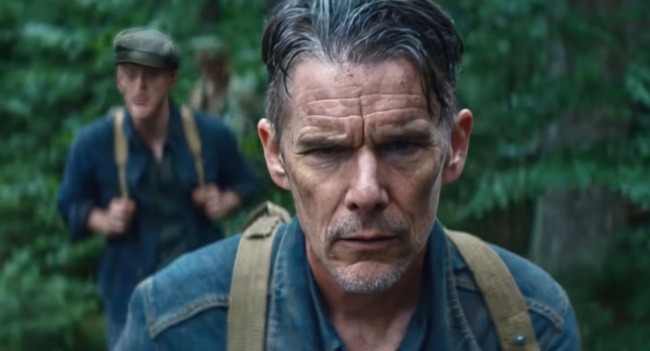
Ethan Hawke carries much of The Weight on his shoulders, and that is fitting for a film built around desperation, responsibility, and the literal burden of a fortune in gold.
Padraic McKinley’s period thriller opens with a sequence that immediately establishes how much Samuel Murphy has already lost. A widower, World War I veteran, and unemployed mechanic living in Oregon in 1933, Murphy is struggling to survive as the Great Depression tightens its grip. His situation becomes even more desperate when he and his young daughter, Penny, lose their home and are confronted by a group of men who turn out to be police officers.
Murphy’s decision to fight back before realizing who they are has devastating consequences.
He is separated from Penny and sent to prison, while his daughter is placed in government care. The film then delivers one of its most striking moments: the title card appears just as Murphy watches Penny being taken away from him.
The camera stays on Hawke’s face as the reality of what has happened finally settles in. There is no dramatic outburst to soften the moment. Instead, the film allows the silence and Hawke’s expression to do the work. The idea of the weight becomes tangible: the weight of his failure, his circumstances, and the possibility that he may never get his daughter back.
It is an unusually powerful introduction, and one that immediately shows what McKinley can accomplish when he trusts atmosphere and performance over exposition.
A Desperate Father Gets One Chance at Freedom
The story takes place in 1933, when Samuel Murphy is serving time at a labor camp where prisoners can reduce their sentences through hard physical work. Murphy is determined to earn his freedom, but time is working against him.
Penny is living in government care, and in a month she will officially become a ward of the state and become eligible for adoption. Murphy knows he cannot finish his sentence in time to stop that from happening.
Then Warden Clancy, played by Russell Crowe, offers him an extraordinary way out.
Clancy has learned what Murphy is capable of and believes he is the right man for a dangerous assignment. A friend of the warden’s is connected to a remote gold mine, and the gold there is facing nationalization under President Franklin D. Roosevelt’s policies. Rather than allow the gold to be confiscated, the men behind the operation want it moved.
Murphy is given a simple but nearly impossible proposition. He must choose three fellow prisoners and transport packs of gold bars to a drop point five days away through the wilderness. If they succeed, Clancy will personally arrange their freedom.
If even one bar fails to reach the destination, the deal is off.
That premise gives The Weight a strong foundation for a survival thriller, but the movie’s most effective element is the emotional reason Murphy has for taking the job. He isn’t chasing wealth. He is trying to get back to his daughter.
Hawke plays that desperation with a combination of stubborn determination and barely contained panic. Murphy is experienced enough to understand the dangers ahead, which makes the journey feel more threatening rather than less. Every obstacle matters because he cannot afford to fail.
The Crew May Be More Dangerous Than the Wilderness
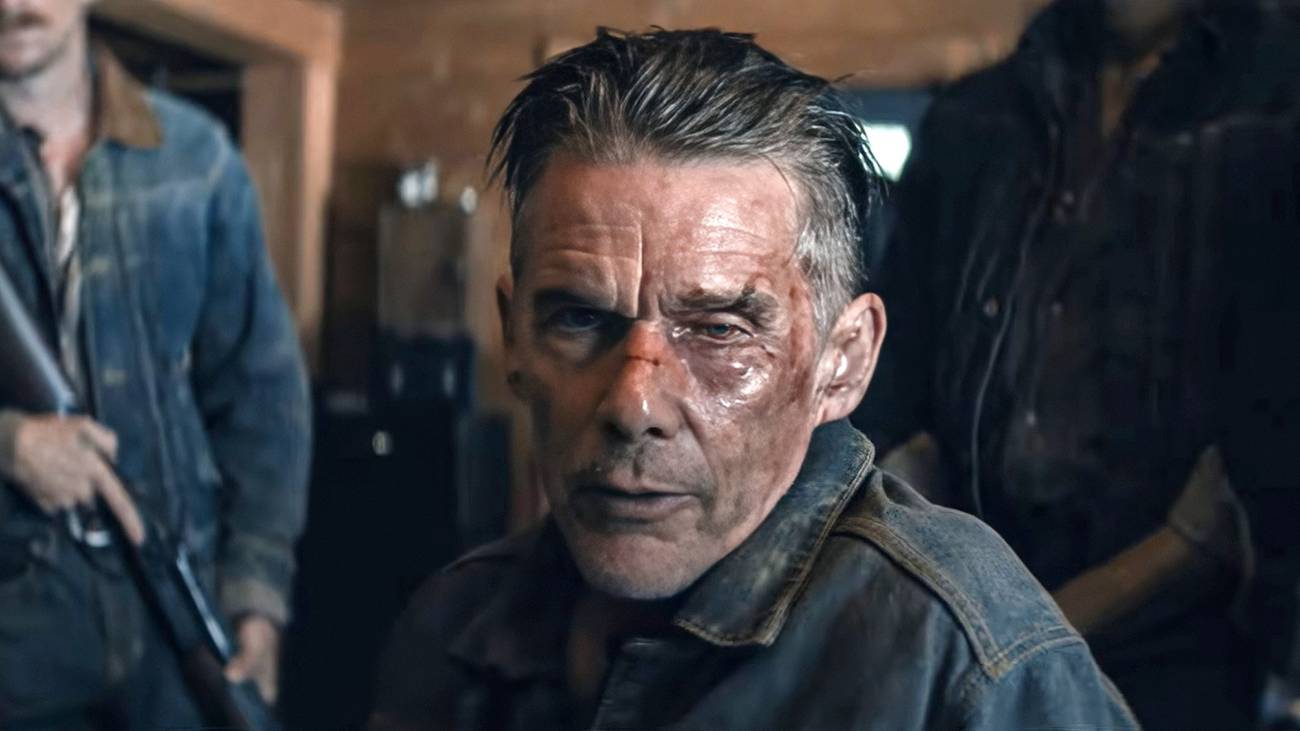
Murphy’s biggest problem is not necessarily the landscape. It is the men he has to depend on.
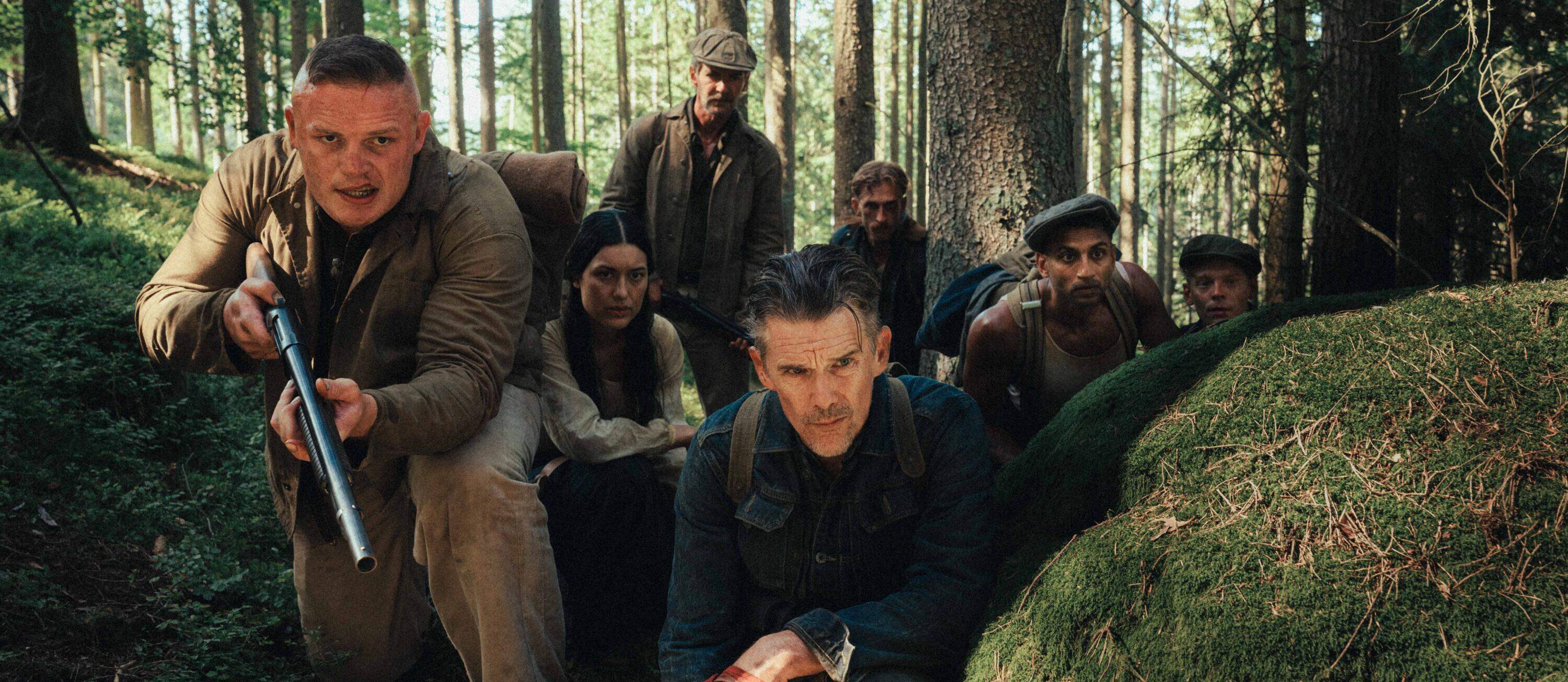
His three choices are Singh, played by Avi Nash, Olson, played by Lucas Lynggaard Tønnesen, and Rankin, played by Austin Amelio.
Singh appears thoughtful and intelligent, although his intelligence can also lead him into trouble. Olson has almost the opposite problem. Rankin is loud, confrontational, and prone to making matters worse. He may not be Murphy’s ideal choice, but with little time to prepare, he is the best fourth man Murphy can find.
Two armed men, played by Sam Hazeldine and George Burgess, accompany the group to protect the interests of those who arranged the operation. Neither is particularly welcoming.
Then there is Anna, played by Julia Jones, a Native American woman who uses the group’s secret departure from the mine as an opportunity to escape herself.
The result is an uneasy collection of people with very different motivations. They have to work together, but there is little reason for them to trust one another.
That tension gives McKinley plenty to work with.
The journey itself is physically punishing. The landscape is rugged and dangerous, and the film’s textured visual style makes the environment feel like a constant threat. A misplaced foot or a moment of hesitation can have fatal consequences.
Yet the most interesting question is whether the group will destroy itself before the wilderness does.
The Rope Bridge Sequence Shows the Film at Its Best
One of the movie’s strongest sequences comes when the group reaches a deteriorating rope bridge spanning a canyon.
The problem is immediately obvious: the bridge cannot safely support a person carrying a heavy pack of gold. The characters therefore have to find another way to move their valuable cargo across.
McKinley stretches the scene out, allowing the danger to build rather than rushing toward the obvious solution. For several minutes, the sequence becomes a test of nerve and ingenuity.
Hawke is particularly effective in these moments because he understands how much can be communicated without dialogue. Murphy’s attention is fixed on the problem in front of him, but the audience is equally aware that one mistake could destroy everything.
Austin Amelio’s Rankin is also crucial here. The character’s recklessness makes him one of the few people in the group who could derail the mission either deliberately or through sheer carelessness.
That uncertainty is one of the film’s greatest strengths.
In fact, The Weight often works better when the danger comes from human unpredictability than when it relies on conventional action.
When the Thriller Becomes More Conventional
Unfortunately, the movie cannot maintain that level of tension throughout.
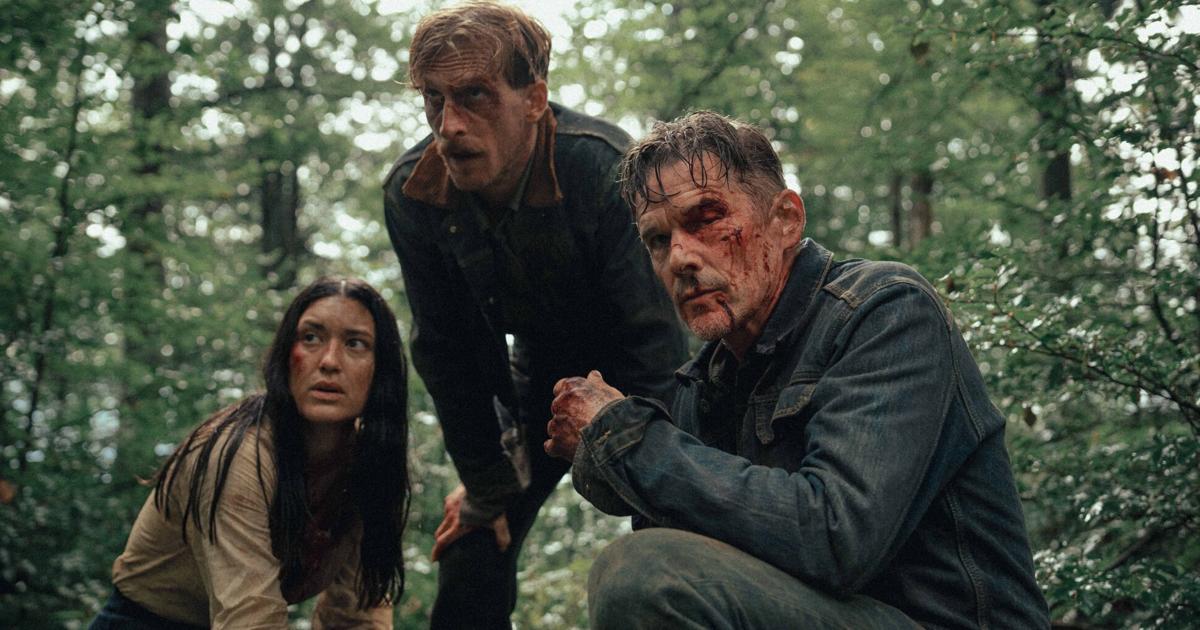
As the third act approaches, the larger purpose of the mission becomes clearer and the story moves toward more overt violence. These scenes are competently handled, but they feel more familiar than the quieter material that comes before them.
The opening establishes The Weight as a grounded story about a father facing an impossible situation. Much of the film’s middle section builds tension through physical hardship, distrust, and the constant possibility of an accident. When the movie shifts toward more conventional confrontation and violence, some of that distinctive atmosphere is lost.
That does not make the finale ineffective. Hawke remains the film’s emotional anchor, and the story still has enough momentum to carry the audience through its final stretch.
The movie’s approach to its conclusion is also entertaining, particularly because of the emotional groundwork established at the beginning.

Ethan Hawke Gives the Film Its Center
The performances are one of The Weight‘s biggest assets.
Hawke gives Samuel Murphy a convincing mixture of toughness and vulnerability. Murphy is a man who has already been battered by circumstances, but he refuses to accept that his daughter’s future has been decided without him.
Russell Crowe has a smaller role as Warden Clancy, but his presence gives the story additional weight. Clancy is the person who turns Murphy’s hopeless situation into a dangerous opportunity, and Crowe gives their encounters the appropriate sense of authority and menace.
The supporting cast also contributes to the film’s uneasy group dynamic. Nash, Tønnesen, Amelio, Jones, Hazeldine, and Burgess each help distinguish the members of the expedition, even though some characters are necessarily sketched more lightly than others.
The film was written by Matthew Booi and Shelby Gaines, from a story by Booi, Leo Scherman, and Matthew Chapman. McKinley makes his feature directorial debut with the movie.
A Period Thriller With More Than Gold at Stake
The title The Weight works on several levels. There is the physical burden of the gold, but the film also uses that burden to reflect Murphy’s emotional situation.
Ethan Hawke has discussed the title in terms of the emotional weight carried by the characters, while McKinley has connected it to both the physical gold and the pressures weighing on the people trying to move it.
That idea helps explain why the film’s quieter moments can be more compelling than its action scenes. The gold gives the characters a practical objective, but Murphy’s real motivation is much more personal.
His journey is about reaching Penny before he loses the chance to be her father.
The film also draws from the traditions of gritty survival and crime thrillers. Its Depression-era setting gives the story an especially harsh backdrop, while the isolated wilderness creates the kind of pressure-cooker environment in which suspicion can become as dangerous as any physical obstacle.
The Weight premiered at the 2026 Sundance Film Festival and later received a European premiere at the Berlin International Film Festival before its theatrical release.
Verdict
The Weight does not maintain the extraordinary tension of its opening from beginning to end. Its later action is more conventional, and some of the suspense inevitably loses its edge as the story moves toward its final confrontation.
But the film has too many strong elements to be dismissed when it dips.
McKinley’s direction gives the wilderness a palpable sense of danger. Hawke provides a deeply grounded central performance. The uneasy group dynamic keeps even relatively quiet conversations charged with possibility, and sequences such as the rope-bridge crossing demonstrate just how effective the film can be when physical danger, character tension, and emotional stakes collide.
Most importantly, The Weight understands that its most compelling question is not whether Murphy can get the gold where it needs to go.
It is whether he can carry the burden of everything that happened to him and still make it home to his daughter.
The Weight was released in theaters on September 18, 2026. The film has a runtime of approximately 1 hour and 55 minutes and is rated R for language, violence, and bloody images.