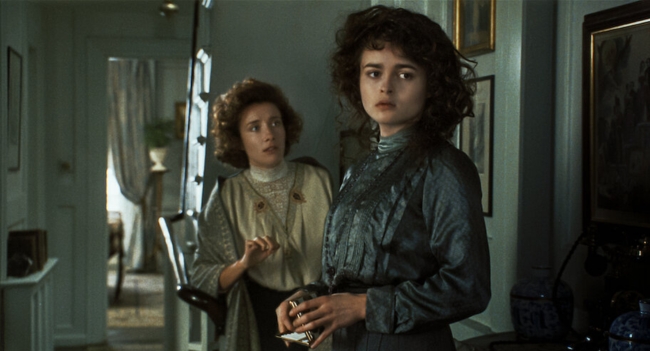
Fans of The Other Bennet Sister should add this acclaimed period drama to their watchlist
If you enjoyed The Other Bennet Sister for its complicated family relationships, romance and close look at social class, Howards End is another period drama worth seeking out.
The four-part adaptation of E. M. Forster’s 1910 novel brings together three very different families and uses their relationships to explore wealth, privilege, poverty and the social divisions of early 20th-century England. The BBC miniseries originally aired in 2017 and stars Hayley Atwell, Matthew Macfadyen, Philippa Coulthard and Joseph Quinn.

Three families, three very different worlds
At the heart of Howards End are the Schlegels, the Wilcoxes and the Basts.
The Schlegel sisters, Margaret and Helen, are intelligent, idealistic women from a comfortable background. The wealthy Wilcoxes, meanwhile, represent a more traditional and materially privileged side of English society. Leonard Bast and his wife, Jacky, belong to a financially struggling world that is far removed from the security enjoyed by the other families.
As these lives become increasingly intertwined, questions of money, class, morality and personal responsibility begin to surface. The series keeps its focus firmly on the people caught between those social boundaries, rather than treating its period setting as mere decoration.
Margaret’s relationship with the Wilcox family becomes particularly important after she develops a close bond with Ruth Wilcox, the owner of the country house Howards End.
Ruth’s connection with Margaret has consequences that continue long after her death, setting off tensions within her own family and bringing Margaret closer to Henry Wilcox, played by Matthew Macfadyen.
At the same time, the Schlegels try to help Leonard Bast, whose financial difficulties place him in an increasingly vulnerable position. Their attempts to intervene ultimately draw all three families into a chain of events involving love, pregnancy, death and a dramatic final revelation.

Hayley Atwell and Matthew Macfadyen lead a strong cast
Hayley Atwell takes the central role of Margaret Schlegel, while Philippa Coulthard plays her younger sister Helen. Matthew Macfadyen stars as Henry Wilcox, with Julia Ormond as Ruth Wilcox.
The ensemble also includes Joseph Quinn as Leonard Bast, Alex Lawther as Tibby Schlegel, Joe Bannister as Charles Wilcox, Tracey Ullman as Aunt Juley, Rosalind Eleazar as Jacky Bast, Jonah Hauer-King as Paul Wilcox, Sandra Voe, Miles Jupp and others.
The performances were one of the series’ biggest strengths. Contemporary reviews highlighted Atwell and Macfadyen in particular, with The Guardian praising the adaptation for its wit and humanity and noting how it concentrates on its characters and ideas.
Another review from The Arts Desk described the series as a compelling adaptation and singled out the chemistry and contrast between the Schlegel sisters.
The production also received significant recognition. Howards End was nominated for the BAFTA Television Award for Mini-Series in 2018, alongside The Moorside, The State and the eventual winner, Three Girls. Hayley Atwell was also nominated for Best Actress at the 2018 Broadcasting Press Guild Awards.

A story about class that still feels relevant
Although Howards End is set in the early 20th century, its central concerns are remarkably easy to recognise.
The series examines what happens when people from different social backgrounds become closely connected, and how assumptions about wealth and respectability can shape the choices people make. Margaret and Helen’s attempts to help the Basts also expose the limits of good intentions when the people trying to help have never experienced the same financial insecurity themselves.
That social tension is a major part of what makes the drama more than a traditional romance. The relationships matter, but so do the economic and cultural differences separating the characters.
The series was also praised for its visual presentation. Period costumes, sets and locations recreate the world of Forster’s novel without overwhelming the story, while the direction by Hettie Macdonald and screenplay by Kenneth Lonergan give the adaptation a modern television rhythm.

A four-episode adaptation with plenty to unpack
The BBC version consists of four episodes.
The opening episode brings the Schlegels, Wilcoxes and Basts into each other’s orbit through a misunderstanding, a surprise visit and a stolen umbrella. From there, the consequences of Ruth Wilcox’s death become central to the story, while the Schlegels’ own circumstances begin to change.
Later episodes deepen the conflict between the three families. Margaret receives an offer from Henry, Helen becomes increasingly distressed by the Basts’ situation, and the families are eventually brought together at a wedding. Henry’s past also becomes an important part of the unfolding drama.
By the final episode, Margaret has to confront Henry’s past while Helen leaves for Europe without explaining her decision. Her return becomes inevitable when she learns that Aunt Juley has fallen ill with pneumonia.
The story builds toward a conclusion in which the three families’ intertwined histories finally collide.
![Howards End [Starz]: Talking Episode 4's Ending with Matthew Macfadyen](https://www.indiewire.com/wp-content/uploads/2018/04/howards-end-wilcox.jpeg)
How critics and viewers responded
The series received a strong critical response. Rotten Tomatoes currently lists Howards End with an 87% Tomatometer score from 46 critics, while the series has also attracted a substantial audience response.
Viewers have particularly praised the acting, writing, cinematography, costumes and attention to period detail. The performances of Hayley Atwell and Matthew Macfadyen have repeatedly been highlighted, while the production’s depiction of English society gives the drama much of its atmosphere.
For viewers coming to the series after The Other Bennet Sister, the appeal is easy to understand. Both offer a period setting where family expectations, romance, money and social position are closely connected, while their characters have to negotiate a society in which class can determine the opportunities available to them.
Howards End is therefore a strong choice for anyone looking for a character-driven period drama with a literary foundation and a story that gradually draws several very different lives together.
Watch the trailer:
Howards End is listed on Netflix, although Netflix notes that availability varies by country.