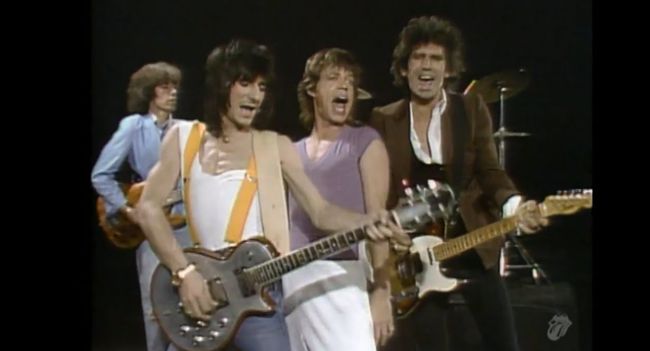
“Start Me Up” would eventually become one of the Rolling Stones’ most recognizable rock songs, powered by an unmistakable Keith Richards guitar riff. But for years, the band didn’t hear it that way at all.
Long before its 1981 release, the song existed in a dramatically different form. The Stones had approached it as a reggae number, recorded take after take, became frustrated with the results and ultimately pushed it aside as a rejected track.
It took years, a return to the archives and one overlooked rock ’n’ roll take to reveal what they had been sitting on.
“Start Me Up” Began as a Reggae Song

The song’s origins stretch back to sessions for the Rolling Stones’ 1976 album Black and Blue. At the time, it was known as “Never Stop,” and Richards was convinced reggae was the direction it needed to take.
“I was convinced that was a reggae song. Everybody else was convinced of that: ‘It’s reggae, man,’” Richards recalled to Guitar World. “We did 45 takes like that.”
Despite all that work, the Stones weren’t satisfied with what they had. The unfinished song was put aside while the group turned its attention elsewhere.
Mick Jagger later described it to Rolling Stone as something that was “just forgotten about, a reject.”
That could easily have been the end of the song.
The Stones Eventually Gave the Track Another Chance
The band revisited the material while working on 1978’s Some Girls, but “Start Me Up” still wouldn’t officially emerge until several years later.
The breakthrough came when the Rolling Stones needed additional material to complete another album before heading back on tour. Jagger began searching through older recordings and came across something that had been buried among the numerous attempts at “Never Stop”: a rock-oriented take.
It sounded very different from the reggae versions that had dominated the original sessions.
Engineer Chris Kimsey later recalled the transformation.
“When they started playing it this time, it wasn’t a reggae song,” he told Rolling Stone. “It was what we know today as the great ‘Start Me Up.’ It was Keith’s song; he just changed it.”
Jagger immediately recognized the potential in what he heard.
“I like it very much,” he told the Los Angeles Times, believing they had the foundation for “a very good rocker.”
One Overlooked Take Changed Everything
Perhaps the most remarkable part of the story is how close that version came to remaining buried.
According to Jagger, the Stones initially recorded two takes before the song shifted heavily toward reggae. The second take was the complete rock ’n’ roll performance that eventually became the basis of the released recording.
“The funny thing was that it turned into this reggae song after two takes – and that take on Tattoo You was the only take that was a complete rock ‘n’ roll take,” Jagger told Rolling Stone.
The band then continued pursuing the reggae arrangement for roughly another 20 takes. When those versions failed to convince them, the entire song was effectively dismissed — and nobody thought to return to the earlier rock take.
Years later, Jagger did exactly that.
Once the forgotten recording had been rediscovered, finishing the track took approximately six hours in the studio.
“Start Me Up” was released on Aug. 14, 1981, 10 days before Tattoo You reached stores. The song quickly became a major hit, climbing to No. 2 in the United States and giving the Rolling Stones what would become their final U.K. Top 10 hit.
Keith Richards’ Riff Became the Song’s Foundation
At the heart of the finished recording was the Richards guitar riff that Jagger had recognized years after it was first played.
“It was Keith’s great riff,” Jagger told Rolling Stone, “and I wrote the rest.”
The riff’s effectiveness comes from more than its instantly recognizable sound. Richards employs an approach he has described as “turning the beat around,” playing around Charlie Watts’ rhythm rather than simply following the conventional rock emphasis on the second and fourth beats.
The result sounds effortless and instinctive, even though the rhythmic relationship between Richards and Watts gives the track much of its distinctive character.
Rolling Stones producer Don Was compared Richards’ instinctive approach to that of a jazz musician.
“He’s a guy who understands how to just play in the moment,” Was told the Sun-Sentinel. “He knows how to get in touch with the feeling of a song and to translate that into music in a very spontaneous way. He’s like a great jazz musician, really.”
Richards Admitted He Didn’t Recognize What They Had
For all the praise surrounding his riff, Richards has given Jagger credit for eventually realizing that something special was hiding in those old recordings.
Richards said the riff itself had emerged casually during a break, without him giving it much thought at the time.
“On a break, I just played that guitar riff, not even really thinking much about it,” he told Guitar World. “Five years later, Mick discovered that one rock take in the middle of the tape and realized how good it was.”
Looking back, Richards admitted that failing to recognize the song’s potential sooner remained a source of frustration.
“The fact that I missed ‘Start Me Up’ for five years is one of my disappointments,” he said. “It just went straight over my head, but you can’t catch everything.”
What spent years sitting in the Rolling Stones’ archives as an abandoned experiment ultimately became one of the defining songs of their later career — all because a single rock ’n’ roll take survived among the many reggae versions surrounding it.