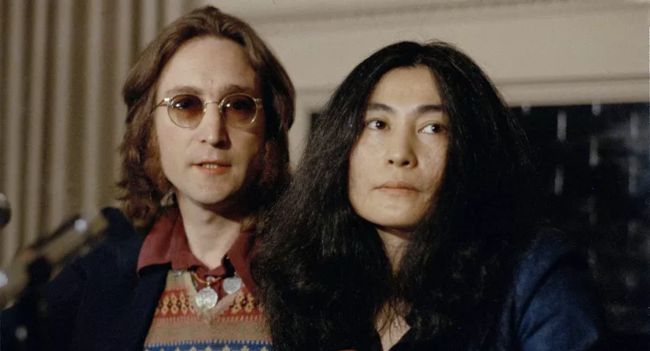
Few relationships in music history have been examined, celebrated and blamed as intensely as John Lennon and Yoko Ono’s.
They were lovers, artistic partners, political activists and eventually parents, spending 14 years together in a relationship that produced experimental music, headline-making protests and one of the most scrutinized marriages in popular culture.
Lennon once described falling for Ono as something unlike anything he had experienced before.
“When I fell in love with Yoko, I knew, my God, this is different from anything I’ve ever known,” he said. “This is more than a hit record, more than gold, more than everything.”
Their story began in London in 1966, survived years of hostility after the Beatles broke up, endured an 18-month separation and ultimately led Lennon back to music after years away.
Then, on December 8, 1980, it ended with his murder outside the New York home they shared.
:max_bytes(150000):strip_icc():focal(674x316:676x318):format(webp)/yoko-ono-john-lennon-021023-3-5400226f688643aebafe300619867cb1.jpg)
November 7, 1966: John Lennon meets Yoko Ono
Lennon first encountered Ono at London’s Indica Gallery, where she was preparing a solo exhibition.
He had heard about a Japanese avant-garde artist who had come from America and went to see her work.
One installation particularly caught his attention: a ladder leading to a magnifying glass through which the viewer could read the word “Yes.”
Lennon later remembered approaching Ono and beginning a playful exchange with her.
“That’s when we really met,” he told Playboy. “That’s when we locked eyes and she got it and I got it.”
Both were involved with other people at the time, but the meeting became the beginning of a relationship that would dramatically reshape their lives.
1968: Lennon’s first marriage ends as his relationship with Ono intensifies
Lennon had married Cynthia Powell in 1962 after discovering she was pregnant with their son, Julian.
:max_bytes(150000):strip_icc():focal(629x299:631x301):format(webp)/yoko-ono-john-lennon-eb329545e88a4fbbb35f3ec0b773db6b.jpg)
By 1968, however, Lennon and Ono had begun an affair.
Cynthia later discovered them together at the Lennon family home in Kenwood.
The marriage formally ended in November 1968, although Lennon would later insist that his relationship with Cynthia had already broken down before Ono became involved.
In a 1976 letter to Cynthia, he wrote that their marriage “was over long before the advent of L.S.D. or Yoko Ono.”
November 11, 1968: Their first album causes immediate controversy
:max_bytes(150000):strip_icc():focal(999x0:1001x2):format(webp)/john-lennon-yoko-ono-1-cacf0360968848e4a73a4fbbcd71f855.jpg)
Lennon and Ono’s artistic partnership began almost as quickly as their romantic one.
During a weekend at Kenwood in spring 1968, they recorded the experimental project that became Unfinished Music No. 1: Two Virgins.
Lennon later recalled finishing the recordings around midnight before the pair became intimate at dawn.
Released in November, the album immediately attracted attention because its cover featured Lennon and Ono completely naked.
It also made clear that Ono was no longer simply Lennon’s romantic partner.
The two intended to create art together.
March 20, 1969: Lennon and Ono marry in Gibraltar
:max_bytes(150000):strip_icc():focal(738x0:740x2):format(webp)/yoko-ono-john-lennon-marriage-certificate-gibraltar-021023-1-2000-c93b1173ae854a479af8a2a5cc656529.jpg)
Less than a year later, they were married.
Lennon and Ono traveled to Gibraltar and held a small ceremony on March 20, 1969.
Lennon wore off-white trousers and a white jacket, while Ono dressed in white with a miniskirt.
He later immortalized the experience in “The Ballad of John and Yoko.”
“Gibraltar was like a little sunny dream,” Lennon remembered.
Their honeymoon would prove anything but conventional.
March 1969: Their honeymoon becomes a peace protest
:max_bytes(150000):strip_icc():focal(499x0:501x2):format(webp)/yoko-john-lennon-cannes-ed88c55e006f43f6852fb53e3c5d288e.jpg)
Five days after their wedding, Lennon and Ono checked into the Amsterdam Hilton and climbed into bed.
They stayed there for five days as part of their first famous “bed-in for peace.”
Knowing the press would follow their marriage, the couple decided to use the attention to promote an antiwar message.
“We knew whatever we did was going to be in the papers,” Lennon later explained. “We decided to utilize the space we would occupy anyway, by getting married, with a commercial for peace.”
Two months later, they staged another bed-in in Montreal as the Vietnam War continued.
During that protest at the Queen Elizabeth Hotel, Lennon recorded “Give Peace a Chance.”
1970: The Beatles split — and Ono becomes a target
The Beatles announced their breakup the following year, and Ono quickly became one of the most frequently blamed figures in the collapse of the band.
She faced intense criticism, including racist attacks.
Lennon repeatedly rejected the idea that she had destroyed the Beatles.
During a 1971 appearance on The Dick Cavett Show, he joked that if Ono deserved the blame for breaking the group apart, perhaps she should also receive credit for the music Lennon, Paul McCartney, George Harrison and Ringo Starr subsequently made as solo artists.
Ono argued that keeping four highly creative individuals together indefinitely was unrealistic.
“It was almost miraculous that they were together,” she said.
Years later, Lennon acknowledged how painful the backlash had been.
“Our love helped us survive it,” he told Playboy in 1980, “but some of it was pretty violent.”
August 1971: New York becomes home
Lennon and Ono relocated to New York City in 1971.
After initially staying at the St. Regis Hotel, they rented a studio at 105 Bank Street in the West Village.
Both quickly fell in love with Manhattan.
“It’s so good!” Ono told The New Yorker. “It’s like a quaint little town.”
Lennon described the city as “the center of our world,” praising its creative energy and seemingly endless possibilities.
The couple would eventually become inseparable from New York in the public imagination.
December 1971: Music and activism become increasingly intertwined
Lennon and Ono continued using their celebrity to support political causes.
On December 10, 1971, they appeared at the John Sinclair Freedom Rally in Ann Arbor, Michigan.
Sinclair, an activist and manager of the MC5, had received a 10-year prison sentence for possession of two marijuana joints.
Stevie Wonder, Bob Seger and Allen Ginsberg were among the other figures involved in the rally.
Three days later, Sinclair was released.
The event was one of several occasions in which Lennon and Ono combined live performance with political campaigning.
1972: The U.S. government tries to deport Lennon
Their political activity soon attracted attention from the Nixon administration.
In March 1972, Lennon and Ono were served with deportation papers.
Their immigration attorney, Leon Wildes, later documented a lengthy battle in which the couple were reportedly followed by the FBI for three years.
Wildes used the Freedom of Information Act to uncover records related to the case.
Lennon ultimately won his battle to remain in the United States in 1975.
The legal fight became one of the defining political struggles of the couple’s years in America.
June 1972: Another collaborative album arrives
Lennon and Ono released Some Time in New York City in June 1972.
The album was heavily influenced by their political interests and became their second official album together.
But behind their public activism and artistic partnership, their marriage was becoming increasingly strained.
Within roughly a year, they would separate.
November 1973: Lennon and Ono split
The pressure surrounding their immigration battle coincided with growing difficulties in their relationship.
According to biographer Albert Goldman, Ono told the couple’s assistant May Pang that she and Lennon were arguing and “growing apart.”
Lennon eventually left their home.
The separation began the period he later called his “Lost Weekend,” although it lasted approximately 18 months.
During that time, Lennon moved to Los Angeles and entered into a relationship with Pang.
May Pang says Ono encouraged the relationship
Pang has maintained that the affair initially happened at Ono’s suggestion.
In the 2023 documentary The Lost Weekend: A Love Story, Pang recalled Ono entering her office and telling her, “John and I are not getting along. I want you to go out with him.”
Pang initially resisted, pointing out that Lennon was her employer and Ono’s husband.
Nevertheless, a relationship developed.
Pang later lived with Lennon and accompanied him to California.
According to Pang, Ono initially expected the arrangement to be brief.
“She thought it would be two weeks, gone, goodbye,” Pang said.
Instead, Lennon and Pang remained together until early 1975.
1975: Lennon and Ono find their way back to each other
By early 1975, Ono had decided she wanted Lennon back.
Pang recalled Ono telling her, “I’m thinking of taking John back.”
Lennon and Ono reconciled and, on March 20 — their sixth wedding anniversary — renewed their vows.
That same period brought another enormous change.
After fertility struggles and multiple miscarriages, Ono became pregnant.
October 9, 1975: Sean Lennon is born on his father’s birthday
Sean Taro Ono Lennon was born in New York City at 2 a.m. on October 9, 1975.
The date was already significant.
It was John Lennon’s 35th birthday.
For Lennon and Ono, Sean’s arrival followed years of painful attempts to have a child together.
Lennon later spoke about the miscarriages and medical difficulties Ono had endured.
“We managed to have the child that we tried to have for 10 years,” he told Rolling Stone, explaining why they then withdrew substantially from public life.
“My God, we weren’t going to blow it.”
Lennon became increasingly focused on raising Sean, while Ono later said she saw unmistakable similarities between father and son.
“I see a lot of John in Sean,” she told PEOPLE in 1982. “He’s quick and snappy.”
Lennon largely disappears from music
Following Sean’s birth, Lennon stepped away from the relentless cycle of recording and public appearances that had defined much of his adult life.
For several years, family life took priority.
The couple did occasionally appear publicly, including at President Jimmy Carter’s inaugural ball in January 1977.
But musically, Lennon remained largely silent.
That changed in 1980.
August 1980: Lennon and Ono return to the studio together
After roughly six years away from making records, Lennon and Ono entered New York’s Hit Factory to begin another collaborative project.
Lennon said the motivation was simple.
“We feel like doing it and we have something to say,” he told Playboy.
Years earlier, their collaborations had been met with hostility in part because of the anger surrounding the Beatles’ breakup.
By 1980, Lennon believed audiences might finally be more receptive.
“We think either people have forgotten or they have grown up by now,” he said.
November 17, 1980: Double Fantasy marks a new beginning
Their album Double Fantasy arrived on November 17, 1980.
The title came from a flower Lennon encountered during a trip to Bermuda with Sean.
Lennon explained that the flower was a type of freesia, but the name had taken on another meaning for him and Ono.
“If two people picture the same image at the same time,” he said, “that is the secret.”
The record presented Lennon and Ono in conversation with one another, alternating songs while exploring marriage, family and adult life.
It appeared to mark the beginning of another creative chapter.
Instead, it became Lennon’s final album released during his lifetime.
Lennon still defended Yoko until the end
Only months before his death, Lennon again addressed the years of hostility directed toward Ono.
He described them both as sensitive people and admitted that the attacks had been painful.
“When you’re in love, when somebody says something like, ‘How can you be with that woman?’ you say, ‘What do you mean? I am with this goddess of love, the fulfillment of my whole life.’”
For Lennon, their relationship had survived because their commitment to one another outweighed the hostility around them.
“Our love helped us survive it,” he said.
December 8, 1980: Their story ends outside the Dakota
On December 8, Lennon and Ono spent part of the day working and later returned to their apartment building, the Dakota, in Manhattan.
As Lennon approached the building, he was shot.
He died at 40 years old.
Ono later described the moment a doctor handed her Lennon’s wedding ring.
Until then, she said, some part of her had been unable to accept that he was gone.
“The doctor came and handed me things. I still didn’t believe it,” she told PEOPLE in 1990. “Then the doctor handed me John’s wedding ring, and I knew.”
She initially struggled even to authorize the hospital to announce his death.
“For that split second, I felt as though John would still be alive if his death was not announced.”
Decades later, she said she continued to dream about him.
“His spirit is always with me.”
1982: Yoko accepts a Grammy without John
Two years after Lennon’s death, Double Fantasy won Album of the Year at the Grammy Awards.
Ono walked onstage with Sean to accept the honor.
The audience gave them a standing ovation.
Visibly emotional, Ono told the crowd, “I think John is with us here today.”
She spoke of how proud both she and Lennon had been to make music and thanked the audience through tears.
What had been intended as a comeback album had become one of the final monuments to their partnership.
Ten years later, Yoko reflected on the intensity of their marriage
In 1990, a decade after Lennon’s murder, Ono spoke candidly about the relationship.
“What I miss most about John is his incredible tenderness and his belief in me,” she told PEOPLE.
She did not portray their marriage as uncomplicated.
“Love can sometimes be hell,” she said. “You could abuse each other in the name of love.”
What sustained them, she believed, was mutual respect.
“We never lost respect for each other and always made sure to express it.”
Then she added a line that seemed especially haunting after everything that happened.
“We loved each other like there was no tomorrow.”
Looking back at their intensity, Ono said it almost seemed as though they had somehow understood that their time would be limited.
“As if we knew we didn’t have much time.”
Yoko remained in the home they shared
Ono continued living at the Dakota for decades after Lennon’s death.
In 2015, she explained why leaving the place they had shared never felt right.
“Every day we shared each room,” she told the Daily Beast.
For Ono, the years of good memories inside the building outweighed the horror of what happened outside it.
“The good memory supersedes the bad memory,” she said.
Leaving would have meant abandoning rooms filled with objects Lennon had touched and loved.
She also continued opposing parole for Mark David Chapman, expressing concern about the danger she believed his release could pose to herself, Sean or others.
Yoko kept celebrating John long after his death
On October 9, 2021, what would have been Lennon’s 81st birthday, Ono shared another public remembrance.
The date was also Sean’s birthday.
She posted a photograph of Lennon and a young Sean blowing out birthday candles together.
“Happy Birthday John! Happy Birthday Sean! I love you!” she wrote.
It was a simple message attached to a relationship that had never been simple.
From an avant-garde gallery in London to bed-ins, experimental albums, political battles, separation, reconciliation, parenthood and finally tragedy in New York, Lennon and Ono’s 14 years together unfolded almost entirely under public scrutiny.
Their relationship inspired devotion and hostility in equal measure.
But Lennon himself remained unequivocal about what Ono meant to him.
To him, falling in love with her had been bigger than fame, records or anything else the Beatles had given him.
And decades after his death, Ono continued to describe that bond in similarly absolute terms.
“We loved each other like there was no tomorrow.”