Riley Green Promised to Build The Voice’s Country Team — but a 19-Year-Old R&B Singer Made Him Break His Own Rule
Riley Green arrived on The Voice with a pretty simple strategy.
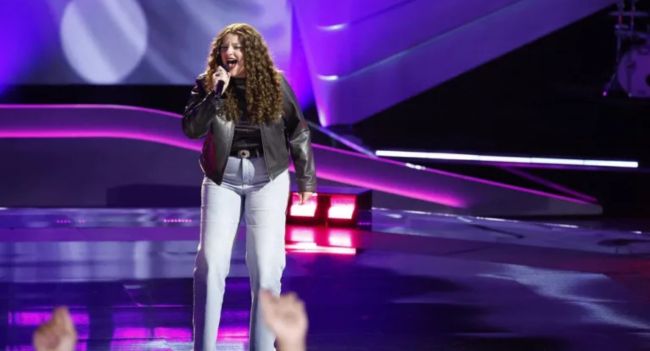
Find country singers. Build a country-heavy team. Give one of them a real shot at winning Season 30.
For one night, everything went according to plan.
Green landed the season’s first four-chair turn, welcomed another young country hopeful to his team and appeared to be building exactly the roster he’d envisioned.
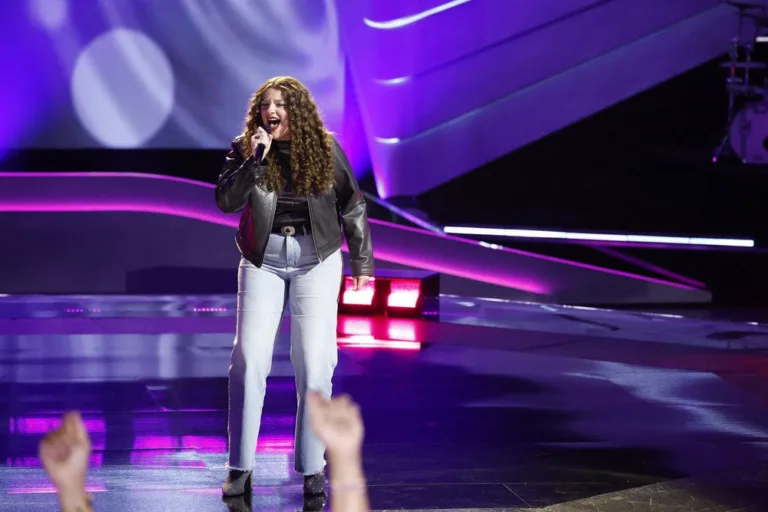
But on the second night of Blind Auditions, 19-year-old Harmony McKee walked onto the stage and complicated everything.
Her usual musical world wasn’t country at all.
She sang R&B, soul and bluesy rock — and admitted she had never performed a country song before.
Her first attempt was enough to make Green turn his chair.
Green Had Been Clear About His Strategy
Green made his coaching debut when Season 30 premiered on September 21.
From the beginning, he wanted country talent.
His early results supported that approach.
Sisters Ferryn and Brinkley, from Sevierville, Tennessee, became the first four-chair turn of the season and ultimately chose Green.
He also secured 19-year-old Joe Henley.
Green believed country music had a strong chance of producing the eventual winner, so continuing to build around singers from the genre seemed like the obvious move.
Harmony McKee wasn’t the obvious move.
Harmony Had Never Sung Country Before
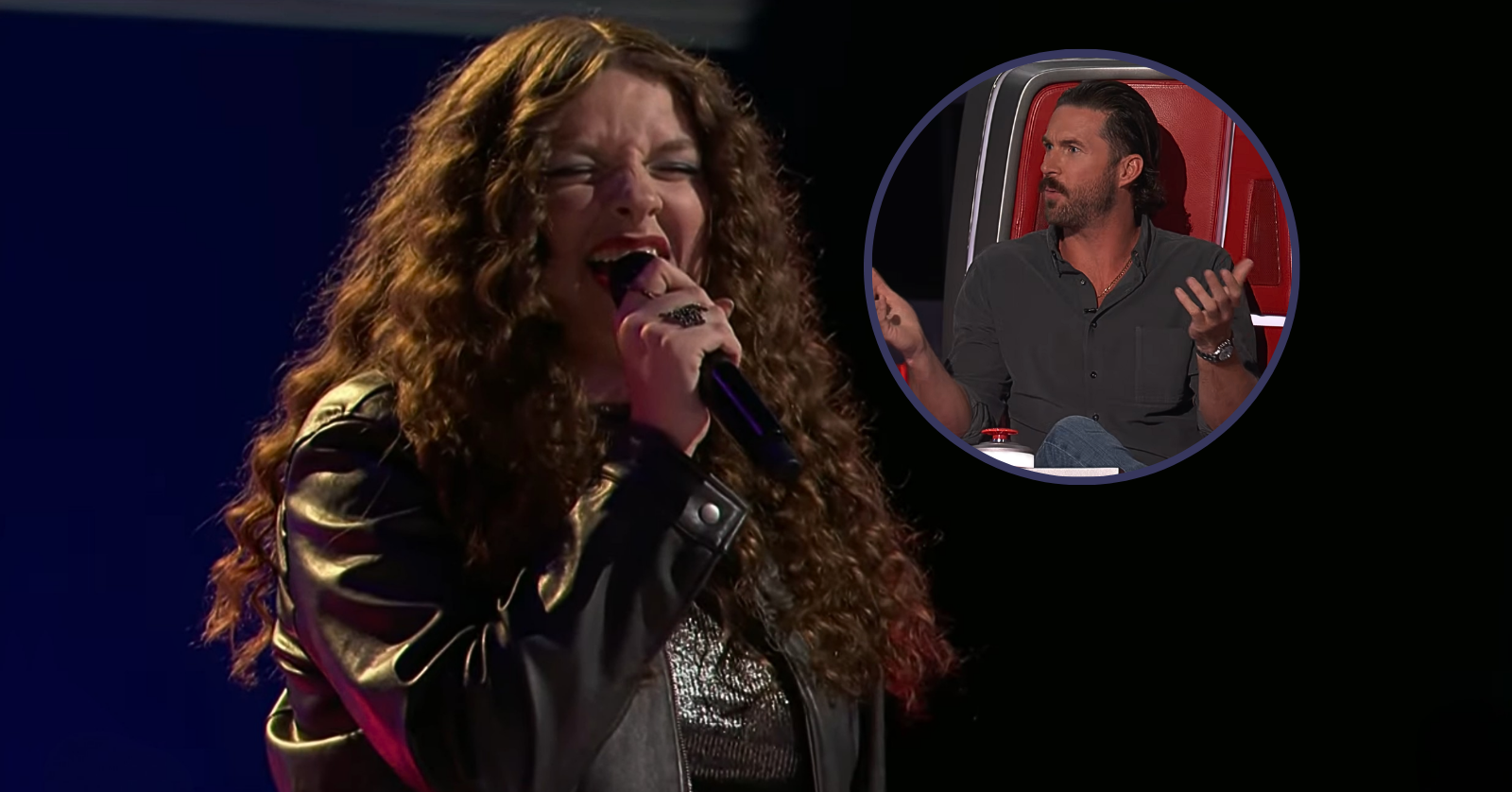
McKee arrived for her Blind Audition with a musical background rooted largely in R&B and soul, along with what she described as bluesy rock.
Instead of choosing something safely within that world, she took a risk.
She performed Miranda Lambert’s “Gunpowder & Lead.”
It was the first country song McKee had ever performed.
But there was nothing tentative about the result.
Her performance convinced both Riley Green and Adam Levine to turn their chairs.
Suddenly, the country coach who had been talking about assembling a country team was fighting for a singer who didn’t consider country her usual lane.
And Levine immediately realized that could work in his favor.
Adam Levine Saw His Chance
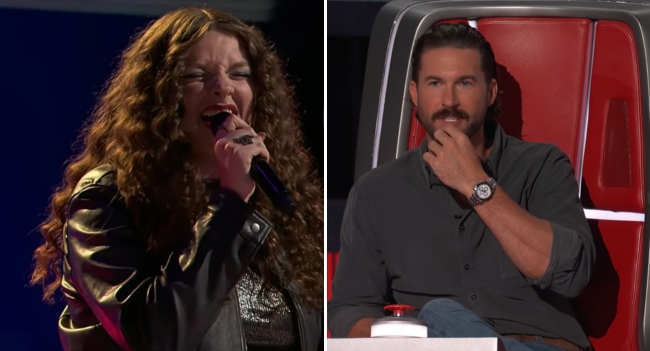
Once McKee revealed that she’d never performed a country song before, the coaches were surprised.
For Levine, the revelation provided the perfect argument.
If McKee’s musical identity was built around R&B, soul and rock rather than country, why should she automatically choose Green?
Levine embraced her versatility and tried to convince her that her musical background made him the better fit.
But Green found a different connection.
He and McKee discovered a shared appreciation for Johnny Cash, something both had developed through their grandfathers.
That personal connection helped Green’s pitch.
So did Kelly Clarkson.
Kelly Clarkson Actually Helped Riley
Although Clarkson wasn’t competing for McKee herself, she offered the young singer some advice about Green’s team.
McKee wouldn’t sound like anyone else already there.
That difference, Clarkson suggested, could become an advantage.
Rather than disappearing into a group of similar voices, McKee could occupy her own space on Team Riley when the competition eventually reached the public-voting stages.
It was an intriguing argument.
Green wanted country singers.
McKee wasn’t really one.
And that might have been exactly why she belonged with him.
Harmony Chose Team Riley
When the decision finally arrived, McKee passed on Levine and chose Riley Green.
Green couldn’t have been happier.
“I’m so happy I got Harmony,” he said. “She really made that song her own. The way she took over the stage. She’ll definitely be a big star.”
The choice expanded Team Riley beyond the country-focused roster Green had originally described.
At that point in the Blind Auditions, his team included Joe Henley, Ferryn & Brinkley, Caroline Alexis and Harmony McKee.
McKee clearly stood out among them because of where she’d come from musically.
Green’s Team Was Already Becoming Something Different
The interesting part of McKee’s audition wasn’t simply that Green landed another singer.
It was that he wanted her badly enough to look beyond his own original strategy.
McKee hadn’t spent years singing country.
She hadn’t even spent months doing it.
Before walking onto The Voice stage, she’d never performed a country song at all.
Yet one Miranda Lambert performance was enough for Green to hear something he wanted on his team.
That could give him an intriguing coaching challenge as the competition continues: helping McKee explore country music without stripping away the R&B, soul and bluesy-rock influences that made her distinctive in the first place.
One Audition Changed the Plan
Night two brought plenty of other movement across the competition.
Kelly Clarkson used her First-In button to secure Johnnie Kapua, while the episode ended with 23-year-old Lexi Stephens earning a four-chair turn, leaving her eventual coaching decision for the following episode.
But Green had already experienced one of his first surprises as a rookie coach.
He entered The Voice determined to build around country singers.
Harmony McKee arrived having never sung country before.
One performance of “Gunpowder & Lead” was apparently all Riley Green needed to decide that his original plan could make room for something different.