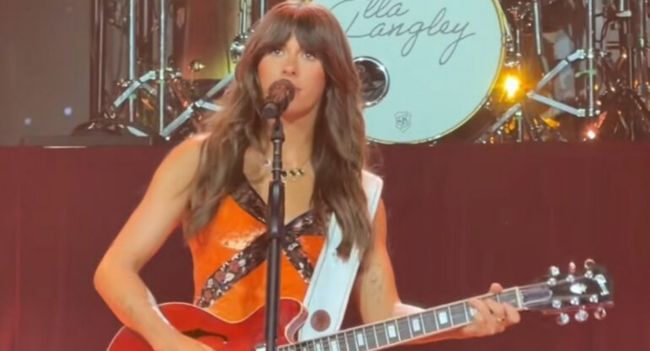
Ella Langley Honors Dolly Parton With Powerful “Jolene” Performance During Emotional Alabama Homecoming
Ella Langley knew her Auburn homecoming concert would not feel complete without acknowledging the woman who helped open doors for generations of female country artists.
So during her August 28 show at Neville Arena in Auburn, Alabama, Langley paused her set and turned to one of Dolly Parton’s most enduring songs: “Jolene.”
“Tonight’s show didn’t feel right without doing something like this,” Langley told the crowd before launching into a fiery, rock-leaning interpretation of the country classic.
The performance came just days after Parton died on August 25 at age 80 following a brief battle with cancer. For Langley, however, the tribute went beyond performing one of Dolly’s biggest songs. She had already shared an emotional message thanking Parton for the courage and authenticity that helped create a path for women like her.
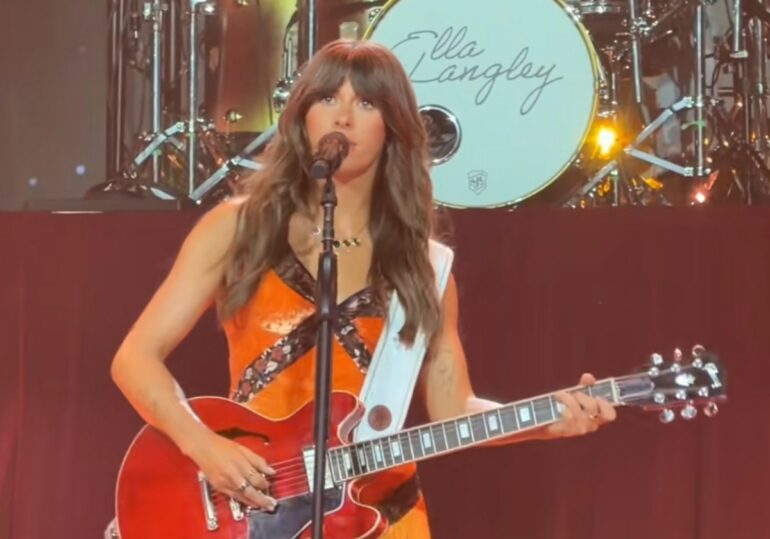
Ella Langley Brings “Jolene” to Her Alabama Homecoming
Langley’s tribute came during the first of two Dandelion Tour concerts at Auburn University’s Neville Arena, close to where the Alabama native grew up.
Rather than attempting to reproduce Parton’s original arrangement, Langley brought her own musical personality to “Jolene,” giving the song a harder, rock-infused edge while retaining the instantly recognizable melody and lyrics.
It was a fitting choice.
Few songs are more closely associated with Parton, and even fewer demonstrate so clearly the songwriting instincts that helped turn her into one of country music’s most influential figures.
“Jolene” first appeared in 1973 before becoming the title track of Parton’s 1974 album of the same name.
Behind its unforgettable plea was a story rooted partly in Parton’s own marriage.
@emily.these.days Last night in Auburn, @Ella Langley said, “Tonight’s show didn’t feel right without doing something like this” and proceeded to sing “Jolene” in honor of @Dolly Parton. One of my favorite moments from the night 🦋 #ellalangley #dollyparton #concert #auburn #fyp ♬ original sound – Emily 🦋
The Real Story That Inspired “Jolene”
Parton repeatedly explained over the years that the song combined two different real-life inspirations.
The name “Jolene” came from a young red-haired fan Parton met after a performance. She was so struck by the girl’s name that she repeated it to herself so she would remember it.
The song’s romantic tension, however, came from somewhere else entirely.
A bank teller had developed a crush on Parton’s husband, Carl Dean, and Parton noticed that Dean appeared to be spending considerably more time at the bank than she thought necessary.
“She got this terrible crush on my husband,” Parton once explained, recalling that Dean enjoyed visiting because of the attention he received.
Parton joked that she would tease him about how frequently he was going to the bank because they certainly did not have enough money to justify so many visits.
The situation was far less threatening than the desperate scenario portrayed in the finished song, but it gave Parton exactly the emotional spark she needed.
She transformed a flirtatious bank teller, a memorable name from a young fan and a touch of marital jealousy into one of country music’s most recognizable compositions.
Dolly Even Found Humor in the Woman Behind the Song
Parton’s storytelling around “Jolene” became almost as entertaining as the song itself.
She frequently joked about Dean’s visits to the bank and the attention he received there.
During her celebrated 2014 Glastonbury appearance, Parton told the audience that the song was “loosely based on a little bit of truth,” explaining that her husband had been spending more time around the woman than she thought he should.
Then came the punchline.
Parton said she had gotten rid of the red-haired woman “in a hurry,” before joking that she ultimately owed her some gratitude because without the experience, she might never have written “Jolene” — or made all the money the song subsequently earned.
That ability to turn insecurity into humor, and then turn both into a timeless song, became part of what made Parton such an extraordinary storyteller.

Two Legendary Songs From an Extraordinary Creative Period
“Jolene” occupies an especially remarkable place in Parton’s songwriting history because of another song associated with the same creative period.
Parton famously recalled writing “Jolene” and “I Will Always Love You” at around the same time, even saying that her old cassette tapes suggested the two compositions may have been written on the same day.
Either achievement alone would have secured a place in country music history.
Together, the songs demonstrate the extraordinary songwriting run Parton was experiencing as she moved toward establishing herself independently from Porter Wagoner and expanding her solo career.
“I Will Always Love You” became a towering standard in its own right, while “Jolene” continued traveling across generations, genres and countries through countless covers and reinterpretations.
That enduring flexibility is part of what allowed Langley to stand in an Alabama arena more than five decades later and make the song sound unmistakably like herself without losing the spirit of Dolly’s original.
Langley Had Already Shared a Personal Goodbye to Dolly
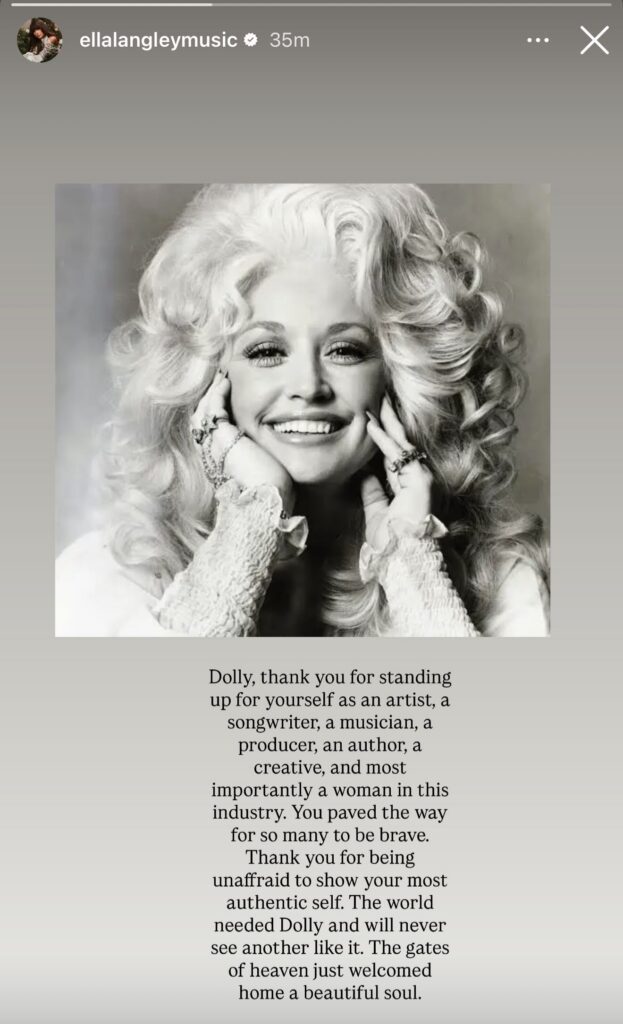
The Auburn performance was not Langley’s first tribute following Parton’s passing.
Soon after the news broke, she shared a heartfelt message emphasizing something particularly meaningful to a younger woman building her own career in country music: Dolly’s willingness to insist on being herself.
“Dolly, thank you for standing up for yourself as an artist, a songwriter, a musician, a producer, an author, a creative, and most importantly a woman in this industry,” Langley wrote.
“You paved the way for so many to be brave.”
She also thanked Parton for being “unafraid to show your most authentic self,” before concluding that the world would never see another figure quite like her.
“The gates of heaven just welcomed home a beautiful soul,” Langley wrote.
Those words gave her subsequent “Jolene” performance another layer of meaning.
Langley was not simply honoring a famous song. She was acknowledging one of the women whose career demonstrated that a female country artist could write her own material, control her image, build a business empire and remain unmistakably herself while doing it.
A New Generation Carries Dolly’s Songs Forward
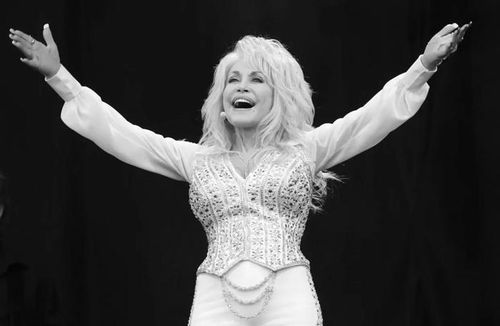
Since Parton’s death, artists from across country music and beyond have returned to the songs she left behind.
“Jolene,” in particular, has always had a remarkable ability to survive reinterpretation. Its deceptively simple structure and emotionally direct lyric have allowed artists from wildly different musical backgrounds to reshape it while keeping the central tension intact.
Langley’s Auburn performance belonged to that tradition.
She did not try to become Dolly Parton for a few minutes.
Instead, she honored her by taking a song written more than half a century earlier and allowing it to live through the sound of another generation.
That may be one of the clearest demonstrations of Parton’s legacy.
The woman herself is gone, but the songs continue moving from voice to voice, stage to stage and generation to generation.
For Ella Langley, one of those songs needed to be heard in Auburn.
As she told the crowd before beginning:
“Tonight’s show didn’t feel right without doing something like this.”
Then she let “Jolene” say the rest.