Unbelievable: The Netflix True-Crime Drama That Turns A Real Investigation Into A Powerful Eight-Part Story
A teenage girl reports a sexual assault — and instead of being believed, she is pressured into questioning her own account. Three years later, two detectives investigating eerily similar attacks begin uncovering evidence that suggests her story was true all along.
That is the disturbing foundation of Unbelievable, Netflix’s eight-part limited series starring Kaitlyn Dever, Merritt Wever and Toni Collette. Released on September 13, 2019, the drama is inspired by a real investigation and explores not only the search for a serial offender, but also the devastating consequences when a victim is not believed.
The series has continued to earn strong critical recognition. Rotten Tomatoes currently lists Unbelievable at 98% from 84 critic reviews, with an 89% audience score.
Two Investigations, One Disturbing Connection
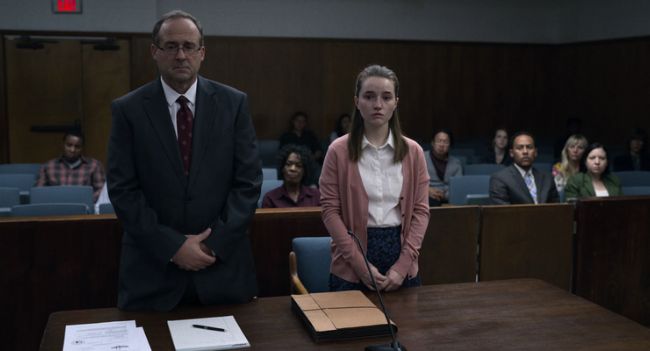
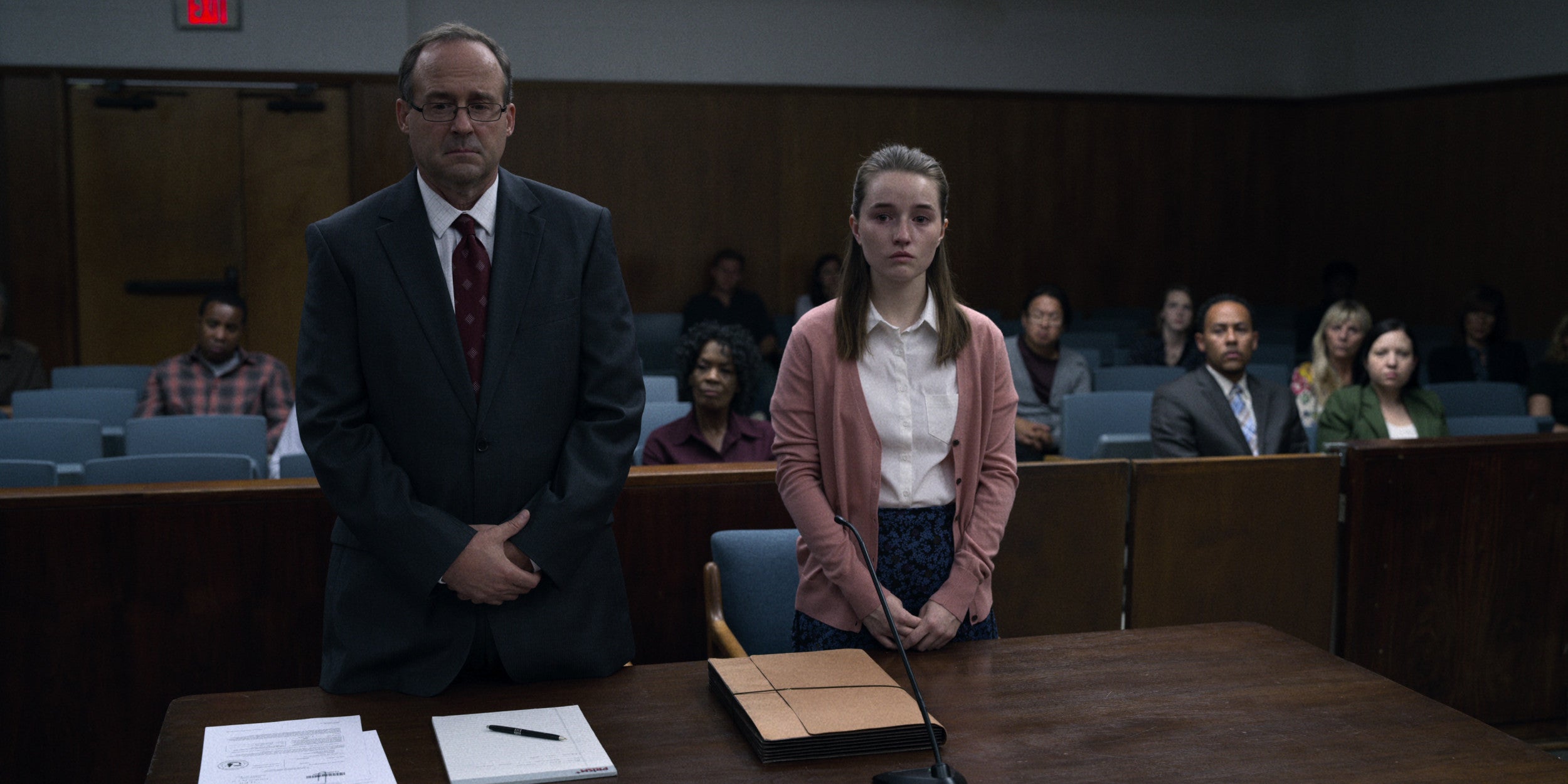
At the heart of the story is Marie Adler, played by Kaitlyn Dever, a teenager who reports that an intruder sexually assaulted her in her home.
Instead of receiving unquestioning support, Marie is confronted with skepticism from investigators and people close to her. The pressure surrounding the case eventually leads her to retract her report, leaving her dealing with the consequences of not being believed.
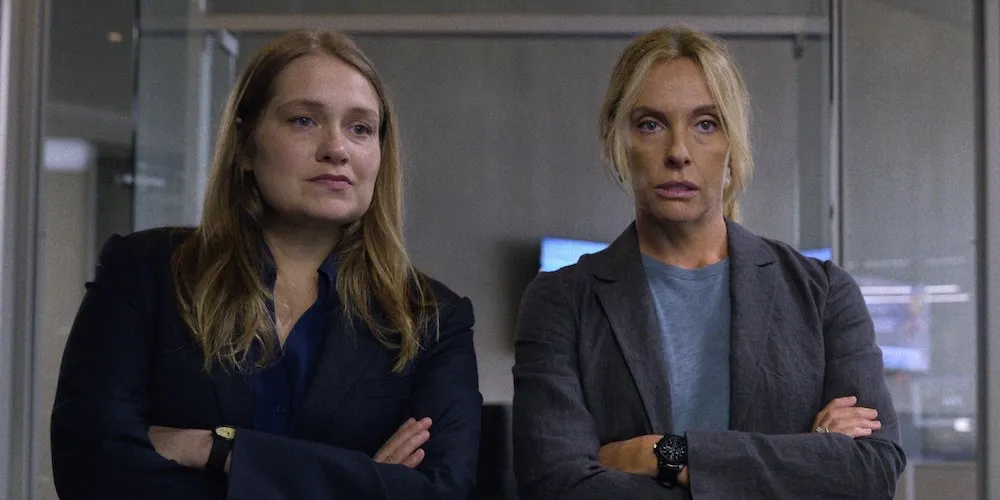
Three years later and hundreds of miles away, Detective Karen Duvall, portrayed by Merritt Wever, begins investigating another sexual assault in Colorado.
The circumstances are disturbingly familiar. As Duvall examines the case, she crosses paths with Detective Grace Rasmussen, played by Toni Collette. The two begin comparing information and recognise similarities that suggest the attacks may not be isolated incidents.
Their investigation gradually expands as more evidence and victims come into focus, eventually leading them toward the possibility of a serial offender. Netflix’s episode descriptions show how the two strands develop in parallel, with Karen and Grace connecting cases while Marie faces the fallout of her original report.
The Real Story Behind Unbelievable

Although the series is scripted, its central events are rooted in documented reporting.
Unbelievable was inspired by “An Unbelievable Story of Rape,” the 2015 investigative article by T. Christian Miller and Ken Armstrong, published by ProPublica and The Marshall Project. Their reporting examined the Washington case involving a young woman whose account was doubted, alongside the Colorado investigation that eventually exposed the connection between multiple assaults.
Miller and Armstrong’s investigation received the 2016 Pulitzer Prize for Explanatory Reporting for its examination of failures in the way rape reports were investigated and the traumatic consequences for victims.
The television adaptation also draws from ** A False Report **, the book written by Miller and Armstrong, as well as the This American Life episode “Anatomy of Doubt.” Netflix identifies both the Pulitzer-winning investigation and the radio episode as sources for the series.
The journalists’ original reporting showed how the Washington investigation went badly wrong while the Colorado detectives methodically built a case that eventually helped reveal the truth. Their reporting was based on previously unreleased police records and interviews with people directly involved in the cases.
The series remains a dramatization, but its most important events are grounded in that real-world investigation.
Marie’s Story Is More Than A Crime Mystery
One of the defining choices in Unbelievable is that Marie does not disappear from the story once the investigation moves elsewhere.
Her experience remains central as the detectives in Colorado begin uncovering connections between cases.
The drama therefore operates on two levels. One is the conventional investigation: detectives examine evidence, compare reports, pursue leads and attempt to identify the person responsible.
The other is much more personal. Marie must deal with the consequences of having her account questioned and then retracted, while the investigation that could ultimately confirm what happened to her unfolds far away.
That structure gives the series its emotional weight. Rather than using the crimes simply as a framework for suspense, Unbelievable examines how disbelief can affect a victim and how institutional failures can compound the original trauma.
Netflix itself describes the series as a story of trauma, determination and resilience, while its official synopsis centres on a young woman accused of lying and two detectives pursuing evidence that could reveal the truth.
Kaitlyn Dever, Toni Collette And Merritt Wever Lead The Cast
The three central performances form the backbone of the series.
Kaitlyn Dever plays Marie, whose story unfolds through the aftermath of her report and the growing consequences of being doubted.
Merritt Wever portrays Karen Duvall, the Colorado detective who begins investigating an assault with similarities to other cases.
Toni Collette plays Grace Rasmussen, who joins Duvall as the investigation expands and the possibility of a larger pattern becomes harder to ignore.
The cast also includes Eric Lange, Bill Fagerbakke, Elizabeth Marvel, Bridget Everett, Danielle Macdonald, Dale Dickey, Liza Lapira and Omar Maskati. Netflix’s official listing confirms Dever, Wever and Collette among the principal cast.
The performances were widely recognised during awards season, with the series ultimately receiving four Emmy nominations, including Outstanding Limited Series and Outstanding Supporting Actress in a Limited Series or Movie for Collette.
Unbelievable also won a Peabody Award, further recognising the series’ approach to its subject matter and its focus on the experiences of survivors.
Eight Episodes That Slowly Bring The Cases Together
The limited series uses all eight episodes to let the investigation develop gradually rather than rushing toward a conclusion.
The opening episodes establish Marie’s experience and the immediate consequences of her report. Three years later, Karen encounters a strikingly similar case in Colorado, prompting questions about whether the attacks could be connected.
By the middle of the series, Karen and Grace are comparing cases and seeking help from the FBI as they attempt to connect the evidence.
The investigation becomes increasingly complicated as new information emerges, while Marie faces problems of her own. The two storylines eventually converge as the Colorado detectives move closer to identifying the perpetrator and preparing for a pivotal day in court.
That pacing is important to the show’s impact. The audience is not simply waiting to discover who committed the crimes; it is also watching to see whether Marie’s experience will finally be recognised for what it was.
Why The Series Still Resonates
Rotten Tomatoes’ current 98% Tomatometer score from 84 reviews reflects the strong critical response that has followed the series since its release. Its audience score currently stands at 89%.
The critics’ consensus highlights the show’s decision to move beyond familiar true-crime conventions and give greater attention to survivors and their experiences.
That approach is what separates Unbelievable from a straightforward police procedural.
There are investigations, suspects, evidence and breakthroughs, but the series never loses sight of the people affected by the crimes. Marie’s experience remains intertwined with the detectives’ pursuit of the truth, creating a story in which solving the case is only part of what matters.
The result is an eight-episode crime drama that is difficult precisely because its most unsettling element is not the mystery itself. It is the human cost of doubt — and the possibility that the truth can remain hidden when the wrong people refuse to listen.
Unbelievable is available to stream on Netflix.