Netflix’s Dublin Murders: The Dark Irish Crime Drama That Keeps Viewers Guessing
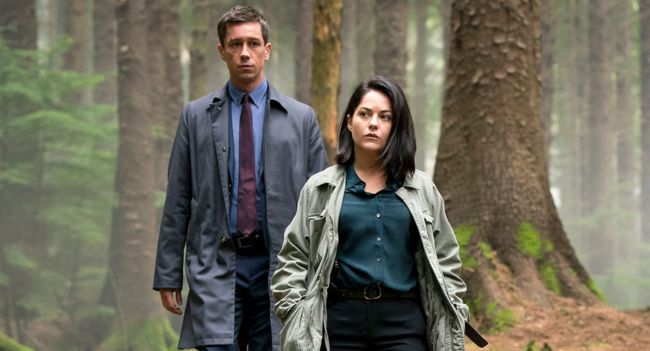
A young girl is found murdered in the woods, while a detective is forced to confront a disturbing connection to his own childhood. From there, Dublin Murders develops into a crime story where the investigation is only one part of a much deeper mystery.
The eight-part Irish crime drama has found a new audience on Netflix, with its brooding atmosphere, complex characters and emotionally heavy storytelling drawing comparisons to acclaimed series such as Happy Valley and Broadchurch.
Based on Tana French’s bestselling Dublin Murder Squad novels, the series brings together the storylines of In the Woods and The Likeness in a single adaptation written by Sarah Phelps.
A murder investigation with a much darker history
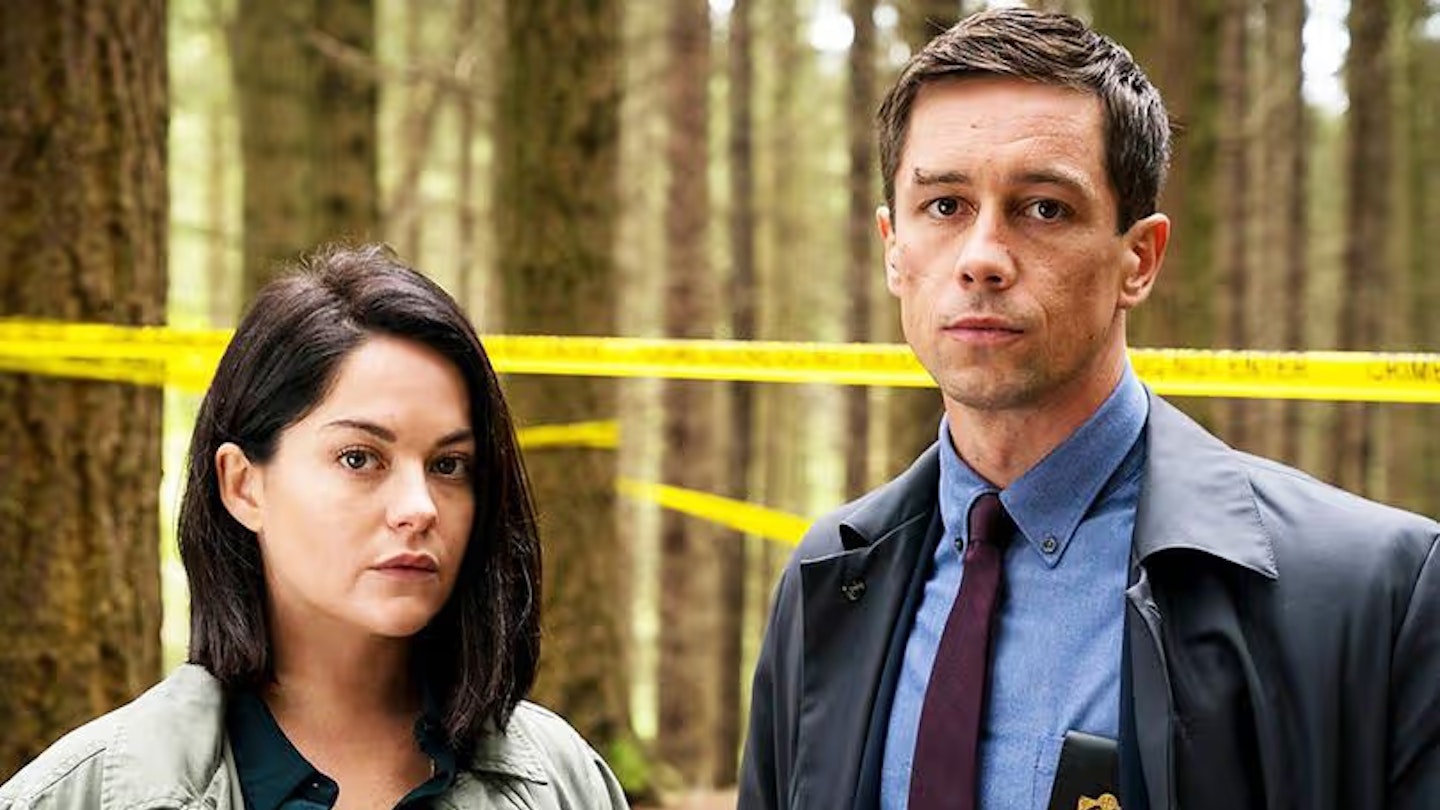
At the centre of the series are detectives Rob Reilly and Cassie Maddox, played by Killian Scott and Sarah Greene.
Their case begins when the body of a young girl, Katy Devlin, is discovered in the woods at Knocknaree. For Rob, the location carries an unsettling personal connection: decades earlier, his two childhood friends disappeared in the same woods, while he was the only child to return.
What initially appears to be a straightforward murder investigation soon becomes tangled with Rob’s unresolved memories and the secrets surrounding his past.
At the same time, Cassie becomes involved in another case that forces her to adopt a new identity and enter an increasingly dangerous situation undercover.
The two investigations gradually reveal just how complicated the lives of the detectives have become. Their professional partnership is tested as personal loyalties, buried trauma and difficult choices begin to collide.
Why Dublin Murders feels different
Rather than treating its mysteries as simple puzzles that need to be solved, the series puts considerable emphasis on memory, identity and the psychological damage left by violence.
That approach gives the drama a tense, unsettling quality. The further Rob and Cassie go into their investigations, the more difficult it becomes to separate the cases from their own emotional struggles.
The woods at Knocknaree also become an important part of the show’s atmosphere. The series leaves elements of what happened there deliberately ambiguous, creating a lingering sense that some questions may never receive straightforward answers.
That decision divided viewers when the finale aired. Some appreciated the refusal to explain everything, while others were frustrated that major questions surrounding Rob’s childhood remained unresolved.

A cast led by Killian Scott and Sarah Greene
Killian Scott takes the lead as Detective Rob Reilly, an English detective who has moved to Dublin and becomes determined to solve Katy’s murder.
Sarah Greene plays Detective Cassie Maddox, Rob’s partner and closest ally. Their relationship is central to the series, particularly as Cassie’s undercover investigation begins to take an increasingly personal turn.
The cast also features Tom Vaughan-Lawlor as Frank Mackey, Moe Dunford as Sam O’Neill, Ian Kenny as Garda Phelan, Conleth Hill as Superintendent O’Kelly and Peter McDonald as Jonathan Devlin.
The performances were among the aspects most praised by viewers, even as the show’s complicated storyline divided opinion.
The series takes inspiration from two Tana French novels
Dublin Murders adapts the first two books in Tana French’s Dublin Murder Squad series: In the Woods, published in 2007, and The Likeness, published in 2008.
Rather than adapting them separately, Sarah Phelps combined elements of both stories for the television series.
That decision resulted in significant changes from the novels. Several characters, relationships and plot developments unfold differently on screen, while the series also introduces supernatural suggestions surrounding the woods that are not present in the same way in the books.
For readers familiar with French’s novels, the television adaptation therefore offers a substantially different experience rather than simply reproducing the original stories.

A finale that leaves questions behind
One of the most talked-about aspects of Dublin Murders is its ending.
The mystery surrounding Katy’s death is eventually resolved, but the story does not provide neat answers to every question. Rob’s missing childhood friends, Jamie and Peter, remain at the centre of one of the show’s biggest unresolved mysteries.
The finale also deepens the strange mythology surrounding Knocknaree, leaving viewers to consider whether there is something supernatural at work or whether the unsettling events can be understood through more human explanations.
The decision to leave some mysteries open was consistent with In the Woods, which also leaves Rob without a definitive explanation for what happened to his friends.
Is Dublin Murders worth watching?
For viewers who enjoy crime dramas driven as much by character and atmosphere as by the central investigation, Dublin Murders offers plenty to sink into.
It is darker and more psychologically complicated than a conventional detective series, with the cases constantly intersecting with the private lives of the people investigating them.
Fans of Happy Valley, Broadchurch and other emotionally intense crime dramas may find familiar qualities here: damaged characters, difficult moral choices, unsettling mysteries and stories where solving the crime does not necessarily resolve everything.
The series originally premiered on BBC One and RTÉ in October 2019, with its eight episodes concluding in November of that year.
Now that it has found another audience on Netflix, Dublin Murders is once again giving crime drama fans a reason to venture into the unsettling world of Knocknaree — where some mysteries are solved, but others are deliberately left lingering long after the final episode.