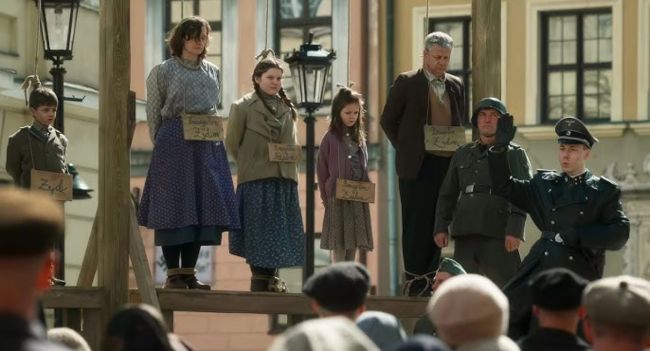
Netflix’s 86%-Rated WWII Drama Irena’s Vow Brings a Remarkable True Story of Courage to the Screen
A young woman hiding 12 Jewish people beneath the home of a Nazi officer sounds like the setup for a tense wartime thriller. In Irena’s Vow, however, that extraordinary act of resistance is rooted in the real-life experiences of Irena Gut Opdyke, a 19-year-old Polish woman who risked her life to protect people being persecuted by the Nazis.
Directed by Louise Archambault and written by Dan Gordon, the 2023 historical drama stars Sophie Nélisse as Irena, alongside Dougray Scott and Andrzej Seweryn. The film currently holds an 86% Tomatometer score from 36 critics, while its audience score stands at 82% on Rotten Tomatoes.

The film has also reached a new audience through Netflix in the UK. Netflix’s UK Top 10 list placed Irena’s Vow at No. 8 for the week of August 31 to September 6, 2026, while the platform’s current UK listing identifies it as a 2023 drama based on real life, books and a play.
But the numbers only tell part of the story. The real weight of Irena’s Vow comes from knowing that the central act of courage actually happened.
A 19-Year-Old Risks Everything to Save 12 Lives
When the events depicted in the film unfold, Irena Gut is just 19.
During the German occupation of Poland, she is eventually placed in charge of a villa belonging to Major Rügemer, a German officer played by Dougray Scott. The position gives her access to a place that would otherwise be almost impossible for Jewish people fleeing persecution to enter safely.
Then Irena learns that the Jewish ghetto is about to be liquidated.
She makes a decision that could cost her life: she secretly brings 12 Jewish people into the basement of the German commandant’s house, hiding them directly beneath the home of the occupying officer she works for.
From that point on, Irena has to live two lives.

Above ground, she continues working and maintains the appearance expected of her. Below the house, 12 people are depending on her to remain undiscovered.
Nazi officers and guests move through the villa. Parties take place inside. Any unexpected noise, visitor or mistake could expose the secret.
That is where much of the film’s tension comes from. There is no need for constant action when discovery could happen through something as ordinary as a conversation or a set of footsteps.
Rotten Tomatoes’ synopsis describes Irena’s efforts as continuing for the final two years of the German occupation, during which she uses wit, humor and courage to keep the people hidden.
The Story Came From Irena Gut Opdyke’s Own Memoir
The events portrayed in Irena’s Vow are based on the life of Irene Gut Opdyke, whose experiences were later recorded in her memoir, In My Hands: Memories of a Holocaust Rescuer.
Published by Knopf in 1999 and written with Jennifer Armstrong, the memoir recounts Gut’s experiences as a young Polish Catholic and nursing student during the war. The United States Holocaust Memorial Museum notes that she was 17 when the war began and was eventually forced to work in a German officers’ dining hall, where she began finding ways to resist Nazi persecution.
Her actions began with smaller forms of assistance. She supplied food and information to people in the ghetto and helped others evade German persecution.

Those efforts eventually led to the extraordinary decision at the center of the film: hiding 12 Jewish people in the basement of the home where she worked.
Gut was later recognized by the Israeli Holocaust Commission as one of the Righteous Among the Nations, further documenting the significance of her wartime actions.
That history gives the film a different kind of emotional force. Irena is not portrayed as someone who knows how everything will turn out. She is a young woman trying to survive an occupation while repeatedly making decisions that could have fatal consequences.
Her courage comes from acting despite that uncertainty.
Sophie Nélisse Gives the Story Its Emotional Center
Sophie Nélisse takes on the demanding role of Irena Gut, carrying much of the film through a performance built around fear, restraint and gradual transformation.
As the story progresses, Irena becomes increasingly resourceful. She has to understand the people around her, anticipate potential threats and carefully adjust her behavior depending on who is watching.
That evolution is central to the drama.

Rather than turning Irena into a conventional action hero, the film places emphasis on the psychological pressure surrounding her. Every decision matters because a single mistake could put 12 other lives at risk.
RogerEbert.com critic Christy Lemire praised Nélisse’s ability to communicate Irena’s changing circumstances through subtle expressions and shifts in demeanor. The review ultimately described the story as worthwhile and Nélisse as engaging enough to keep the audience invested.
The performance therefore works less through grand gestures than through the constant pressure visible in Irena’s behavior.
Dougray Scott Plays the Officer Whose Home Becomes a Refuge
Dougray Scott plays Major Rügemer, the German officer whose villa becomes the hiding place for the people Irena is trying to protect.
That location creates one of the film’s most unsettling ideas: the people targeted by the occupying regime are concealed beneath the very home associated with that regime.
The relationship between Irena and Rügemer also becomes an important source of uncertainty.
Sight & Sound describes Rügemer as the film’s central mystery, with Scott portraying a lonely and highly controlled Nazi officer whose behavior leaves room for questions about what he does and does not understand about the people around him.
The result is a setting where even apparently harmless exchanges can carry enormous consequences.
A conversation upstairs may determine whether the people downstairs remain safe.
From Memoir to Stage to Film
Irena’s Vow was not adapted directly from Gut’s memoir alone.
Her story first appeared in In My Hands in 1999 before being developed for the stage. Dan Gordon, who wrote the screenplay for the film, also adapted the story from his own stage play.
Louise Archambault directed the feature, while Gordon handled the screenplay. The finished movie runs for 2 hours and 1 minute and is categorized as a war drama, biography and history film.

The film’s approach has received a mixed critical response despite its strong overall Rotten Tomatoes score.
Sight & Sound described it as a plainly told account of extraordinary wartime courage while arguing that some elements of Gut’s story are simplified. The Guardian similarly praised the underlying story while criticizing the film for presenting the horrors of Nazism in a somewhat restrained and sanitized manner.
Other critics have responded more positively to the performances and to the importance of bringing Gut’s story to a wider audience. Christy Lemire, for example, called it a worthwhile story and highlighted Nélisse’s performance.
The 86% Tomatometer score therefore represents the overall critical response rather than universal agreement about the film’s execution.
Why the Film’s Central Story Remains So Powerful
World War II and the Holocaust have been portrayed in countless films, but Irena’s Vow focuses on a much smaller and more intimate form of resistance.
There are no armies at the center of the story. Instead, the film follows one young woman working inside a single household, trying to protect 12 people while remaining invisible to the system surrounding her.
That scale makes the danger feel immediate.
Irena must continue working for a German officer while secretly sheltering Jewish people from persecution. The people she is protecting are not far away from danger; they are hidden beneath the same roof where Nazi officers gather.
The Guardian describes the film as a dramatized account of Gut’s efforts to hide 12 Jews in the basement of the home belonging to the Nazi officer for whom she worked. Sight & Sound likewise notes that Gut was 19 when she carried out this extraordinary act and spent much of the war hiding 12 Jewish people in the cellar of her Wehrmacht employer’s home.
The historical reality is what makes the premise particularly affecting.
When Irena began helping those around her, she did not know how the war would end or whether her actions would eventually be discovered. Every new visitor, inspection or conversation presented another possibility that the secret could collapse.
Irena’s Vow Finds a New Audience on Netflix
The film’s arrival on Netflix has introduced Irena Gut Opdyke’s story to viewers who may not have encountered it before.
Netflix describes Irena’s Vow as the story of a Polish woman working as a housekeeper for a Nazi officer who risks her life to hide Jews in his villa during World War II. The platform lists Sophie Nélisse, Dougray Scott and Andrzej Seweryn among the principal cast.
In the UK, the film appeared in Netflix’s Top 10 movies for the week of August 31 to September 6, 2026, reaching No. 8.
For viewers discovering it through the streaming service, the film may initially look like another historical war drama. Understanding the real story behind it changes the experience.
The 12 people hidden beneath the house were not simply a fictional device created to heighten suspense. The central act of rescue was based on the wartime experiences of a real young woman, later preserved in her memoir.
That is ultimately what gives Irena’s Vow its lasting significance.
The film may divide viewers and critics over how effectively it translates that history to the screen, but the story at its center remains extraordinary: a 19-year-old woman found ways to resist an occupying regime and eventually risked everything to shelter 12 Jewish people under the roof of a German officer.
Her story is one of fear as much as courage — and of choosing to act despite knowing exactly what discovery could cost.
Watch the Official Trailer
The official trailer for Irena’s Vow was released by Quiver Distribution on February 22, 2024.